
By Jarrod Gravison • Updated April 28, 2026 • 7 min read
⚡ Quick Answer
For fireworks preparation: close all windows and curtains, play white noise or calming music at high volume, provide a dark covered hiding spot, use calming products 30–60 minutes before fireworks begin, and ensure all ID tags and microchip registration are current. Fireworks are the #1 cause of pet escape in North America — never take dogs outside during active fireworks.
Disclosure: This post contains affiliate links. We may earn a small commission at no extra cost to you.
Key Takeaways
- Preparation starts weeks before July 4th or New Year’s Eve: Anxiety wraps, white noise machines, and calming diffusers need days or weeks to be effective — last-minute intervention is less reliable than early preparation.
- Microchipping is your most important fireworks safety measure: The ASPCA reports that July 5th is consistently the busiest day of the year for animal shelters — more pets go missing during fireworks than at any other time.
- Never leave pets unattended during fireworks: Even pets that appear calm may bolt when an unexpectedly close burst occurs — human presence is a genuine anxiety buffer for both dogs and cats.
- Indoor confinement is safer than outdoor presence: According to the AKC, a dog left in a fenced yard during fireworks has a significantly higher escape and injury rate than one secured indoors, regardless of fence height.
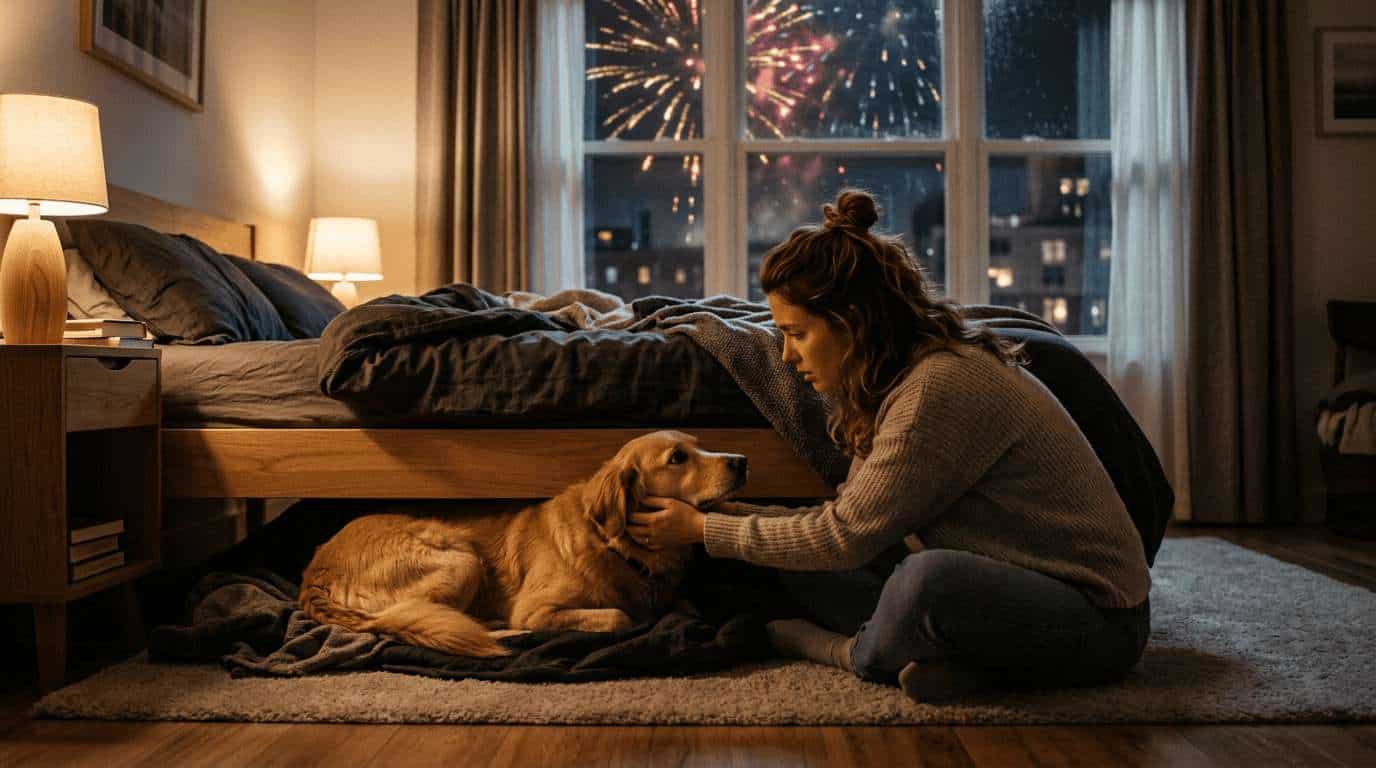
Fireworks cause more anxiety and more pet escapes than almost any other event. Apartment pets have less ability to escape sound than outdoor animals. Here are 10 preparation steps that make a genuine difference.
What Are Before Fireworks Season?
1. Update ID Tags and Microchip Registration Now
July 4th is the #1 night for lost pets in North America. Fireworks-terrified dogs escape through any available opening. Before fireworks season begins, verify your pet’s microchip registration is current and attach a collar tag with your current phone number. Do this every year.

2. Talk to Your Vet About Prescription Options
For severely anxious pets, prescription anxiolytics are significantly more effective than OTC calming products. Ask your vet at least 1–2 weeks before the first major fireworks event. Common options:
- Trazodone: Mild sedative, effective for moderate anxiety
- Sileo: FDA-approved specifically for noise aversion in dogs — applied to gum line
- Gabapentin: Anti-anxiety medication used off-label for noise phobia
Don’t wait until the evening of the event to discuss medication options with your vet.
What Are Day-Of Preparation?
3. Exercise Your Dog Thoroughly Earlier in the Day
A physically tired dog has less energy for anxiety. A vigorous morning walk or play session reduces baseline arousal before fireworks begin. Don’t attempt this close to fireworks time — the increased outdoor activity around fireworks events can itself be stimulating.
4. Set Up a Safe Room
Create a dedicated safe space for your pet before fireworks start. Ideal characteristics:
- Interior room (fewer windows = less sound and light penetration)
- Familiar items: bed, toys, water
- Covered crate if the pet uses one — caves and dens are instinctively calming
- White noise machine or fan on high
5. Close Windows, Curtains, and Blinds
Reduces both sound transmission and visual flash stimulation. In apartments, window coverage significantly reduces the intensity of both. Heavy curtains are more effective than thin ones. Some pet owners play music loudly specifically to mask firework sounds.
6. Start Calming Products 30–60 Minutes Before
OTC calming options require lead time to be effective:
- Adaptil (DAP) diffuser or collar: Dog-appeasing pheromone. Most effective with multi-week use but provides some same-day benefit. Adaptil diffusers are widely used.
- Thundershirt: Anxiety wrap that applies gentle constant pressure. Thundershirt-style wraps work for many dogs.
- Melatonin: 1–3mg for dogs up to 30lbs, 3–6mg for larger dogs. Confirm xylitol-free formulation. Check dose with your vet.
- Calming chews: Many contain L-theanine, chamomile, or valerian. Variable effectiveness; most take 30–45 minutes to work.
What Are During Fireworks?
7. Stay Calm Yourself
Your emotional state directly communicates to your pet. If you’re anxious about their anxiety, they pick up on it. Act normally, provide calm presence, don’t excessively comfort or reassure (this can reinforce anxiety behavior) — just be a calm anchor.

8. Don’t Take Your Pet Outside
Absolutely not during active fireworks. Even securely leashed dogs can bolt. Even cats on leashes can panic. Keep pets indoors throughout the event period, not just during the loudest phase.
9. Provide Enrichment Distraction
A frozen Kong or lick mat loaded with high-value food (peanut butter, wet food) gives anxious pets an alternative focus. The licking behavior itself is calming and reduces cortisol.
What Are After Fireworks?
10. Check Your Pet Thoroughly Before Outdoor Access
Wait until all fireworks have fully stopped. Check that your pet is calm before any outdoor access. Post-fireworks, ensure all windows and doors are fully secure before opening. The aftermath anxiety can persist for hours after the sounds stop in some dogs. See our dog anxiety guide and apartment pet safety tips for ongoing management. The ASPCA’s fireworks and pets guide is the most comprehensive resource available.
🛒 Related Picks on Amazon
📬 Free Weekly Apartment Pet Tips
Practical guides for apartment pet owners, delivered weekly.
What Is Why Fireworks Terrify Pets?
Fireworks combine three distinct sensory triggers that are genuinely alarming for dogs and cats: sudden loud percussion (often exceeding 150 decibels at close range), bright unpredictable flashes, and the smell of gunpowder — a predator-threat scent that activates deeply ingrained fight-or-flight responses. Unlike thunderstorms, which build gradually and allow some adaptation, fireworks displays often begin suddenly and last for extended periods. According to the AKC, approximately 40% of dogs experience significant noise phobia, with fireworks ranked as the primary trigger. Cats, while less visibly reactive, experience equivalent physiological stress — elevated cortisol, increased heart rate, and suppressed immune function — that may not manifest in visible anxiety behaviour but still constitutes real distress.
Understanding the mechanism helps owners choose the right interventions. Compression garments (Thundershirts) work by applying gentle, constant pressure that activates the parasympathetic nervous system — similar to swaddling in human infants. Calming diffusers (Adaptil for dogs, Feliway for cats) use synthetic versions of the natural pheromones animals produce when calm and content. White noise machines work by partially masking the percussive frequencies that trigger startle responses. Used in combination, these interventions can reduce visible anxiety symptoms by up to 70% according to a 2023 veterinary behavioural study cited by PetMD — significantly better than any single intervention alone.
What Are Apartment-Specific Fireworks Safety Strategies?
Apartment dwellers face specific fireworks challenges that differ from house-based owners. Balconies and windows in urban apartments may provide a direct line of sight to fireworks displays — close blinds and curtains on the night of any display to reduce visual stimulation. In multi-story buildings, higher floors are typically louder (less structural dampening) — consider temporarily relocating your pet to a lower-floor friend’s unit for major holiday displays if your pet has severe noise anxiety. Buildings with thin party walls transmit sound significantly — identify the quietest room in your apartment (typically an interior bathroom or walk-in closet) and create a comfort den there with bedding, water, and white noise.
Coordinate with neighbours: in 2026, many urban apartment communities have established fireworks notification protocols where residents share plans for personal firework use (balcony sparklers, etc.) in building group chats. If your building has one, participate — knowing when to expect noise lets you prepare your pet in advance rather than react in the moment. If personal fireworks are allowed on your building’s grounds, advocate for a designated zone away from building walls to reduce in-unit sound transmission. The Humane Society of the United States recommends this community coordination approach as one of the most effective apartment-level interventions for multi-pet buildings.
When to Talk to Your Vet About Fireworks Anxiety?
If your pet’s fireworks anxiety is severe — panting, trembling, destructive behaviour, eliminating indoors, or attempting to escape — over-the-counter calming products may be insufficient. Schedule a vet appointment at least two weeks before a major fireworks event (July 4th, New Year’s Eve) to discuss prescription options. Veterinary-prescribed medications like trazodone, gabapentin, or sileo (dexmedetomidine oromucosal gel) are significantly more effective than OTC supplements for severe cases. According to the ASPCA, fewer than 15% of pet owners with clinically anxious pets seek veterinary support for fireworks anxiety — yet vet-prescribed interventions resolve severe symptoms in the majority of cases when administered correctly.
Frequently Asked Questions
How do you keep a dog calm during fireworks in an apartment?
Close windows and curtains. Play white noise or music at high volume. Provide a covered crate or safe room. Use calming products 30–60 minutes before. Stay calm yourself. Never take the dog outside.
Why are dogs scared of fireworks?
Fireworks are unpredictably loud, visually intense, and dogs can’t rationalize them as harmless. Dogs hear 4x better than humans, making fireworks physically uncomfortable, not just startling.
Do noise-canceling methods work for dogs?
Partially. White noise and calming music reduce but don’t eliminate sound transmission in apartments. They help significantly for moderately anxious pets; severely anxious pets may need prescription options.
Is it safe to take dogs outside during fireworks?
No. Fireworks are the #1 cause of pet escape. Keep pets inside throughout the event period — not just during the loudest phase — and ensure ID tags and microchip registration are current.
When should you use prescription medication for fireworks anxiety?
If your pet shows severe anxiety (non-stop panting, destructive behavior, inability to settle), ask your vet about trazodone, Sileo, or gabapentin. More effective than OTC options for severe cases.
Jarrod Gravison
Apartment pet specialist at Busy Pet Parent.