12 Essential Tips for Work from Home with Pets (Stay Productive and Calm)
Working remotely offers freedom and flexibility—but for pet owners, it also means balancing conference calls with squeaky toys and curious noses. Learning how to manage work from home with pets can help you stay productive without sacrificing your bond or your sanity.
Whether you share your apartment with a playful puppy or a cat that insists on walking across your keyboard, these twelve essential tips will help you create a routine that keeps everyone calm, happy, and focused. You’ll find a mix of schedule hacks, enrichment ideas, and clever apartment adjustments to help you master the art of co-working with your pets.

1. Set Clear Work and Play Boundaries
Pets thrive on consistency. Designate a specific work zone—even a small corner of your apartment—where your dog or cat learns that playtime is paused. This separation helps reduce begging, barking, or attention-seeking while you’re in “focus mode.”
During breaks, reward them with short, positive interactions: a quick fetch session, a snuggle, or a treat. This teaches pets that patience is rewarded, not ignored. Over time, your workspace will signal calm rather than chaos.
2. Maintain a Morning Routine—Just Like a Commute
A structured start to the day helps signal to both you and your pets that “work time” is approaching. Walk your dog before sitting down at your desk or engage your cat in a 10-minute play session. Burning off that early energy prevents mid-meeting zoomies or surprise barking fits.
Try to wake, feed, and walk your pets at consistent times each morning. For guidance on creating a balanced daily rhythm, check out the VCA preventive care schedule for dogs—it’s a great baseline for healthy, predictable routines.
3. Use Enrichment Toys to Keep Pets Busy During Calls
When your schedule fills up with video meetings, enrichment toys can be your best co-workers. Puzzle feeders, frozen Kongs, and slow-dispensing treat balls provide mental stimulation that keeps pets happily occupied and less likely to interrupt.
For safe, species-specific enrichment ideas, explore the Fear Free Happy Homes enrichment guide. These small mental workouts can burn off energy as effectively as a short walk—perfect for apartment dwellers or rainy days indoors.
4. Schedule Dedicated Play Breaks Throughout the Day
Pets don’t understand time—but they learn patterns quickly. Build short, intentional breaks into your workday for play or exercise. Even five minutes of fetch or wand toy play can release built-up energy and reduce anxious pacing or whining during meetings.
Try setting calendar reminders or using the Pomodoro technique—25 minutes of work followed by a 5-minute play session. Your productivity and your pet’s mood will both improve. For dogs, mid-day movement also supports digestive health and prevents restlessness in apartments.
5. Create a Comfortable “Work Zone Bed” for Your Pet
Give your pet a cozy spot near—but not on—your workspace. A designated bed or blanket signals that they’re included in your routine without interrupting it. This helps dogs and cats feel secure while you focus on tasks.
Choose a soft, supportive surface with washable covers. Place it within eyesight of your desk so your pet feels close without being a distraction. For guidance on the best ergonomic options, see the PetMD orthopedic bed recommendations—a great resource for long-term comfort in small spaces.
6. Use Gentle Background Noise to Prevent Barking
City sounds, delivery trucks, and hallway footsteps can trigger barking or anxiety for dogs—especially in apartments. Playing soft background music, a white-noise machine, or ambient “home sounds” helps mask sudden noises that might set them off.
You can also desensitize pets gradually by rewarding calm reactions when new sounds occur. This builds confidence and reduces overreaction. For more support on easing anxiety in noisy environments, visit Fear Free Happy Homes’ noise-calming resource.
7. Keep Toys and Treats Out of Sight During Focus Hours
Pets are quick learners—if toys or treats are visible, they’ll assume playtime never ends. During your core work hours, store distractions like squeaky toys, balls, or treat jars in drawers or cabinets. Out of sight often means out of mind, reducing begging and interruptions while you focus.
Use these periods to reinforce calm behavior. When your pet relaxes quietly, reward them once your meeting or project is complete. Positive timing teaches patience and self-control, helping you both settle into a peaceful rhythm during the day.
8. Use Visual Cues to Communicate “Do Not Disturb”
Dogs and cats respond well to consistent visual signals. Before starting a meeting, hang a colored scarf or light cue near your desk to indicate quiet time. Over time, pets associate that cue with staying calm. This simple trick works surprisingly well for pets that ignore verbal boundaries.
Some pet parents even train dogs to settle on command when a certain desk light turns on. Combine these cues with gentle routines, not scolding, to maintain trust and structure while you work from home with pets peacefully.
9. Keep Essentials Within Reach to Avoid Disruptions
Avoid chaos by keeping pet essentials—treats, wipes, leashes, and toys—in a nearby basket. This allows you to handle sudden interruptions, like barking or spills, without breaking your workflow. Small organizational tweaks can make long workdays flow smoothly.
Use labeled bins or drawers to separate items by function: walk gear, cleanup supplies, and enrichment toys. This also prevents pets from associating your workspace with reward time, which keeps focus sessions calm and consistent.
10. Redirect Energy with Short Training Sessions
Five minutes of simple training (sit, down, place, touch) can reset restless energy and build your pet’s impulse control. Short, upbeat sessions between tasks help your dog or cat feel engaged without winding them up, and they reinforce the calm manners you need while you work.
Keep high-value treats ready and end on a win. Rotate cues so your pet doesn’t anticipate the routine and get bored. For foundational behavior guidance you can adapt to apartment spaces, see the ASPCA’s training and care resources.
11. Build a Reliable Midday Plan
Long stretches without a break can trigger barking, pacing, or “keyboard cat” moments. Schedule a dependable midday outlet: a quick sniff walk, a flirt-pole session in the hallway, or food puzzles in the kitchen. Consistency lowers anxiety and interruptions as you work from home with pets.
If your schedule is unpredictable, line up a trusted backup—neighbor, walker, or sitter—for days packed with meetings. Clear instructions and a brief checklist (water, potty, enrichment) keep everyone on the same page and your pet content.
12. Optimize the Environment for Calm
Small environmental tweaks go a long way in apartments. Add non-slip rugs to reduce zoomies, place a window perch for your cat’s bird TV, and use door draft stoppers to muffle hallway noise. A calmer space equals fewer startle responses and fewer meeting cameos.
Layer soothing sound, comfy beds, and scent enrichment (catnip or silvervine for cats, species-safe calming sprays for dogs). For noise-sensitive pets, these changes pair well with gentle desensitization—see Fear Free’s guide to easing noise fears.
Final Thoughts: Productive Workdays, Happy Pets
Thriving at work from home with pets isn’t about perfection—it’s about predictable rhythms, smart enrichment, and clear boundaries. A few intentional choices each day keep your focus strong, your meetings smooth, and your best friend content by your side.
Start with one or two tips, then build your routine over time. The more consistent the plan, the calmer your home—and the easier every workday feels for both of you.
Frequently Asked Questions
How can I keep my dog quiet while I’m on work calls?
Give your dog a long-lasting chew or puzzle toy before each meeting and keep background noise consistent. Reward calm behavior instead of scolding barking—it teaches them that quiet earns attention. Over time, they’ll relax during your calls naturally.
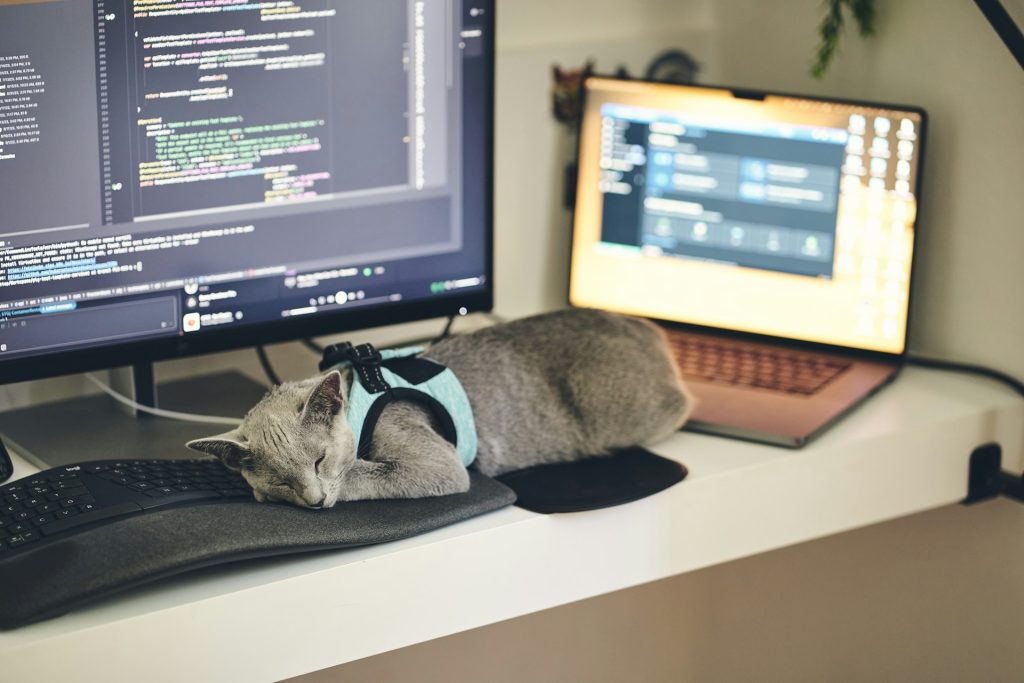
What’s the best way to stop my cat from walking on my keyboard?
Cats crave attention and warmth, so place a cozy bed or heated pad near—but not on—your desk. When your cat settles there, reward them with praise or a gentle pet. They’ll soon learn that your keyboard isn’t the best napping spot anymore.
Should I feel guilty for ignoring my pet while working?
Not at all—structured alone time builds independence and confidence. As long as your pet’s needs for food, exercise, and attention are met, quiet downtime during work hours helps them develop calm habits that benefit both of you.
How many breaks should I give my pet during the workday?
Most pets do best with 3–4 short breaks: morning exercise, midday potty or play, an afternoon mental-stimulation session, and evening wind-down. Consistent structure keeps energy balanced and prevents behavior problems in small apartments.