
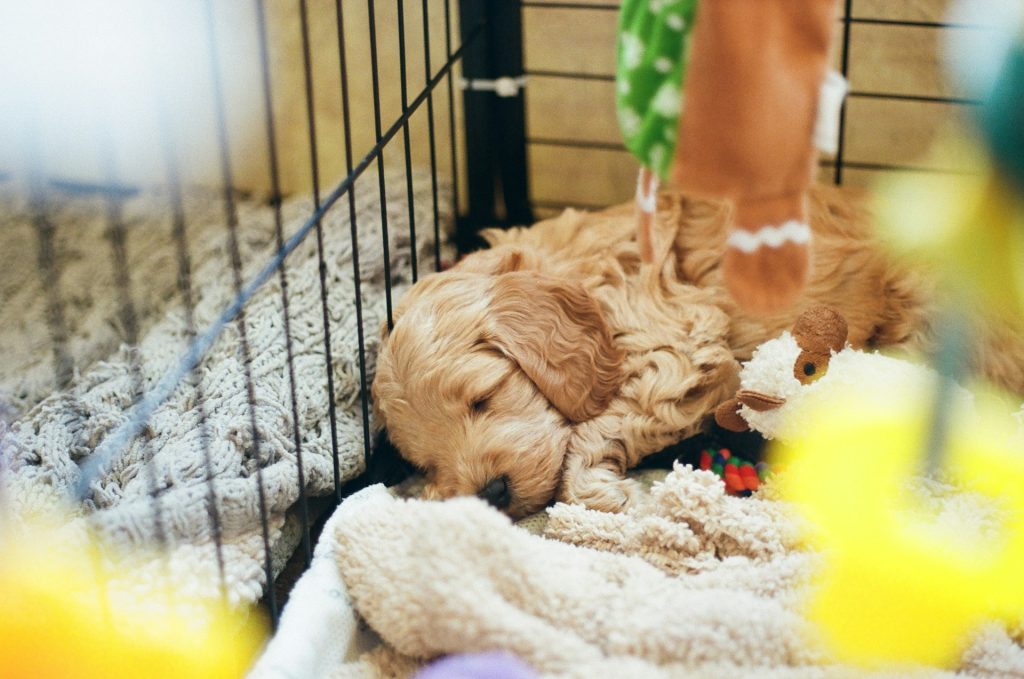
15 Safe Dog Crate Alternatives for Puppies in Apartments
Finding reliable dog crate alternatives for puppies in apartments can feel overwhelming when you’re balancing house training, chewing, and limited square footage. Puppies require structure, but traditional crates aren’t always the only solution — especially in compact apartment layouts.
While crate training remains valuable for many young dogs, some apartment owners look for dog crate alternatives for puppies in apartments that provide safety without overwhelming small living spaces.
The key is creating controlled boundaries that protect your puppy, your belongings, and your lease agreement while supporting healthy development.
Why Puppies Need Structured Containment in Apartments
Puppies explore the world with their mouths. In apartments, that exploration can quickly lead to damaged baseboards, chewed furniture, and unsafe ingestion risks.
Veterinary guidance from VCA Animal Hospitals explains that teething and chewing are normal developmental stages that require safe outlets rather than punishment.
That’s why dog crate alternatives for puppies in apartments must balance supervision, safety, and structured freedom.
Why Traditional Crates Don’t Always Work for Puppies in Apartments
While crates remain a popular training tool, they are not always the most practical solution in compact living spaces. In small apartments, full-size crates can dominate floor plans, restrict movement pathways, and visually overwhelm studio layouts.
That’s why many owners explore dog crate alternatives for puppies in apartments that maintain structure without consuming valuable square footage. Playpens, gated sections, and designated safe rooms often provide similar containment benefits while fitting more naturally into apartment environments.
Puppies also grow quickly. A crate that fits at eight weeks may become restrictive within a few months, especially in apartments where resizing equipment is inconvenient. Choosing adaptable dog crate alternatives for puppies in apartments allows owners to scale containment as their dog develops.
Additionally, noise can echo more noticeably in smaller living spaces. Some puppies vocalize heavily when confined in crates, which can create stress for both owners and neighbors. Structured alternatives sometimes reduce that intensity by offering slightly more movement and environmental comfort.
The goal is not to reject crate training entirely, but to recognize that dog crate alternatives for puppies in apartments can provide flexible containment that aligns better with modern apartment layouts.
1. Use a Reinforced Puppy Playpen Instead of a Crate
One of the most practical dog crate alternatives for puppies in apartments is a reinforced playpen. Unlike traditional crates, playpens provide more movement while still maintaining clear boundaries.
For apartment dwellers, anchoring the pen against a wall preserves walking space and prevents shifting on hardwood or laminate floors.

2. Create a Fully Puppy-Proofed Safe Room
For some apartment layouts, dedicating a small room or enclosed section works better than installing a bulky crate. Safe-room setups function as effective dog crate alternatives for puppies in apartments by eliminating hazards while allowing limited movement.
Remove cords, secure cleaning supplies, block access to trash bins, and protect baseboards to minimize destructive chewing during teething stages.
3. Use Gated Sections to Gradually Increase Freedom
Instead of removing containment entirely, gated sections allow you to expand your puppy’s space over time. These setups strengthen dog crate alternatives for puppies in apartments by promoting structured independence.
This step-by-step progression mirrors strategies used in crate training apartment dogs, where consistency builds long-term reliability.
4. Combine Containment With Approved Chew Outlets
Puppies chew as part of development. Pairing dog crate alternatives for puppies in apartments with safe chew toys reduces damage and frustration.
Offering appropriate chew items inside pens or gated areas helps redirect teething energy away from furniture and baseboards.
5. Use Compact, Low-Profile Containment in Studio Apartments
In studio apartments, containment must fit seamlessly into daily living. Compact panels, wall-mounted gates, and low-profile pens serve as efficient dog crate alternatives for puppies in apartments without overwhelming the room.
If you’re comparing broader containment systems, reviewing dog crate alternatives for apartments can help you determine which solutions scale best as your puppy grows.
6. Separate Potty Training Zones From Containment Areas
Puppies learn faster when sleeping, play, and potty zones are clearly defined. Creating structured boundaries is one of the most effective dog crate alternatives for puppies in apartments because it reinforces routine without full confinement.
Use washable mats or clearly marked sections so your puppy understands where each activity belongs.
7. Build Calm Pre-Departure Routines Early
Even young puppies can develop early anxiety patterns. Establishing predictable routines strengthens dog crate alternatives for puppies in apartments by preventing stress from forming around your departures.
Keep exits neutral and brief. Over time, calm departures create confidence within structured containment zones.
8. Block Access to Baseboards and Electrical Areas
Apartments often have exposed baseboards, cords, and outlets within easy reach. Adjusting the environment enhances dog crate alternatives for puppies in apartments by reducing temptation rather than relying solely on confinement.
Use cord protectors and furniture placement to prevent dangerous chewing incidents during unsupervised periods.
9. Match Containment Strength to Your Puppy’s Size
Not all puppies remain small. If you’re raising a large-breed puppy, selecting durable dog crate alternatives for puppies in apartments is critical for long-term success.
For additional guidance on durable systems, reviewing dog crate alternatives for large dogs in apartments can help you plan containment that scales as your puppy grows.
10. Gradually Increase Supervised Freedom
As training progresses, expanding supervised freedom reinforces dog crate alternatives for puppies in apartments by building trust instead of relying on permanent confinement.
Short, successful freedom sessions prevent destructive habits from forming while encouraging confidence in small living spaces.
11. Keep Containment Near Your Daily Activity Area
Puppies learn faster when they feel connected to their owners. Positioning containment near your workspace or main living area strengthens dog crate alternatives for puppies in apartments by reducing isolation-related stress.
Especially in small apartments, proximity helps your puppy settle while still respecting boundaries.
12. Avoid Using Containment as Punishment
Dog crate alternatives for puppies in apartments should never function as time-outs for misbehavior. Associating containment with punishment can create anxiety and reduce long-term effectiveness.
Keep all containment zones neutral and positive to build confidence instead of stress.
13. Choose Systems That Scale as Your Puppy Grows
Puppies grow quickly. Selecting adaptable dog crate alternatives for puppies in apartments prevents the need to replace equipment every few months.
Expandable pens and modular gates often work better long-term than size-specific crates.
14. Watch for Early Signs of Separation Anxiety
Some puppies show distress when left alone even at a young age. Incorporating calm routines early strengthens dog crate alternatives for puppies in apartments by preventing full anxiety development.
If emotional distress becomes persistent, reviewing dog crate alternatives for separation anxiety in apartments can provide additional guidance tailored to anxiety-specific containment.
15. Combine Structured Freedom With Consistent Training
The most successful dog crate alternatives for puppies in apartments pair environmental boundaries with daily training. Structure without training leads to confusion, while training without structure can lead to damage.
Thoughtful containment helps young dogs learn appropriate behavior while protecting your apartment from preventable destruction.
When Dog Crate Alternatives for Puppies in Apartments Work Best
Dog crate alternatives for puppies in apartments work best when supervision, routine, and consistency remain strong. Containment alone will not solve behavioral issues, but structured environments significantly reduce risk.
In many apartment situations, flexible containment systems provide a practical balance between safety and space efficiency.
Final Thoughts on Dog Crate Alternatives for Puppies in Apartments
Raising a puppy in an apartment requires patience, preparation, and thoughtful containment choices. The right dog crate alternatives for puppies in apartments can protect your space while supporting healthy development.
With structured routines, appropriate chew outlets, and adaptable boundaries, many apartment owners successfully guide puppies through early training stages without relying exclusively on traditional crates.
Frequently Asked Questions
Are dog crate alternatives for puppies in apartments safe?
Dog crate alternatives for puppies in apartments can be very safe when properly puppy-proofed and supervised. Reinforced playpens, gated sections, and designated safe rooms help prevent chewing hazards while allowing controlled movement. The key is eliminating cords, toxic plants, and small ingestible objects before leaving your puppy unattended.
What is the best dog crate alternative for puppies in apartments?
The best dog crate alternatives for puppies in apartments often include anchored exercise pens or gated room sections. These systems provide more flexibility than traditional crates while maintaining structure during house training and teething stages.
Can dog crate alternatives for puppies in apartments help with house training?
Yes, dog crate alternatives for puppies in apartments can support house training when paired with consistent scheduling and supervision. Clear boundaries help puppies learn where to sleep, play, and eliminate, even without full crate confinement.
Should I avoid crate training completely when using dog crate alternatives for puppies in apartments?
Not necessarily. Many owners combine crate training with dog crate alternatives for puppies in apartments to build flexibility. Structured crate exposure alongside gated containment can provide long-term reliability without relying exclusively on one system.
Do dog crate alternatives for puppies in apartments work for high-energy breeds?
Dog crate alternatives for puppies in apartments can work for high-energy breeds when containment strength matches growth rate and activity level. Durable panels, anchored gates, and daily enrichment help prevent destructive behavior in compact living environments.

Join the Busy Pet Parent
Newsletter!
Get easy routines, time-saving tips, and the latest gear reviews—delivered straight to your inbox.
Perfect for busy pet owners, apartment dwellers, and anyone who wants a happy, healthy companion (without the stress).
- Exclusive guides & checklists
- Product recommendations & deals
- No spam—unsubscribe anytime!
More Articles You Might Like
15 Brilliant Fish Tank Apartment Setup Tips (Quiet, Clean, and Stress-Free)
Read more

13 Genius Ways to Pet Proof a Rental Without Losing Your Security Deposit
Read more
15 Best Apartment Dogs for Seniors Who Want Loyal Companions
Read more
5 Indoor Games to Keep Your Dog Happy (Even on Rainy Days)
Read more