
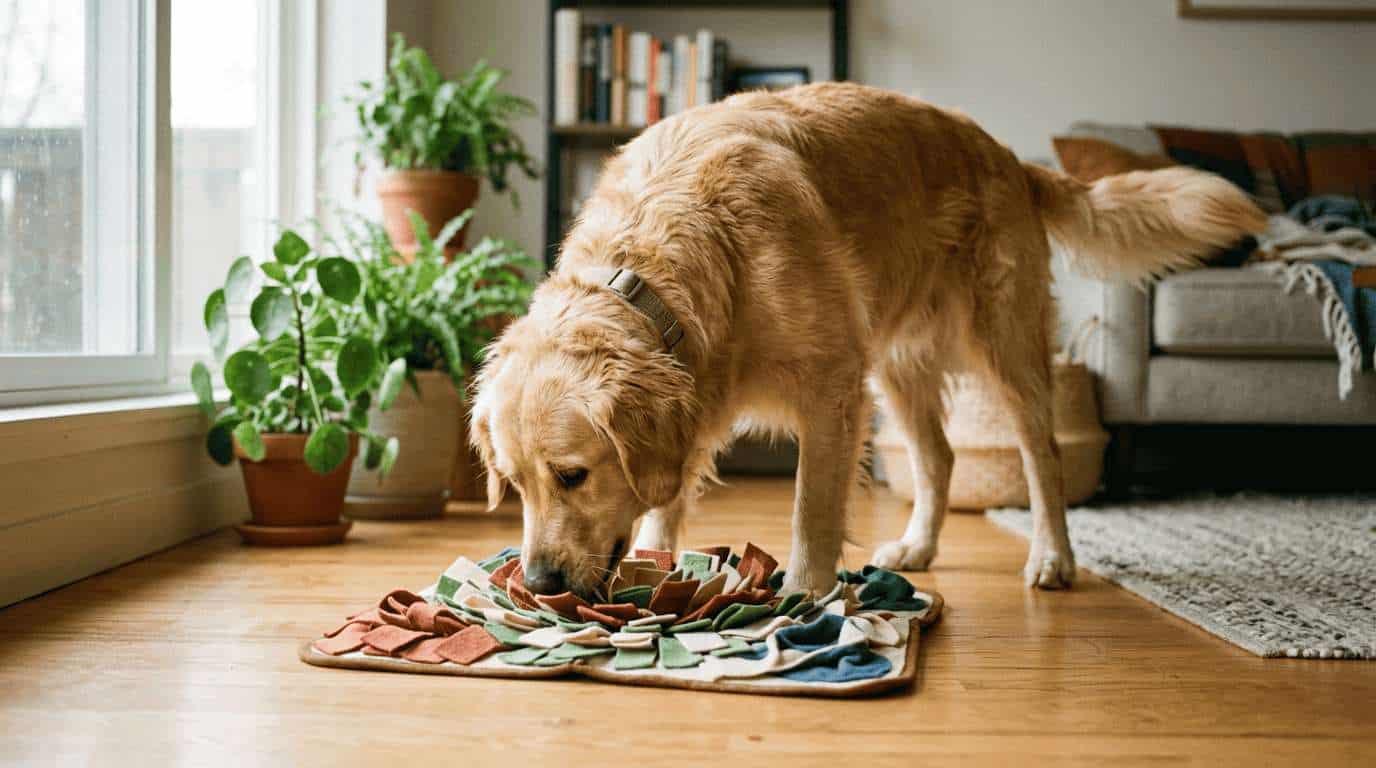
What Is Dog Enrichment and Why Does It Matter?
A tired dog is a good dog — but physical exercise alone isn’t enough. Mental fatigue is just as important, and most apartment dogs in 2026 are chronically under-stimulated mentally even when they get their daily walks. According to the American Kennel Club (AKC), enrichment activities that engage a dog’s brain and natural instincts are one of the most powerful tools available for reducing anxiety, destructive behavior, and excessive barking.
The science behind this is straightforward: dogs evolved as working animals — hunting, herding, tracking, guarding. Their brains are wired for problem-solving and sensory engagement. When that wiring goes unused, they find their own outlets: chewing furniture, barking at nothing, digging at carpet, pacing. Enrichment redirects that energy productively.
A 2019 study from the University of Agricultural Sciences in Sweden found that dogs who engaged in nose-work activities showed significantly lower cortisol levels and demonstrated more “optimistic” judgment bias — essentially, enriched dogs were measurably happier. The good news for busy owners: the same study found that even short, frequent enrichment sessions (10–15 minutes) produced measurable benefits.
What Types of Dog Enrichment Are Most Effective?
Nose Work and Scent Games
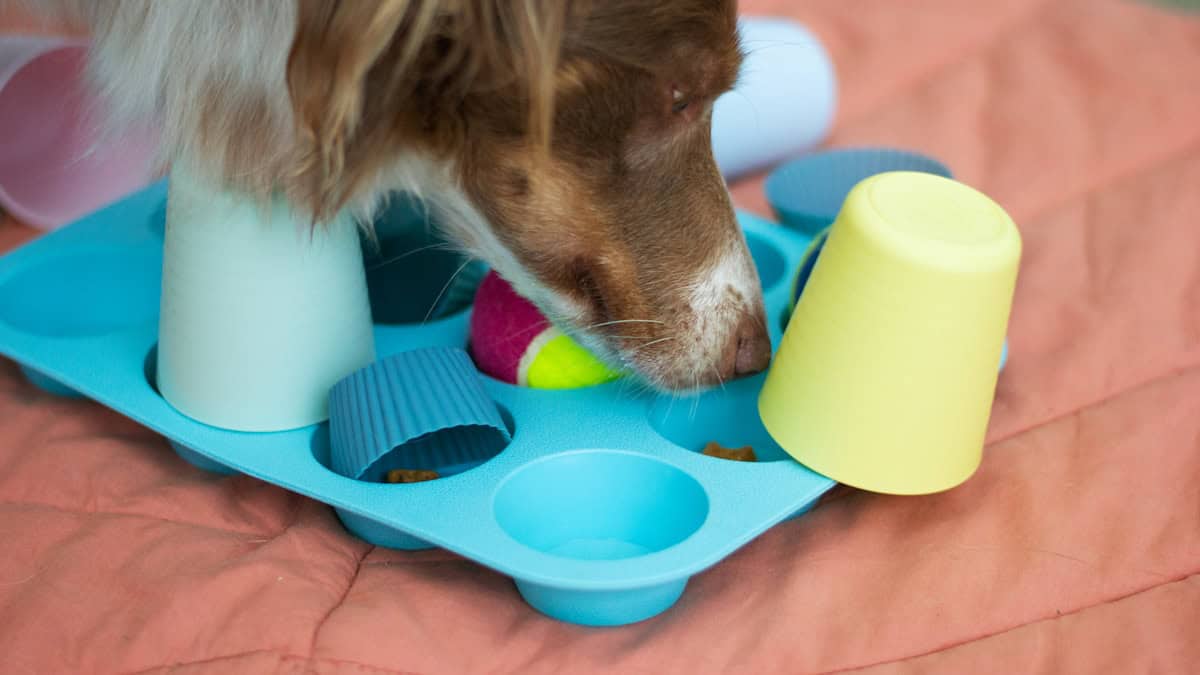
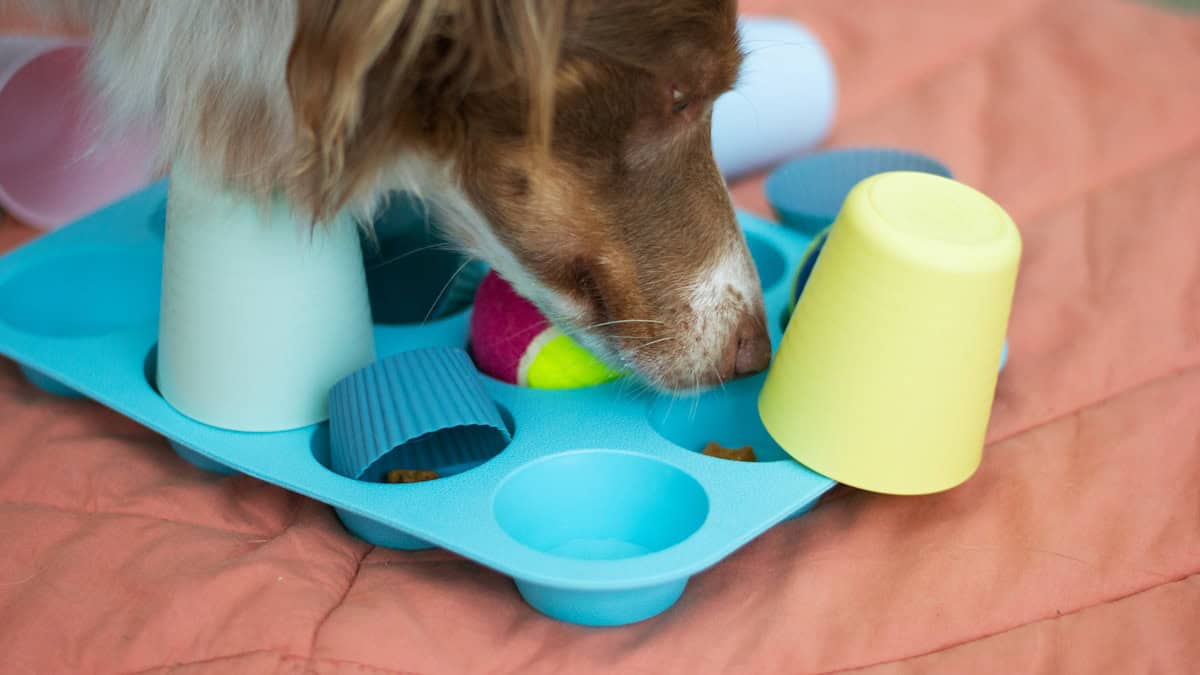
A dog’s nose contains up to 300 million olfactory receptors compared to about 6 million in humans — their sense of smell is their primary way of experiencing the world. Scent-based enrichment is therefore the most naturally satisfying type for almost any dog. Simple nose-work games don’t require equipment: hide small pieces of kibble around the apartment and tell your dog to “find it.” Graduate to muffin tin puzzles (kibble under tennis balls in each cup), snuffle mats, and eventually formal nose-work hides in boxes.
For busy owners, scatter feeding at mealtime — spreading your dog’s kibble across a snuffle mat or on the grass during a walk — turns a boring 30-second meal into a 10-minute nose-work session at zero additional time cost.
Food Puzzles and Slow Feeders
Food puzzles are the gateway enrichment tool for most owners because they’re easy, inexpensive, and dogs love them immediately. The range runs from basic rubber Kongs stuffed with wet food (frozen overnight for a longer challenge) to complex multi-step slider puzzles that require dogs to move pieces in sequence to uncover treats.
According to PetMD, using puzzle feeders at every meal — rather than just as occasional treats — has been shown to reduce food-related anxiety, slow eating speed (reducing bloat risk), and improve problem-solving confidence in dogs. Browse top-rated dog puzzle feeders →
Start with Level 1 puzzles and only increase difficulty once your dog solves them confidently. A puzzle that’s too hard leads to frustration, not enrichment.
Chewing and Licking Activities
Chewing and licking both activate the parasympathetic nervous system — they’re physically calming behaviors for dogs in the same way that humans find repetitive actions like knitting or walking meditative. Providing appropriate chew outlets (bully sticks, yak chews, raw bones, antlers matched to your dog’s chew strength) prevents destructive chewing while delivering genuine stress relief.
Lick mats — flat silicone mats with grooves that hold soft foods like peanut butter, yogurt, or pureed sweet potato — are particularly effective for anxious dogs and can be used strategically during nail trims, grooming sessions, or when visitors arrive.
Training Games and Learning New Skills
Learning new things is cognitively demanding and highly satisfying for dogs. The ASPCA recommends 5–10 minute daily training micro-sessions as a core part of any enrichment routine. You don’t need to work on obedience skills — trick training (spin, bow, wave, tidy up toys) is just as effective for mental stimulation.
The key is keeping sessions short (under 10 minutes), ending on a success, and varying what you work on to keep it novel. “Matwork” — teaching a dog a solid settle/go-to-mat behavior — is one of the most practically useful enrichment training activities for apartment dogs because it creates a self-regulation tool your dog can use independently.
Social Enrichment
Dogs are social animals, and meaningful interaction with people and other dogs is itself a form of enrichment. Structured play sessions, doggy daycare, leashed greetings with familiar dogs, and simply giving your dog your focused attention for 10 minutes (not passive “sitting in the same room” attention, but actual interaction) all count.
For dogs who enjoy it, dog sports like agility, flyball, or rally obedience classes provide both social and cognitive enrichment in one activity. Even beginner classes at your local training facility are highly stimulating for most dogs.
Environmental Enrichment
This is often overlooked: varying your dog’s environment is enrichment in itself. Different walking routes expose your dog to new smells — a “sniff walk” where you let your dog lead and sniff as long as they want is more enriching than a structured 30-minute march around the block. Rotating toys (put half away and swap them out weekly) keeps novelty high. Letting your dog watch birds from a window perch provides visual enrichment. Even changing where you put their food bowl counts.
How Much Enrichment Does a Dog Actually Need Per Day?
The answer depends on breed, age, and individual temperament — but for most apartment dogs in 2026, the following guidelines work well:
- Low-energy/senior dogs: 15–20 minutes of structured enrichment daily (scatter feeding + one puzzle session)
- Medium-energy adult dogs: 30–45 minutes across multiple short sessions
- High-drive working breeds: 60+ minutes, incorporating nose work, training games, and physical exercise together
The “1 hour of brain work equals 2 hours of physical exercise” principle is frequently cited by trainers and backed by the cortisol research mentioned above. A 15-minute sniff walk + lunchtime puzzle feeder + an evening training session can exhaust a moderate-energy dog more effectively than an extra-long evening run.
What Are Easy Enrichment Ideas for Busy People?
The barrier for most owners isn’t knowledge — it’s time. Here are zero-prep and low-prep enrichment options that fit into any schedule:
- Scatter feeding: Spread breakfast kibble on a snuffle mat or the yard. 0 extra time.
- Frozen Kong: Stuff and freeze the night before. Lasts 20–30 minutes during your morning meeting.
- Lick mat: Smear with peanut butter. Done in 30 seconds, lasts 10–15 minutes.
- Hide and seek: Hide kibble or a toy in 3 spots while your dog watches you, then release with “find it.”
- Name that toy: Teach your dog the names of 2–3 toys. Ask them to fetch a specific one. 5-minute game, highly stimulating.
- Box investigation: Put a cardboard box with a few treats hidden inside. Let them problem-solve.
The goal is to replace passive time (dog lying on the floor while you work) with active engagement time, even in short bursts throughout the day. Browse snuffle mats and enrichment tools →
Key Takeaways
- Mental enrichment is as important as physical exercise for a dog’s wellbeing
- Nose work is the most naturally satisfying enrichment for almost all dogs
- 15 minutes of structured enrichment per day produces measurable stress reduction
- Puzzle feeders at every meal combine nutrition and enrichment with no extra time
- Training games, chew activities, and environmental variation all count as enrichment
- Rotate toys weekly to maintain novelty without buying new ones
- Sniff walks — letting the dog lead and sniff — are more enriching than structured marches
Frequently Asked Questions
Can too much enrichment stress a dog out?
Yes — enrichment that’s too difficult or too prolonged can cause frustration rather than satisfaction. Always end on a success, keep sessions short (under 15 minutes for most activities), and watch for signs of stress (lip licking, yawning, turning away). If your dog walks away from a puzzle mid-session, it’s either too hard or they’re done for now.
What’s the best first enrichment toy to buy?
A rubber Kong (size-appropriate for your dog) is the most versatile and durable option. Stuff it with wet food, peanut butter, or banana and freeze overnight. It’s appropriate for dogs of all sizes, ages, and experience levels.
My dog isn’t interested in puzzle feeders — what should I do?
Start easier. If the puzzle requires moving pieces, try something where the food is simply scattered or slightly hidden. Many dogs need to build “enrichment confidence” — they’ve never been asked to work for food before and find the concept confusing. Encourage with cheerful voice and hand guidance until they get their first win.
Is enrichment different for senior dogs?
Senior dogs need enrichment too — possibly more than younger dogs, since they’re often less physically active. But difficulty level should be reduced. Sniff walks, lick mats, gentle puzzle feeders, and short training games are ideal. Avoid high-impact physical enrichment like tug games for dogs with joint issues.
Can enrichment replace daily walks?
No — walks provide physical exercise, social exposure, and environmental enrichment that can’t be fully replicated indoors. But enrichment can reduce the length of walks needed and dramatically improve behavior on rest days when walks are shorter than usual.
How do I know if my dog is getting enough enrichment?
Signs of under-enrichment: destructive behavior, excessive barking, hyperactivity indoors, attention-seeking, and restlessness. Signs of adequate enrichment: relaxed resting between activity periods, engaged play, good sleep quality, and absence of destructive behaviors.
Key Takeaways: Dog Enrichment for Busy Apartment Owners in 2026
Enrichment does not have to be complicated or time-consuming. The biggest shift is mindset: every meal, every walk, and every short training break is an opportunity to satisfy your dog’s natural instincts. According to the ASPCA, consistent low-effort enrichment built into your daily routine outperforms sporadic high-effort sessions every time.
- Start simple: Scatter feeding and frozen Kongs require zero training and five minutes of prep.
- Sniff walks count: A 20-minute sniff walk is more mentally tiring than a 45-minute brisk march — let your dog lead their nose.
- Rotate, don’t hoard: Keep half your dog’s toys in storage and swap them weekly to maintain novelty without spending money.
- Layer activities: Combine enrichment types — a lick mat during a training micro-session, or a puzzle feeder after a sniff walk — to compound the benefit.
- Track behavior, not time: You’re doing enough when your dog rests calmly between sessions and destructive behaviors drop off. That’s your real metric.
Need product ideas? Browse top-rated dog enrichment toys on Amazon →
What is the difference between enrichment and exercise for dogs?
Exercise primarily addresses physical energy — it tires muscles and satisfies a dog’s need to move. Enrichment targets cognitive and sensory stimulation — it satisfies instincts for sniffing, problem-solving, and social engagement. Both are necessary. The AKC notes that dogs deprived of mental stimulation often remain restless and anxious even after adequate physical exercise, which is why enrichment is the missing piece for many apartment dogs whose behavior problems persist despite daily walks.