
11 Pet Addendum Red Flags That Could Cost You Thousands (2026 Guide)

The most dangerous pet addendum red flags include unlimited damage liability clauses, non-refundable “deposits,” automatic eviction triggers, and vague language about what counts as a pet violation. Spotting these before you sign can save you thousands of dollars and protect your housing security.
Why Pet Addendums Can Be Financial Traps?
You found the perfect apartment. The landlord allows pets. You’re ready to sign. But buried in that pet addendum could be clauses that expose you to thousands of dollars in unexpected costs — or even sudden eviction.
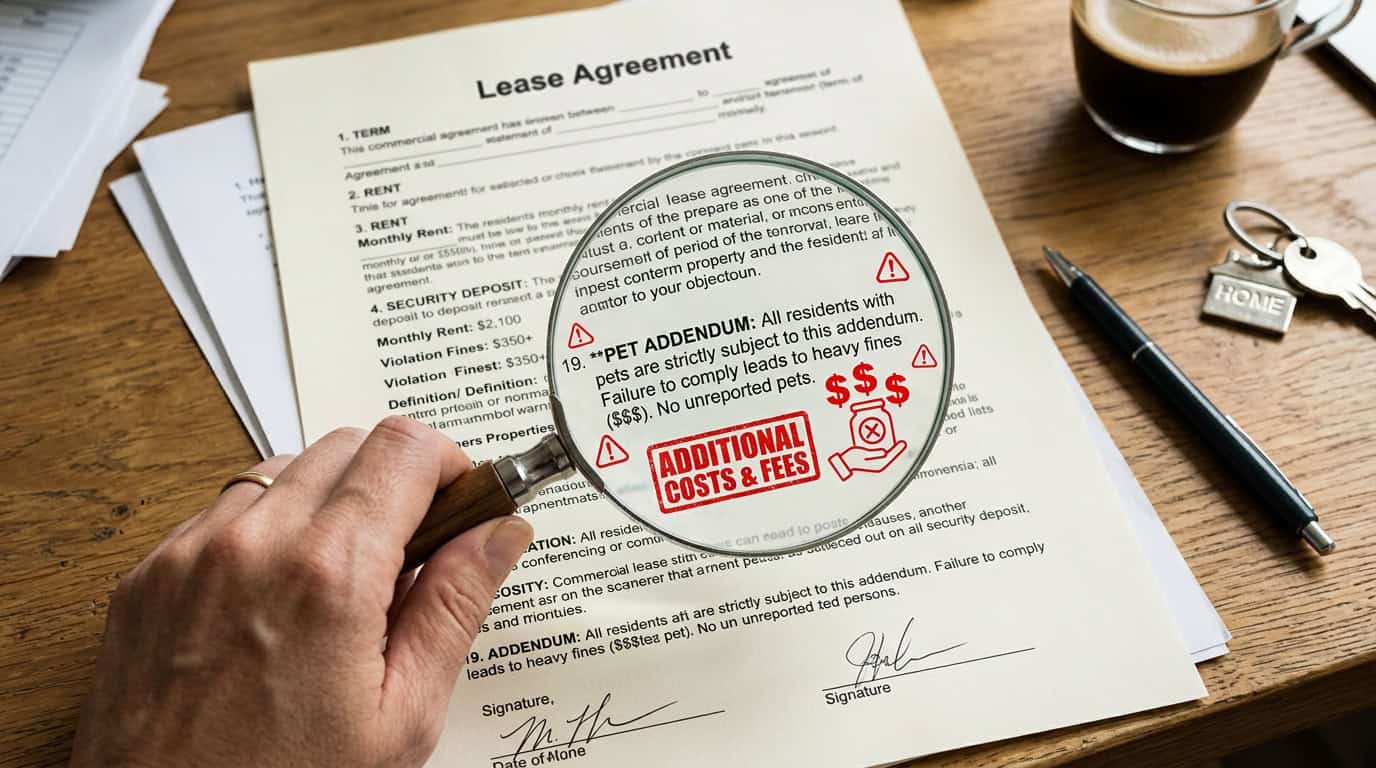
Pet addendums are supplemental agreements attached to your main lease that specifically govern your pet’s tenancy. Unlike standard lease terms, these addendums are often written hastily, lack legal review, and can contain provisions that heavily favor landlords. Many renters sign them without reading carefully, only to discover the problems months later.
According to research by HUD’s Fair Housing office, disputes over pet-related lease terms are among the most common tenant-landlord conflicts. Understanding what you’re agreeing to before you sign is critical.
In this guide, we’ll walk through 11 specific red flags to look for — and what to do if you find them. We’ve also covered the basics in our complete pet addendum guide if you need a foundation first.
What Should You Know About Red Flag #1?
One of the most dangerous clauses you’ll encounter reads something like: “Tenant is responsible for all damage caused by pet, including but not limited to full replacement costs of carpet, flooring, walls, and fixtures.”
The problem? “Full replacement cost” can far exceed actual damage. If your dog scratches a hardwood floor that’s 10 years old, you shouldn’t owe the full cost of new hardwood throughout the apartment. Most state laws require landlords to charge only for actual damage beyond normal wear and tear, depreciated appropriately. But if you’ve signed a clause agreeing to “full replacement,” you may find yourself in an expensive dispute.
What to do: Negotiate to add “beyond normal wear and tear, depreciated for age” language. If the landlord refuses, that’s a significant warning sign about how they handle disputes.
What Should You Know About Red Flag #2?
A pet deposit is supposed to be refundable — that’s what makes it a deposit. But many landlords label non-refundable fees as “deposits” to make them sound standard.
Read carefully: does the addendum say the deposit is refundable? Does it specify conditions for full or partial return? If it says “non-refundable pet deposit,” you’re actually paying a fee disguised as a deposit. This is worth negotiating hard on — a $500 “deposit” you’ll never see again is just $500 added to your move-in costs.
For more context on how pet deposits and pet rent typically work, see our guide on pet deposit and pet rent fees explained.
What Should You Know About Red Flag #3?
Some addendums include clauses like: “Any noise complaint involving tenant’s pet shall be grounds for immediate lease termination.”
This is extraordinarily dangerous. One noise complaint — even an unfounded one from a difficult neighbor — could theoretically give your landlord justification to terminate your lease. In practice, eviction processes have legal protections, but signing such a clause weakens your position significantly and creates leverage for a bad-faith landlord.
What to negotiate: Any eviction trigger should require documented, repeated violations with written warnings, and a cure period (typically 3–7 days to resolve the issue).
What Should You Know About Red Flag #4?
Vague breed and weight restrictions are a trap. An addendum that says “no aggressive breeds” without defining which breeds qualify is a problem waiting to happen. Your landlord can later claim your dog — a breed you’ve had for years — is now classified as “aggressive” and use that as grounds for removal.
Similarly, weight limits like “pets must be under 25 lbs” without clarification of when the weight is measured (move-in? annually?) can become issues as your dog grows.
What to ask for: Specific breed names if there are restrictions, and a stated weight measured at the time of the original pet approval, not ongoing.
What Should You Know About Red Flag #5?
Some addendums grant landlords the right to conduct surprise inspections specifically related to your pet — outside the standard notice requirements of state law. This is legally questionable in most states (which require 24–48 hours notice for non-emergency entry) and is a sign that the addendum was written without proper legal review.
If you see language like “landlord may enter at any time to inspect pet conditions,” this overrides your privacy rights and should be crossed out and initialed by both parties before signing.
What Should You Know About Red Flag #6?
Pet rent (a monthly fee on top of base rent for having a pet) is increasingly common. But some addendums allow the landlord to increase pet rent at any time with little or no notice — even mid-lease.
Your main lease likely has protections against mid-lease rent increases. But if the pet addendum is structured separately, that protection might not apply. Before signing, confirm that any pet rent increase requires the same notice period as base rent increases.
What Should You Know About Red Flag #7?
Clauses that require “continued landlord approval” for your pet’s presence — without defining what approval means or what criteria could lead to disapproval — give landlords broad discretionary power. Your pet is approved today. Next month, for reasons never explained, that approval could theoretically be withdrawn.
If you see this language, ask for specifics: What would cause approval to be revoked? What notice would you receive? What opportunity would you have to respond?
Red Flag #8: Liability for Neighbor or Guest Pet Incidents
Some addendums attempt to hold you liable for incidents involving other pets — for example, if a neighbor’s dog injures your dog and causes damage, or if a guest brings a pet that causes an issue. These clauses are often unenforceable but can still result in costly disputes.
Review any language about “pets on the premises” carefully. You should only be responsible for your own registered, approved pets.
Red Flag #9: Clauses That Survive Lease Termination
This one catches people off guard: some pet addendums include language stating that certain obligations “survive lease termination.” This can mean that even after you move out, the landlord claims you owe for ongoing pet-related issues. While some survival clauses are legitimate (damage liability for the period you lived there), any clause that creates open-ended post-tenancy obligations is a serious red flag.
Related: Before you even get to the addendum stage, make sure you know the right questions to ask your landlord about pets during the application process.

Red Flag #10: No Dispute Resolution Process
A well-drafted addendum should include a clear process for resolving disagreements — written notices, response timelines, and steps before legal action. If the addendum you’re reviewing is entirely one-sided (landlord decides, period), that’s a red flag about how disputes will be handled if things go wrong.
According to Nolo’s legal resources, many tenant-landlord disputes escalate precisely because the lease or addendum lacks a defined resolution pathway.
Red Flag #11: The Addendum Contradicts the Main Lease
Finally — and this is critical — read your main lease and your pet addendum side by side. Do they contradict each other? For example, your main lease might say deposits are fully refundable within 30 days of move-out, but the pet addendum says the pet deposit is non-refundable. Contradictions create ambiguity, and ambiguity in legal documents often gets resolved in court — at your expense.
Ask your landlord to clarify in writing which document controls in the event of a conflict. Better yet, have the contradiction corrected before signing.
What to Do If You Find Red Flags
Finding red flags doesn’t automatically mean you should walk away — but it does mean you need to negotiate. Here’s your action plan:
- Mark every problematic clause with a note about your concern
- Put negotiation requests in writing (email creates a paper trail)
- Ask for specific definitions where language is vague
- Request changes be initialed by both parties on the signed copy
- Consult a tenant’s rights attorney if the stakes are high (large deposit, expensive apartment)
If a landlord refuses to negotiate any of the major red flags above — especially unlimited liability or automatic eviction triggers — seriously consider whether this is the right rental. A landlord who won’t budge on these in writing is showing you how they’ll handle problems later.
For a complete walkthrough of what a good pet addendum looks like, see our pet addendum explained guide. And if you’re preparing to win over a landlord from the start, our article on legally protecting yourself when renting with pets covers exactly that.
Protecting Yourself Before and After You Sign
Beyond reading the addendum carefully, there are practical steps to protect yourself throughout your tenancy:
- Do a move-in inspection with photos and video dated before your pet enters the unit. Use our apartment pet inspection checklist as a guide.
- Keep a pet behavior log — if noise complaints arise, documentation of your proactive management matters.
- Invest in pet-safe odor eliminators and damage prevention. Products like enzyme-based pet odor eliminators and scratch protectors for furniture can minimize actual damage — reducing what a landlord can legitimately claim.
- Document any landlord communications about your pet in writing.
- Know your state’s tenant rights — many clauses in pet addendums are simply unenforceable under local law.
Frequently Asked Questions
What is a pet addendum red flag?
A pet addendum red flag is a clause that is vague, overly broad, or financially dangerous — such as unlimited damage liability, non-refundable fees labeled as deposits, or clauses that allow eviction for minor infractions without a cure period.
Can a landlord charge unlimited pet damage?
In most U.S. states, landlords can only charge for actual documented damages beyond normal wear and tear. Clauses claiming “unlimited” liability may not be fully enforceable, but they can still lead to costly legal disputes and should be negotiated out before signing.
What should a fair pet addendum include?
A fair pet addendum should clearly list the specific pets allowed (breed, weight, species), a defined refundable deposit amount, monthly pet rent if applicable, your responsibilities, and a clear process for resolving disputes with notice periods.
Can a landlord change pet rules mid-lease?
Generally no — once a lease is signed, both parties are bound by its terms. However, some poorly written addendums include clauses allowing rule modifications with notice. Always check for these before signing.
What if I already signed a bad pet addendum?
Document everything, communicate with your landlord in writing, and consult a tenant’s rights attorney in your state. Many unfair clauses are unenforceable under local tenant protection laws, and knowing your rights is your best defense.