
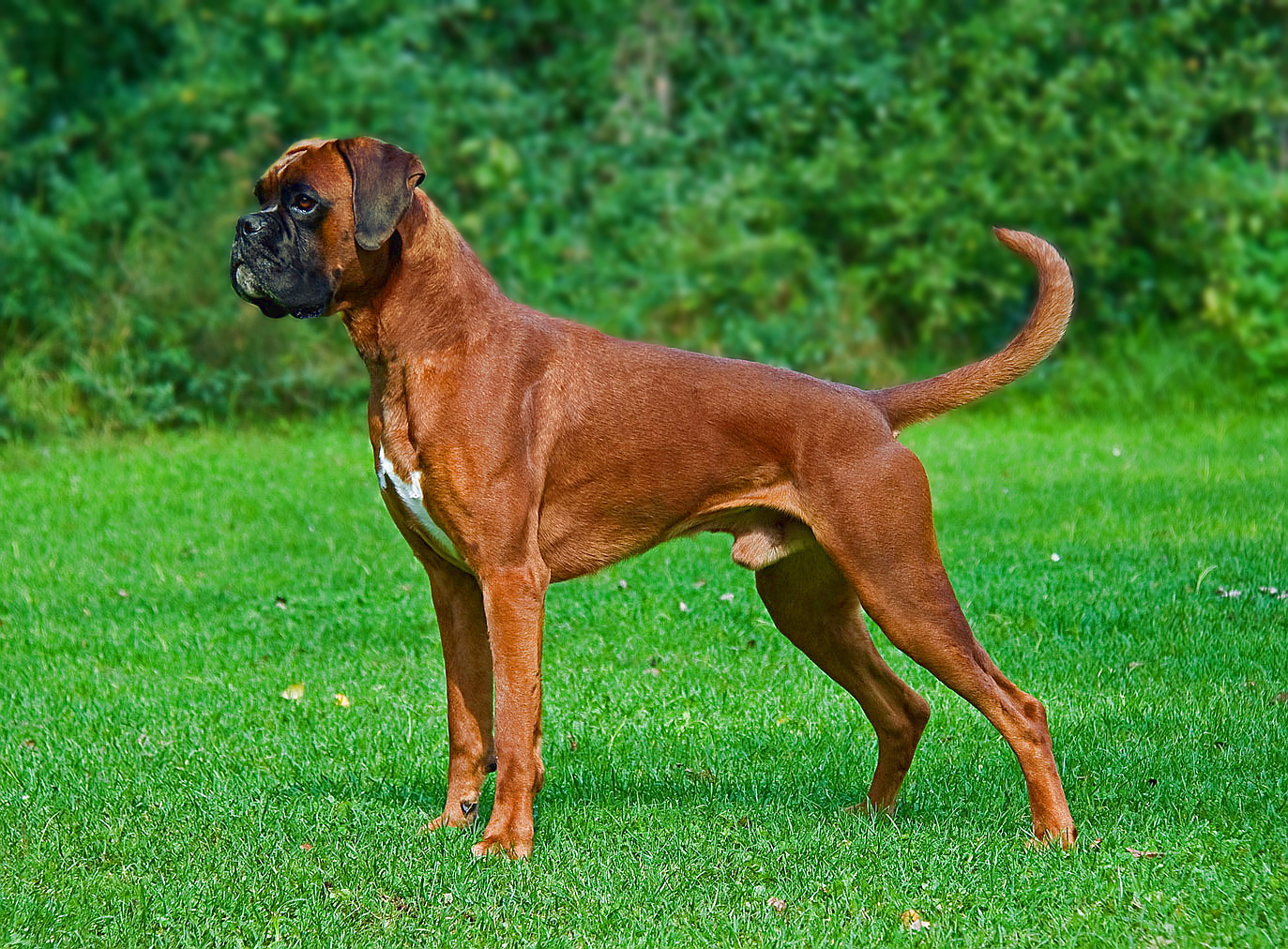
The Boxer is a beloved Working breed with roots in Germany. Known for being highly responsive to training; they excel in obedience, agility, and trick work, this medium-large dog makes a wonderful companion for the right household. With a lifespan of 10-12 years, the Boxer is a long-term commitment that rewards owners who match their lifestyle to the breed’s needs.
Breed Overview
| Characteristic | Details |
|---|---|
| Group | Working |
| Size | Medium-Large |
| Energy Level | High |
| Shedding | Low |
| Grooming Needs | Low |
| Trainability | High |
| Lifespan | 10-12 years |
| Origin | Germany |
Breed History & Origins
The Boxer was developed in Germany in the late 19th century, descended primarily from two now-extinct German breeds: the Bullenbeisser (bull biter) and the Bärenbeiszer (bear biter). These were large, powerful hunting dogs used to hold large game — wild boar, bison, and bear — until hunters arrived. As these types of hunts declined, German breeders crossed the Bullenbeisser with English Bulldogs to create a new breed suited to be a butcher’s dog, cattle herder, police dog, and companion.
The first Boxer club was founded in Munich in 1895, and the breed standard was established shortly after. Boxers served with distinction in both World Wars — used as messenger dogs, pack carriers, attack dogs, and guard dogs — and their reputation as loyal, trainable working dogs spread internationally. American soldiers returning from Europe after World War II brought Boxers home, sparking enormous popularity in the United States. The AKC recognized the Boxer in 1904. Today, Boxers consistently rank among the top ten most popular breeds in the United States, celebrated for their playful, exuberant personality, their fierce protectiveness of family, and their remarkable patience with children — making them one of the great family dogs of the modern era.
Temperament and Personality
As a Working breed, the Boxer brings characteristic traits that define its personality. These dogs are highly responsive to training; they excel in obedience, agility, and trick work, and their high energy level means they thrive in homes that can match their activity requirements. Early socialization is key to raising a well-rounded Boxer that’s confident around new people and environments.
Exercise and Activity Needs
The Boxer needs 60–90 minutes of daily exercise to stay physically and mentally healthy. Working breeds like the Boxer benefit from structured walks, off-leash play, and mentally stimulating activities like puzzle feeders or training sessions. Under-exercised Boxers may develop destructive habits or anxiety. For more inspiration, see our guide to exercise ideas for dogs.
Grooming Requirements
The Boxer has low-maintenance coats requiring only occasional brushing every 1–2 weeks. Their coat produces minimal shedding, making them a good choice for allergy-sensitive households, so having the right tools — a quality slicker brush and deshedding tool — makes a real difference. Regular nail trimming, ear cleaning, and dental care round out a complete grooming routine.
Training Tips
Boxers are highly responsive to training; they excel in obedience, agility, and trick work. Positive reinforcement methods — treats, praise, and play — work best. Keep sessions short (10–15 minutes) and consistent, starting from puppyhood. Avoid harsh corrections, which can undermine trust with this breed. See also: puppy training tips.
Health Considerations
Medium-Large Working dogs like the Boxer are typically prone to size-related conditions. Medium-Large breeds often face joint health considerations, so maintaining a healthy weight is critical. Regular vet checkups (twice yearly after age 7), appropriate vaccinations, and preventive care for dental disease will help your Boxer live a full, healthy life of 10-12 years.
Boxers are also disproportionately affected by cancer, with brain tumors and mast cell tumors occurring at higher rates than average. Aortic stenosis (narrowing of the aortic valve) is a serious cardiac condition in Boxers — a cardiologist exam is recommended before breeding. Spondylosis deformans, a degenerative spinal condition where bony spurs develop along the vertebrae, is common in older Boxers but is often asymptomatic; it can occasionally cause stiffness or discomfort.
Is the Boxer Right for You?
The Boxer is an excellent fit for active owners who can provide 60–90 minutes of daily exercise and appreciate minimal shedding maintenance. They generally good with children when properly socialized. If you can match their energy and grooming needs, the Boxer will reward you with years of loyal companionship. Not sure if your lifestyle fits? Check out our list of best dogs for apartment living for more guidance.
Living With a Boxer
Bringing a Boxer into your home means adapting your lifestyle to meet the breed’s specific needs. Daily routines matter — consistent feeding times, regular exercise, and predictable schedules help dogs feel secure and reduce anxiety-related behaviors. Boxers generally thrive with structure and clear expectations.
Socialization during the puppy period (3-14 weeks) is critical for any dog but particularly important for breeds that can develop strong territorial or protective instincts. Exposing puppies to a wide variety of people, animals, sounds, and environments during this window builds confidence and reduces fear-based reactivity later in life.
Mental stimulation is as important as physical exercise for most breeds. Puzzle feeders, training sessions, scent work, and interactive play keep dogs cognitively engaged and reduce boredom-related behaviors like destructive chewing or excessive barking. Even 10-15 minutes of structured mental work can take the edge off an energetic dog significantly more than an equivalent period of physical exercise alone.
Building a strong relationship with your veterinarian before problems arise gives you an important resource. Annual wellness exams allow vets to catch developing health issues early, and a vet who knows your dog’s baseline makes diagnosing subtle changes much easier. Don’t wait for emergencies — regular proactive healthcare is one of the most important investments you can make in your dog’s long-term quality of life.
Boxer Puppy Care & What to Expect Year One
Boxer puppies are exuberantly physical, bouncy, and deeply affectionate from the very beginning. They greet life with full-body enthusiasm, jumping, spinning, and wriggling in a manner that Boxer owners call the “Boxer wiggle” or “kidney bean” — a full-body wag that is practically a breed trademark. This enthusiasm is wonderful, but it needs direction before your Boxer becomes an adult with the same energy in a 65-pound body.
Training Boxers requires patience with their characteristically playful, distracted nature. They are intelligent dogs that genuinely enjoy learning, but they also have a clown streak that can derail training sessions. Keep sessions short (10 minutes maximum), energetic, and fun — Boxers respond to trainers who match their enthusiasm rather than those who project stern seriousness. Early obedience training, especially “four on the floor” (no jumping) and loose-leash walking, are the highest-priority commands for a Boxer.
Boxers are brachycephalic (short-muzzled), which means they overheat more easily than breeds with longer muzzles. Exercise in cool morning or evening hours during warm months, always provide water during exercise, and learn to recognize early signs of overheating — excessive panting, drooling, wobbly gait, or glazed eyes. Boxers have died from heatstroke because their owners didn’t understand how quickly the breed can overheat.
Boxers are deeply human-oriented and do not thrive when isolated. They are dogs that want to be where their family is, included in daily activities, and present for household life. A Boxer left in the backyard or largely ignored will become unhappy and destructive. Their tremendous loyalty and affection are matched by an equal need for connection — a need that, when met, makes them one of the most rewarding companions imaginable.
Further Reading
- AKC Official Boxer Breed Standard
- VCA Animal Hospitals — Dog Breed Health Guides
- signs your dog is happy — Know the signs your dog is thriving
- signs your dog is bored — Catch boredom before it becomes a problem
Recommended Gear for Boxer Owners
| Product | Why It Works for Boxers |
|---|---|
| Gentle Pin Brush | Lightweight and gentle — perfect for Boxer’s low-maintenance coat |
| Zuke’s Mini Naturals Training Treats | Small, soft, low-calorie — ideal for reward-based training |
| KONG Classic Dog Toy | Durable, vet-recommended, keeps Boxers mentally stimulated |
| Nina Ottosson Interactive Puzzle Toy | Burns mental energy between walks — great for high-energy Boxers |
As an Amazon Associate, Busy Pet Parent earns from qualifying purchases at no extra cost to you.
Frequently Asked Questions
What is the temperament of a Boxer?
Boxers are known for their playful and energetic temperament. They are affectionate, loyal, and protective of their families, making them great companions. They are also known to be good with children and can be quite silly and fun-loving.
How often should I groom my Boxer?
Boxers have short, smooth coats that require minimal grooming. Brushing once a week is usually sufficient to remove loose hair and keep their coat healthy. Regular baths are recommended, but not too frequently to avoid stripping natural oils.
What are common health issues in Boxers?
Boxers are prone to certain health issues, including hip dysplasia, heart conditions (such as cardiomyopathy), and certain cancers. Regular veterinary check-ups and a healthy diet can help monitor and manage these risks.
How much exercise does a Boxer need?
Boxers are high-energy dogs that require at least 1 to 2 hours of exercise each day. This can include walks, playtime, and mental stimulation through training or interactive games to keep them happy and prevent boredom.
Are Boxers easy to train?
Boxers are intelligent and eager to please, which can make them relatively easy to train. However, they can also be stubborn at times, so consistent, positive reinforcement training methods work best. Early socialization and obedience training are recommended.