
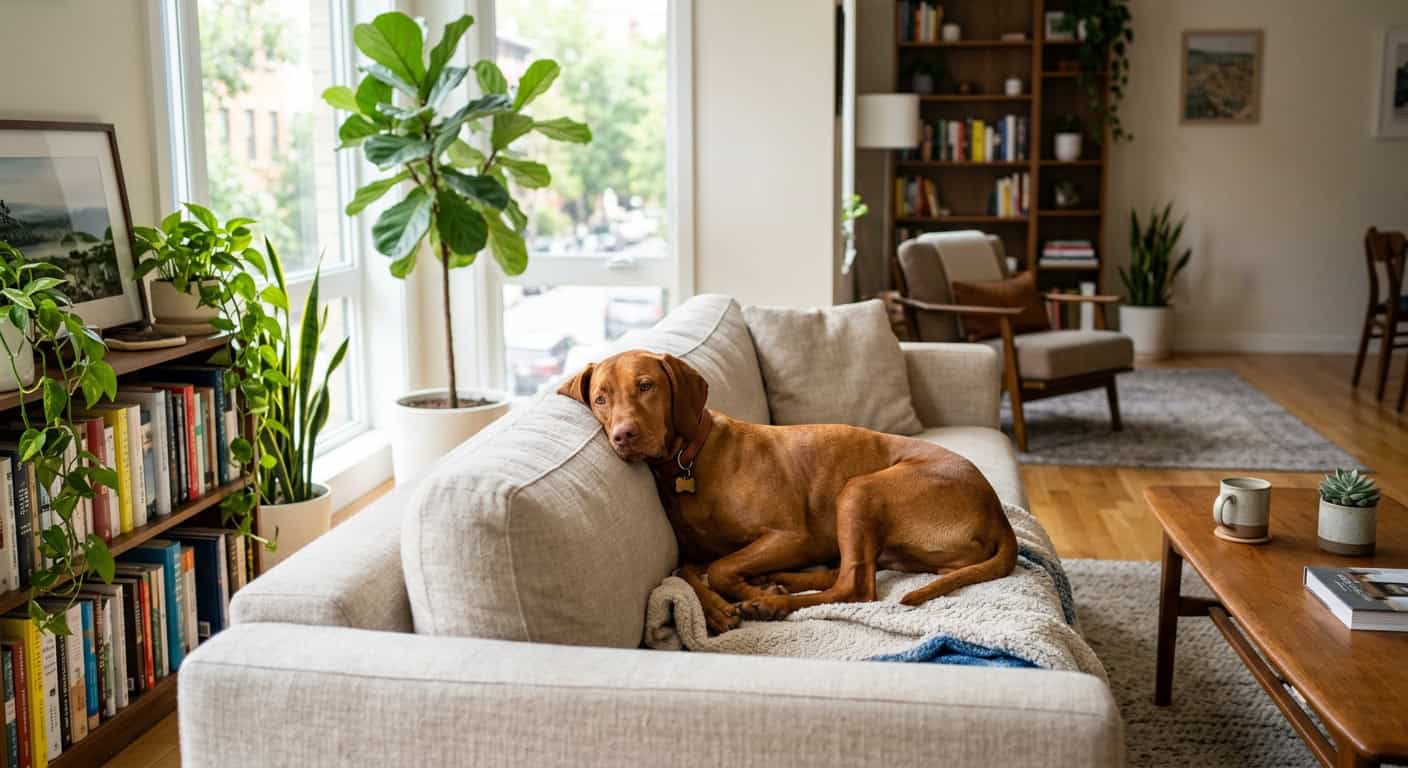
In the two weeks before moving, keep your dog’s schedule as stable as possible. Moving prep (boxes appearing, furniture rearranging, your elevated stress levels) is already anxiety-inducing for dogs who read your emotional state closely. Maintain walks at the same times, feed at the same times, and avoid any major changes like switching food brands or starting a new training program in this window.
According to the AKC, dogs pick up on owner anxiety through cortisol cues in your body language and scent — staying calm and matter-of-fact during packing and moving activities helps your dog stay calm too. If your dog has existing anxiety, talk to your vet about short-term calming support options before the move.
What Should You Know About Move Day?
Keep your dog in a quiet room or with a trusted person during the moving process. The chaos of movers, open doors, and furniture shifting is overwhelming for most dogs. Move the dog in the carrier/car after furniture is positioned in the new apartment.
The best move-day option is to have your dog stay with a trusted friend, family member, or daycare facility rather than experience the chaos directly. The combination of strangers, moving equipment, doors propped open, and your distracted attention creates a high-risk environment for both accidents and escape. If daycare isn’t an option, confine your dog to a quiet room with familiar items, a white noise machine, and someone checking in regularly.
PetMD recommends setting up your dog’s space first — before anything else — so there’s a settled, scent-familiar zone when your dog arrives. Their bed, water bowl, crate (if used), and a few toys should be placed in their designated corner before your dog crosses the threshold for the first time.
What Are First Days in the New Apartment?
Set up a base room with familiar items before the dog arrives: their bed, food/water stations, and toys they know. Let the dog settle in this room first. Apply Adaptil spray to bedding and furniture 30 minutes before arrival. Let them explore the rest of the apartment gradually over the first few days — one new room per day if they seem anxious.

The first apartment exploration should be leash-guided even indoors — let your dog move at their own pace, investigate corners and rooms, and process the new scents without rushing. Some dogs confidently explore within 30 minutes; others take several days of gradual exposure before they stop startling at unfamiliar sounds from neighbors, hallways, or building systems (HVAC, elevators, trash chutes).
According to the ASPCA, new environment anxiety in dogs typically manifests as reduced appetite, restlessness, and house-soiling — all of which are normal in the first 1–2 weeks and should resolve without intervention if routine is maintained. If symptoms persist beyond 2 weeks or escalate, a vet consultation is appropriate.
What Are Establishing the New Routine Immediately?
Start the new walk schedule from day one. Same times as the old apartment if possible — your dog’s bladder schedule is set by routine. Feed at the exact same times. Training sessions on day one (even 5 minutes) signal stability and normalcy. See our daily pet care routine guide.
The evening of move-in day, run your normal bedtime routine exactly as you would at home — walk, feeding, wind-down, sleep location. The faster your dog experiences that the old cues (your movements, your schedule, their bed position) mean the same things they always meant, the faster the new apartment becomes “home.” Dogs learn environmental associations rapidly; the bedtime routine is your most powerful reset signal.
What Are New Building-Specific Challenges?
- Elevator sounds, hallway echoes, neighbor noises — all new triggers. Brief white noise in the apartment helps initially.
- New outdoor routes — let the dog sniff extensively during the first week’s walks. They’re building their scent map of the neighborhood.
- New neighbors — calm, controlled introductions. Don’t force interaction.
See our keeping pets calm during a move guide and apartment pet safety tips for room-by-room setup. The Humane Society’s moving with pets guide is a comprehensive resource.
🛒 Related Picks on Amazon
📬 Free Weekly Apartment Pet Tips
Practical guides for apartment pet owners, delivered weekly.
Elevator desensitization deserves dedicated time. Many dogs find elevators distressing — the enclosed space, the mechanical sounds, the slight drop sensation, and the sudden appearance of strangers at random floors are a sensory gauntlet. Spend 10 minutes daily for the first week riding the elevator just a few floors and back, rewarding calm behavior at every step, before adding it to the regular walk route.
Building lobby socialization is equally important. In 2026, most apartment buildings have designated pet-friendly zones and building-specific pet rules — introduce yourself to the building manager or superintendent early, confirm the rules, and start your neighbor relationships on the right foot before any noise complaints arise. A positive introduction with a friendly, well-mannered dog buys significant goodwill.
How Do You Building Your Dog’s Support Network in a New Neighborhood?
A successful apartment dog life isn’t just about your dog’s relationship with your unit — it’s about their relationship with the whole environment. In a new neighborhood, building that network proactively makes everything easier:
Find your nearest dog park or off-leash area immediately. Knowing where you can let your dog run freely from the first week gives both of you a stress outlet and helps your dog associate the new neighborhood with positive experiences. Apps like Sniffspot and AllTrails (for dog-friendly trails) can help you map options within a 15-minute walk.
Introduce yourself to the building’s other dog owners. Common building dogs are one of the most powerful adjustment tools available — a familiar canine face in the elevator or lobby helps your dog feel the new environment is populated by friendly animals rather than strangers. Building-specific Facebook groups and NextDoor communities are practical ways to find other dog owners in your building before you meet them in person.
Establish a veterinary relationship before you need it urgently. Register with a local vet in your first week — not your first month. In 2026, many urban veterinary clinics book new patient appointments 3–6 weeks out. If you wait until your dog needs care to find a vet, you may end up paying emergency clinic prices for non-emergency care. A first-week wellness check also establishes a baseline record at your new clinic and gives you a relationship with a vet who knows your dog before a crisis occurs.
According to PetMD, dogs who have regular positive social exposure — other friendly dogs, familiar humans, and routine environmental encounters — are significantly less likely to develop anxiety disorders than dogs whose social world is limited to their owner. The transition to a new apartment is an ideal time to intentionally build a richer social environment for your dog.