
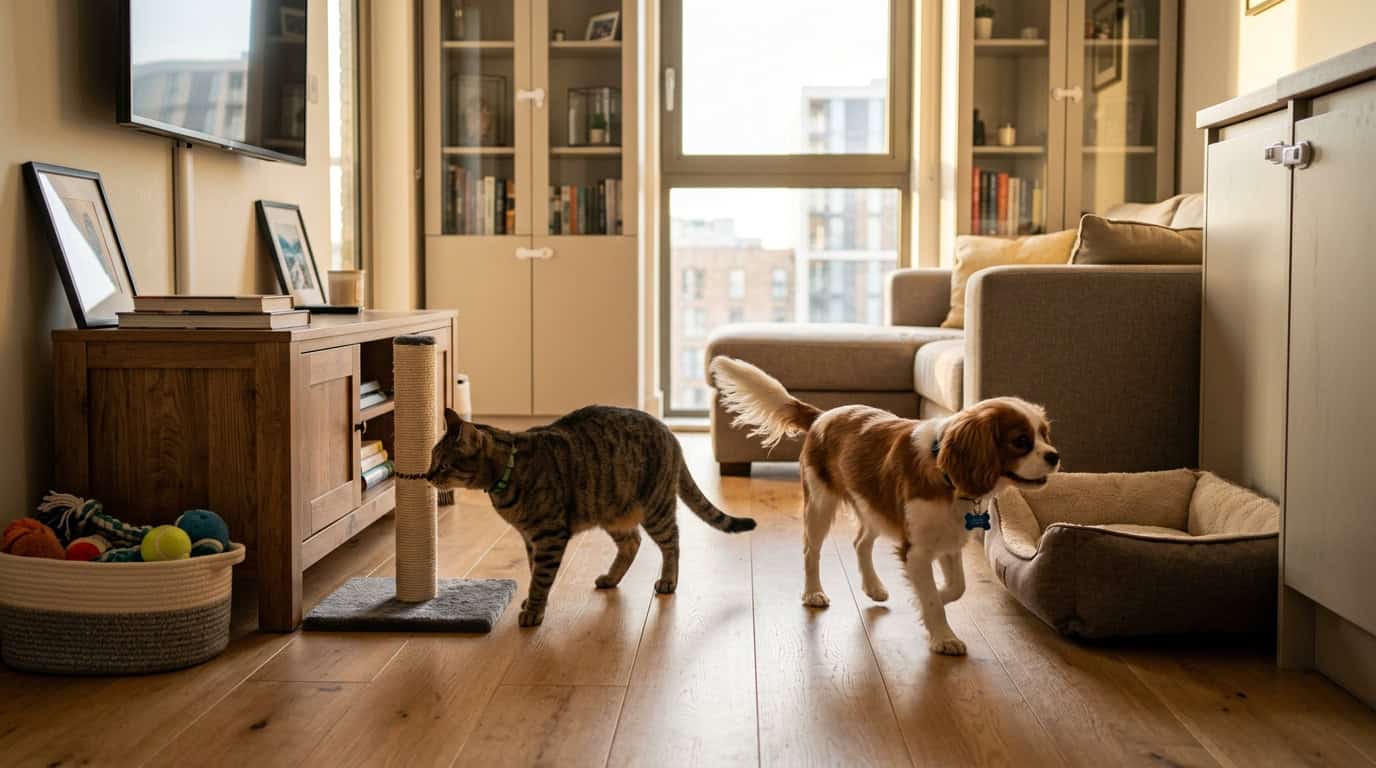
The 15 most common apartment pet dangers include toxic plants, exposed electrical cords, unsecured cleaning chemicals, toxic human foods, open balcony railings, household medications, small swallowable objects, unsafe garbage access, cooking hazards, laundry machines, open toilets, fragrance diffusers, sharp objects, window gaps, and unvented carbon monoxide. Each one is preventable with simple, low-cost measures.
Your apartment feels safe to you. But to your dog or cat — creatures that chew, sniff, climb, and squeeze into places you’d never think to look — it’s a minefield of invisible dangers.
Apartment living concentrates hazards in ways that suburban or rural environments don’t. Smaller spaces mean less dilution of chemical fumes. Balconies mean fall risk. Dense storage means more unsecured toxins per square foot. And pets in apartments have fewer outlets for energy, which drives more exploratory (and often dangerous) behavior.
This guide covers the 15 most common apartment pet dangers — and the exact steps to eliminate each one.
What Should You Know About Danger 1?
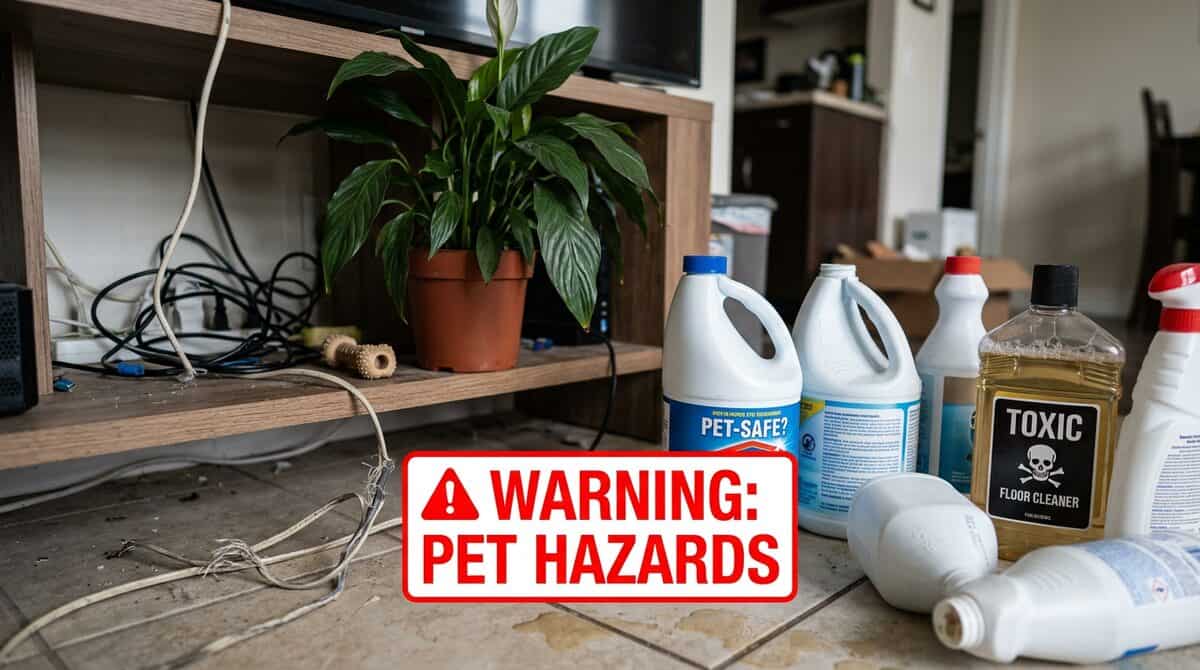
This is the silent killer of apartment pet safety. Many of the most popular houseplants — lilies, pothos, philodendron, aloe vera, peace lily, and snake plants — are toxic to cats and dogs. Lilies in particular are acutely fatal to cats: even a small amount of pollen or leaf causes kidney failure within 72 hours.
Prevention: Before buying any plant, check the ASPCA’s complete toxic plant database. Replace toxic species with pet-safe alternatives: spider plants, Boston ferns, orchids, or money trees. Keep remaining plants on high shelves behind barriers, not on counters or floors. See our list of toxic houseplants for pets for apartment-specific advice.
What Should You Know About Danger 2?
Puppies and kittens chew cords instinctively. The result: electrical burns to the mouth, cardiac arrest, or fire. Even adult pets may chew cords out of boredom. Apartments often have more cords per square foot than houses due to smaller rooms with multiple devices.
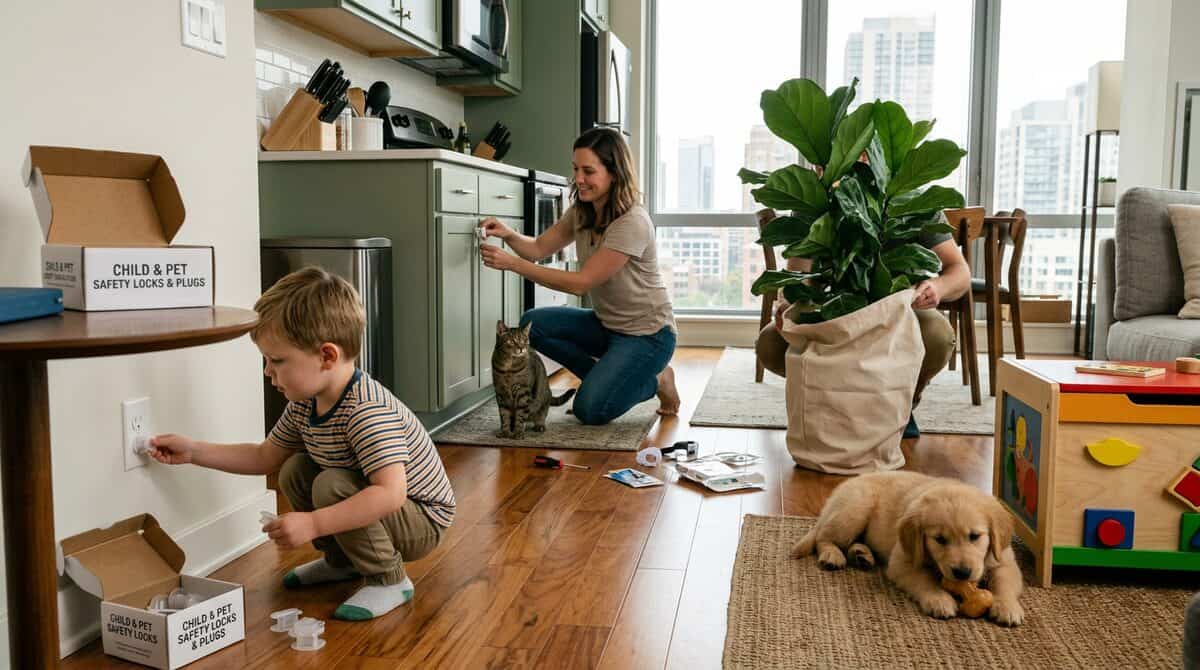
Prevention: Use cord covers, cable management boxes, or flexible spiral wrap to bundle and protect all exposed wires. Bitter apple spray is a good deterrent on cords your pet already targets.
What Should You Know About Danger 3?
Most household cleaners — bleach, ammonia, drain openers, oven cleaners — are acutely toxic to pets. Cats are especially vulnerable because they groom surfaces off their paws and fur. Even “natural” cleaners like essential oil sprays can cause liver damage in cats.
Prevention: Store all cleaners in latched cabinets your pet cannot access. After mopping or cleaning floors, allow full drying time before letting pets back in. Switch to pet-safe cleaning products where possible. The Pet Poison Helpline maintains a searchable toxin database if you’re unsure about a specific product.
What Should You Know About Danger 4?
Grapes, raisins, onions, garlic, xylitol (found in sugar-free gum, peanut butter, and many baked goods), chocolate, macadamia nuts, and alcohol are all acutely toxic to dogs and/or cats. Apartments often have food more accessible — open counters, lower-positioned pantries, living room snack tables.
Prevention: Never leave food unattended at counter or table level. Store toxic foods in high or latched cabinets. Educate all household members and guests. When in doubt, contact Pet Poison Helpline (888-764-7661) — available 24/7.
What Should You Know About Danger 5?
A balcony is a joy for apartment pet owners — and one of the highest-risk environments for apartment pets. Cats can jump through or over railings. Small dogs can squeeze through gaps. “High-rise syndrome” in cats is a well-documented emergency room condition.
Prevention: Install balcony mesh or cat netting specifically designed to cover railings. Never leave pets on the balcony unsupervised. Ensure there’s nothing near the railing your pet can climb to increase their reach height. Our cat apartment hacks include specific balcony safety approaches.
What Should You Know About Danger 6?
Human medications — ibuprofen, acetaminophen, antidepressants, blood pressure medication — are among the most common causes of pet poisoning. Dogs especially will eat pills that smell interesting. Apartments often have medications on nightstands, bathroom counters, or bags left open.
Prevention: Store all medications (including vitamins and supplements) in latched medicine cabinets or high drawers. Never leave pill bottles on counters. If a pet ingests medication, call emergency vet or ASPCA Animal Poison Control immediately — do not wait for symptoms.
What Should You Know About Danger 7?
Hair ties, rubber bands, coins, batteries, small toys, sewing needles, earrings — all of these become foreign body obstructions when swallowed. Small object ingestion is one of the most common veterinary emergencies. Apartments, due to smaller floor footprints, tend to accumulate more of these per square foot.
Prevention: Daily floor sweeps. Use closed containers for hair accessories. Store jewelry out of reach. Keep floors clear of small items. If you suspect swallowing, symptoms include vomiting, lethargy, loss of appetite, and abdominal pain — seek vet care immediately.
What Should You Know About Danger 8?
A dog or cat that accesses the garbage can encounter food toxins, sharp can lids, plastic bags (suffocation risk), and discarded medications all at once. Kitchen garbage is often the most dangerous single item in an apartment.
Prevention: Use a garbage can with a locking lid or place it inside a latched cabinet. Never leave garbage bags on the floor. Keep compost (especially dangerous — grapes, onions, fermented material) secured or inaccessible.
Danger 9: Cooking Hazards
Dogs and cats that have access to the kitchen during cooking face burns from hot surfaces, ingestion of dropped toxic foods, and scalding from hot liquids. Cats jumping on stoves are especially vulnerable.
Prevention: Use a baby gate to keep pets out of the kitchen while cooking. Never leave cooking unattended. Keep counters clear of food scraps. Train dogs to a “place” mat outside the kitchen during meal prep. Learn more about apartment dog training to reinforce these boundaries.
Danger 10: Washing Machines and Dryers
Cats especially love to sleep in laundry machines — they’re warm, enclosed, and smell like their owner. A pet that crawls into a dryer or washer and gets trapped faces a fatal outcome if the machine is started.
Prevention: Always check the drum before starting any laundry machine. Keep washer and dryer doors closed when not in use. Never leave a running laundry machine unattended if your pet is unsupervised.
Danger 11: Open Toilet Lids
Toilet water frequently contains cleaning chemicals from automatic bowl cleaners. Small pets — puppies, kittens, rabbits — can fall in and drown. This is a straightforward but frequently overlooked hazard.
Prevention: Keep toilet lid closed at all times. Use only pet-safe toilet bowl cleaners if you use automatic dispensers. This is especially critical with new pets in the home.
Danger 12: Essential Oil Diffusers and Certain Air Fresheners
Many essential oils — tea tree, eucalyptus, peppermint, cinnamon, citrus — are toxic to cats and irritating to dogs. Ultrasonic diffusers aerosolize these oils, coating surfaces in the room that cats then ingest through grooming. This is a newer hazard that many pet owners don’t know about.
Prevention: Avoid essential oil diffusers entirely in homes with cats, or use only in well-ventilated rooms the cat cannot access. Use pet-safe air fresheners instead. Ensure good ventilation in any room where fragrance products are used. See our guidance on stress signs in apartment cats — respiratory irritants often look like behavioral issues.
Danger 13: Sharp or Breakable Objects
Glass decorations, sharp kitchen tools left out, craft supplies, broken ceramics — all pose cut and laceration risks to paws, mouths, and noses. In apartments where storage space is limited, these items often end up in lower, more accessible positions.
Prevention: Keep sharp objects in drawers. Avoid leaving glass décor at pet-accessible heights. If something breaks, clean up immediately and completely — a shard under a couch that you miss can injure a paw days later.
Danger 14: Unsealed Window Gaps
Open windows without secure screens are a primary fall risk for cats and can be an escape route for dogs. “High-rise syndrome” — cats falling from significant heights — results in broken limbs, internal injuries, and death. Even cats with great balance miscalculate.
Prevention: Install window guards or secure screens rated for pet use. Avoid leaving windows open more than a few inches without additional security. Never rely on a cat’s “survival instinct” — falls are genuinely dangerous. Check our guide on keeping dogs happy in small apartments for safe ventilation alternatives.
Danger 15: Carbon Monoxide and Smoke
Pets are more sensitive to CO and smoke than humans — they’re often lower to the ground where gases accumulate, and their smaller body mass means faster impact. Apartments with gas cooking, gas heating, or old ventilation systems carry this risk.
Prevention: Install a CO detector in your apartment (often required by law, but verify). Test it monthly. If you smell gas or your alarm sounds, take your pet and exit immediately. The CDC’s healthy pets resources note that pet behavior changes can be an early warning of air quality problems — lethargy or confusion in a normally active pet warrants investigation.
Your Apartment Pet-Proofing Checklist
Use this as a one-time audit of your space:
- ☐ All toxic plants identified and removed or secured
- ☐ All electrical cords covered or managed
- ☐ All cleaning products in latched cabinets
- ☐ All medications in latched or elevated storage
- ☐ Garbage can locked or cabineted
- ☐ Balcony meshed or gated
- ☐ Windows have secure screens
- ☐ Laundry machines kept closed
- ☐ Essential oil diffusers removed or restricted
- ☐ CO detector installed and tested
- ☐ ASPCA Poison Control number saved: 888-426-4435
ASPCA Animal Poison Control: 888-426-4435 (24/7, fee may apply)
Pet Poison Helpline: 855-764-7661 (24/7)
For a broader look at keeping your pet safe and happy, see our guides on managing dog separation anxiety in apartments and the complete guide to house training a dog in an apartment.
Frequently Asked Questions
What are the most dangerous household items for apartment pets?
The most dangerous items include toxic foods (grapes, onions, xylitol), toxic houseplants (lilies, pothos, philodendron), exposed electrical cords, unsecured cleaning products, open balcony railings, and loose small objects that can be swallowed.
Are houseplants dangerous for cats and dogs?
Many common houseplants are toxic to pets. Lilies are fatal to cats even in small amounts. Pothos, philodendron, aloe vera, and snake plants cause vomiting and neurological symptoms. Always check the ASPCA toxic plant list before bringing any plant home.
How do I pet-proof an apartment on a budget?
Start with cabinet safety latches, cord organizers, and removing or relocating toxic plants — all inexpensive fixes. Use baby gates to restrict access to hazardous areas. The biggest risks are usually free to fix (putting away medications, securing garbage).
What should I do if my pet eats something toxic?
Call the ASPCA Animal Poison Control Center (888-426-4435) or your emergency vet immediately. Do not induce vomiting unless specifically instructed by a vet. Have the product or plant name ready.
Are apartment balconies safe for pets?
Balconies are one of the highest-risk areas for apartment pets. Never leave pets unsupervised on balconies. Install mesh or screen barriers to prevent falls or escape, even if railings seem close together — cats and small dogs can squeeze through or jump over gaps.
.bpp-layout-fix{max-width:820px;margin:0 auto;padding:0 16px;font-family:-apple-system,BlinkMacSystemFont,’Segoe UI’,Roboto,sans-serif;color:#2d3748;line-height:1.7}
.bpp-layout-fix h1{font-size:2rem;line-height:1.3;margin-bottom:.5rem}
.bpp-layout-fix h2{font-size:1.4rem;color:#1a202c;margin-top:2rem;border-left:4px solid #36b37e;padding-left:.75rem}
.bpp-layout-fix h3{font-size:1.15rem;color:#2d3748;margin-top:1.5rem}
.bpp-layout-fix img{max-width:100%;height:auto;border-radius:10px;margin:1.25rem 0;display:block}
.bpp-breadcrumb{font-size:.82rem;color:#718096;margin-bottom:1rem}
.bpp-breadcrumb a{color:#36b37e;text-decoration:none}
.bpp-meta{font-size:.82rem;color:#718096;margin-bottom:1.25rem;display:flex;gap:1.25rem;flex-wrap:wrap}
.bpp-quick-answer{background:#f0fff4;border-left:4px solid #36b37e;padding:1rem 1.25rem;border-radius:0 8px 8px 0;margin:1.5rem 0}
.bpp-quick-answer strong{display:block;margin-bottom:.4rem;color:#276749}
.bpp-disclosure{font-size:.78rem;color:#718096;background:#f7fafc;border:1px solid #e2e8f0;padding:.75rem 1rem;border-radius:8px;margin:1.25rem 0}
.bpp-tip{background:#ebf8ff;border-left:4px solid #3182ce;padding:.85rem 1.1rem;border-radius:0 8px 8px 0;margin:1.25rem 0;font-size:.94rem}
.bpp-warning{background:#fff5f5;border-left:4px solid #e53e3e;padding:.85rem 1.1rem;border-radius:0 8px 8px 0;margin:1.25rem 0;font-size:.94rem}
.bpp-product-box{border:1px solid #e2e8f0;border-radius:10px;padding:1rem 1.25rem;margin:1.5rem 0;background:#fafafa}
.bpp-product-box a{color:#36b37e;font-weight:700;text-decoration:none}
.bpp-faq{margin-top:2rem}
.bpp-faq details{border:1px solid #e2e8f0;border-radius:8px;margin-bottom:.75rem;padding:.85rem 1rem}
.bpp-faq summary{font-weight:700;cursor:pointer;color:#1a202c}
.bpp-author-box{display:flex;gap:1rem;align-items:flex-start;background:#f7fafc;border:1px solid #e2e8f0;border-radius:10px;padding:1.1rem 1.25rem;margin:2rem 0;font-size:.9rem}
.bpp-author-box img{width:60px;height:60px;border-radius:50%;object-fit:cover;flex-shrink:0}
.bpp-share{margin:1.5rem 0;text-align:center}
.bpp-share span{font-weight:700;margin-right:.75rem}
.bpp-share a{display:inline-block;margin:.25rem .3rem;padding:.45rem 1rem;border-radius:6px;color:#fff;text-decoration:none;font-size:.85rem;font-weight:600}
.bpp-share .fb{background:#1877f2}
.bpp-share .tw{background:#1da1f2}
.bpp-share .pi{background:#e60023}
.bpp-newsletter-cta{background:linear-gradient(135deg,#f0fff4,#e6fffa);border:1px solid #9ae6b4;border-radius:12px;padding:1.5rem;margin:2rem 0}