
7 Smart Pet Home Upgrades That Save You Time and Money
By Jarrod Gravison • Updated April 28, 2026 • 7 min read
⚡ Quick Answer
HEPA air purifier, robot vacuum, automatic feeder, enzyme cleaner stock, washable furniture covers, litter enclosure, and door paw station. These 7 reduce daily pet care effort substantially.
Disclosure: This post contains affiliate links. We may earn a small commission at no extra cost to you.
Small apartment upgrades designed around pet ownership can dramatically reduce the daily effort of pet care. These 7 investments pay for themselves in time and money saved.
Key Takeaways
- HEPA + robot vac is the non-negotiable baseline: These two upgrades eliminate the two biggest apartment pet pain points (odor and hair) with near-zero ongoing effort — they’re the upgrades every pet owner should prioritize first.
- Enzyme cleaners should be bought in bulk: Accidents happen — having enzyme cleaner stocked at all times means you can treat stains immediately before odor sets into flooring and subfloor, which is especially critical in apartments where the floor is often your landlord’s property.
- Furniture covers pay for themselves in security deposits: A $30 washable sofa cover protects a $1,200 couch from pet hair and claw damage that could cost you your full deposit — the ROI is immediate.
- The paw station prevents floor damage over time: Salt, mud, and grit tracked in from walks are leading causes of hardwood floor scratching and grout staining in apartment units — a $20 paw cleaning station at the door eliminates this problem entirely.
What About HEPA Air Purifier (One-Time, $80–$200)?
Running continuously, a HEPA air purifier reduces airborne pet hair and dander, extending the time between apartment deep-cleans. Also reduces pet allergy symptoms. The long-term labor savings in cleaning effort justify the upfront cost within months.
According to the American Lung Association, pet dander is one of the most potent indoor allergens — and in a sealed apartment with limited air exchange, it accumulates to levels far higher than in a ventilated house. A HEPA purifier rated for your room size captures 99.97% of particles 0.3 microns or larger, including dander, mold spores, and the fine dust that carries pet odor molecules.
In 2026, look for purifiers with a CADR (Clean Air Delivery Rate) of at least 200 for a standard apartment living room. Run it continuously on medium speed rather than high — quieter operation and longer filter life. Replacement filters typically run $20–$40/year, keeping the total cost of ownership well under $300 for 5 years of cleaner air.
What About Robot Vacuum on Daily Schedule ($150–$350)?
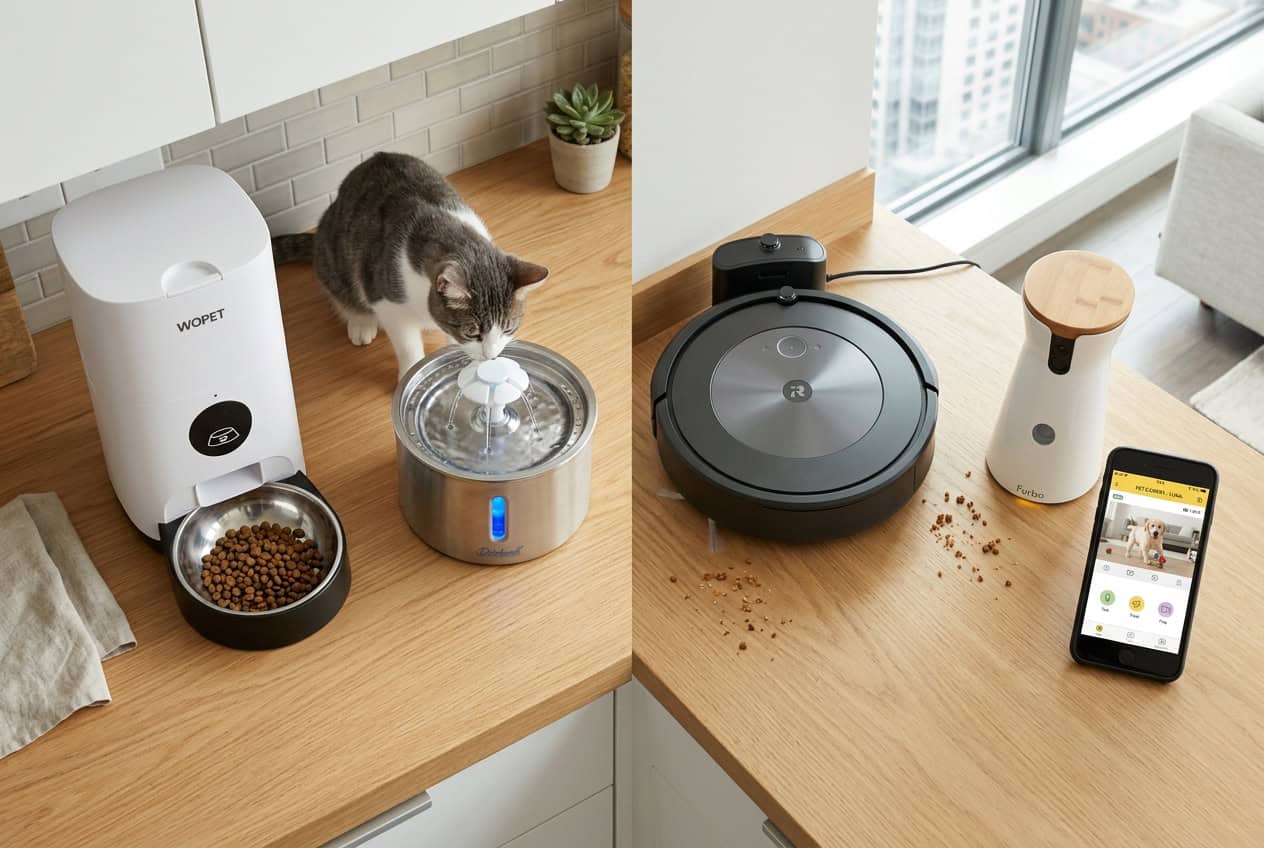
A robot vacuum running daily before you come home means floors are never visibly hair-covered. The time savings over a year (30+ hours of manual vacuuming) are significant for any pet owner. Choose models specifically designed for pet hair with tangle-free brush rolls.
The AKC estimates that heavy-shedding breeds can shed up to 50,000 hairs per day during peak seasons. Running a robot vacuum daily — even for a quick 20-minute pass — prevents that accumulation from embedding in rugs, upholstery, and apartment HVAC intake filters. Most robot vacuums can be scheduled from a smartphone app; set it to run while you’re at work and come home to hair-free floors.
For apartments with mostly hard floors, a combination robot vac/mop handles hair and tracked-in dirt simultaneously. For carpeted apartments, prioritize suction power (1,500 Pa+) over mopping features. Self-emptying models are worth the premium if you’re gone most of the day — you won’t need to empty the dustbin for weeks.
What About Automatic Pet Feeder ($30–$80)?
Consistent meal timing without daily effort. See our automatic feeder guide for top picks. Also reduces food anxiety behavior (early morning meowing and pawing).
Beyond convenience, consistent meal timing has documented health benefits for dogs. PetMD notes that fixed mealtimes improve gut motility, support weight management (by eliminating free-feeding overeating), and help regulate bathroom schedules — critical for apartment dogs whose outdoor access depends entirely on you. A predictable feeding time creates a predictable elimination time, making your morning and evening walks more efficient.
What About Enzyme Cleaner Stock (Keep Accessible)?
Having enzyme cleaner immediately accessible for accidents means treating stains in seconds — before they set. A set stain takes significantly more effort to remove. Keep under the kitchen sink.
Standard household cleaners don’t break down the uric acid crystals in pet urine — they mask odor temporarily while the crystals remain in the flooring, reactivating every time humidity rises. Enzyme cleaners contain live bacterial cultures that actually digest the organic compounds causing odor and staining. The ASPCA recommends treating any urine accident immediately and thoroughly, extending the enzyme cleaner contact time to 10+ minutes before blotting.
For apartment renters, fast treatment is especially important because urine that penetrates the subfloor can be charged to you at move-out as structural damage — costs that can run $500–$2,000 in flooring repair. Keeping a 32 oz bottle of enzyme cleaner accessible (not under the sink, but visible on a shelf) means you use it every time instead of skipping treatment because it was inconvenient to retrieve.
What About Washable Covers on All Furniture ($20–$60 each)?
Machine-washable slipcovers on sofas and chairs eliminate the effort of vacuuming pet hair from upholstery. Weekly launder vs. 45 minutes of furniture vacuuming. Also protects furniture value for apartment move-out.
Pet hair and claw damage to upholstered furniture is the most common cause of security deposit deductions in pet-friendly apartments. In 2026, machine-washable microfiber furniture covers have improved dramatically in aesthetics — many are indistinguishable from tailored slipcovers at a fraction of the cost. For leather furniture, a furniture protector spray provides an alternative to covers while maintaining the look.
What About Cat Litter Furniture Enclosure ($50–$150)?
A furniture-style litter enclosure contains tracking and reduces visible mess while looking like apartment decor. See our cat litter box guide. Reduces floor cleaning around the litter area significantly.
Open litter trays in apartments create two problems: visible mess and odor diffusion into a smaller space. Enclosed litter furniture (cabinets, end tables with integrated trays) addresses both while adding to the room’s aesthetic. According to PetMD, cats prefer covered litter spaces anyway — a top-entry enclosure reduces litter tracking and masks odor more effectively than a standard hooded tray.
What About Paw Cleaning Station at the Door ($15–$30)?
A door paw station — a mat and paw washer — prevents outdoor dirt from spreading through the apartment on every walk. 30 seconds per walk prevents 30 minutes of floor cleaning per week.
AKC home setup guide ASPCA pet-safe home
🛒 Related Picks on Amazon
📬 Free Weekly Apartment Pet Tips
Practical guides for apartment pet owners, delivered weekly.
A paw cleaning station is one of the highest-ROI pet home upgrades per dollar spent. The combination of a wet microfiber mitt or soaking tub plus a dry mat at the entry point removes 80–90% of outdoor contaminants before they reach your floors. For apartment hallways and elevator lobbies where pets track in widely, this also reduces complaints from neighbors and building management about dirty common areas.
The ASPCA recommends checking paws for salt, ice melt chemicals, and debris after every winter walk — these can cause paw pad cracking and irritation that becomes expensive to treat. A paw station makes this check automatic rather than something you have to remember to do separately.
Implementation Checklist: Getting Started
The easiest way to implement these upgrades without overwhelm is to tackle them in priority order over four weeks:
Week 1 — Foundation: Order a HEPA air purifier (size it to your square footage) and set up automatic scheduling. Order enzyme cleaner in bulk — at least one 32 oz bottle per room where your pet spends time. Place them visibly accessible rather than buried under a sink.
Week 2 — Hair management: Order or activate a robot vacuum and set it to run daily during work hours. Do a preliminary vacuum of all areas to remove existing hair accumulation before the robot takes over maintenance.
Week 3 — Furniture and floor protection: Add washable covers to all upholstered furniture. Set up the paw cleaning station at your primary entry door with both a wet towel and dry mat. Install a litter enclosure if you have cats.
Week 4 — Routine optimization: Program your automatic feeder with your dog’s current feeding schedule and portions. Test the full system for a week and adjust based on what your specific apartment and pet lifestyle actually need.
The total investment for all seven upgrades, at entry-level pricing in 2026, runs $350–$600. Most owners recover that cost within a single year through reduced cleaning service needs, lower veterinary bills from better hygiene, and recovered security deposit from avoided floor and furniture damage.
Frequently Asked Questions
What are the best pet home upgrades for apartments?
HEPA air purifier, robot vacuum, automatic feeder, enzyme cleaner stock, washable furniture covers, litter enclosure, and door paw station. These 7 reduce daily pet care effort substantially.
Do pet home upgrades save money?
Yes over time. A robot vacuum saves 30+ hours of manual vacuuming annually. Washable covers protect furniture from replacement costs. Enzyme cleaner prevents stain damage at move-out.
What is the best single pet home upgrade for an apartment?
A HEPA air purifier or robot vacuum provide the highest consistent quality-of-life improvement for the cost. For cat owners: a furniture litter enclosure transforms the look and feel of the space.
How do you reduce pet mess in an apartment?
Washable furniture covers, daily robot vacuum, HEPA air purifier, washable pet beds laundered weekly, and enzyme cleaner for immediate accident treatment.
Are smart home upgrades for pets expensive?
The core 3 — air purifier, robot vacuum, feeder — total $260–$630. The remaining 4 upgrades add $100–$230 total. Most pay for themselves within 6–12 months in saved time and cleaning labor.
What is the best single upgrade for a pet-friendly apartment?
A HEPA air purifier is the highest-impact single upgrade for most apartment pet owners — it continuously reduces odor, dander, and airborne allergens with no daily maintenance required. If you have a heavy shedder, pair it with a robot vacuum on a daily schedule for a complete low-effort solution to the two biggest apartment pet complaints.
How do I get pet smell out of an apartment permanently?
Permanent odor elimination requires three steps: source treatment (enzyme cleaner on all accident spots), ongoing air filtration (HEPA purifier), and regular washing of soft surfaces (furniture covers, pet bedding, rugs). One-time air fresheners and scented candles mask odor without removing it. In severe cases, a UV flashlight can reveal old accident spots invisible under normal lighting — treat each one with enzyme cleaner.
Jarrod Gravison
Apartment pet specialist at Busy Pet Parent.