
15 Brilliant Ways to Keep a Small Apartment Clean With Pets
2. Use Waterproof Covers on Everything
Furniture covers, bed covers, and washable throws on all pet-accessible furniture prevent hair and accident damage from reaching the actual furniture. Machine wash weekly — much easier than cleaning a sofa.
3. Feed on a Mat
A waterproof mat under food and water bowls contains spills and food debris. Wipe down daily. Far easier than cleaning the surrounding floor repeatedly.
4. Maintain Litter Boxes Religiously
Scoop daily (twice for multiple cats). Deep clean boxes weekly. Replace litter completely every 2–4 weeks. The litter box is the single biggest odor source in any cat apartment — maintaining it properly eliminates 80% of cat-related odor complaints. See our litter box hacks guide.
5. Store Pet Supplies in Sealed Containers
Open bags of food and treats become odor sources and attract pests. Store everything in airtight containers. A single lidded bin for all pet supplies keeps the space organized and reduces ambient pet smell.
What Are Daily Cleaning Habits?
6. Quick Vacuum Every Day
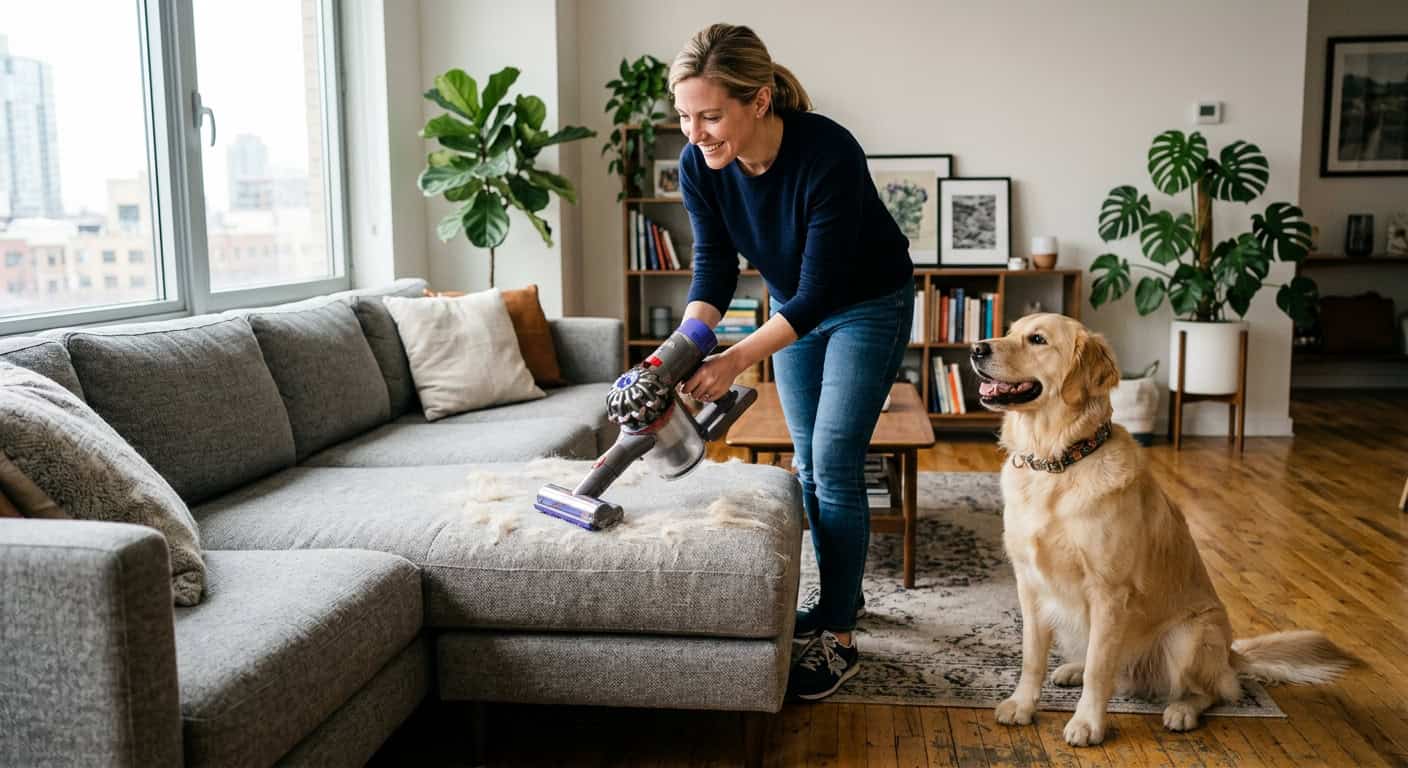
A 5–10 minute daily vacuum with a stick vacuum prevents hair from embedding into carpet and building up on hard floors. Less total effort than a weekly deep vacuum of a heavily haired apartment. A robot vacuum running daily is even easier.
7. Treat Accidents Immediately
Every hour an accident sits increases the cleanup difficulty. Blot, apply enzyme cleaner, cover and let dry. Don’t wait until your weekly clean. See our best pet stain removers guide.
8. Wipe Down Food and Water Stations Daily
Pet bowls grow biofilm within 24 hours if not cleaned. Wipe bowls daily and wash with soap 3x/week. Stainless steel or ceramic bowls are easier to sanitize than plastic.
What Are Weekly Deep Habits?
9. Wash All Pet Bedding Weekly
Pet bedding is the highest concentration odor source after litter boxes. Wash at 60°C to kill bacteria and dust mites. If your pet resists not having their bed, have two and rotate them.

10. Full HEPA Vacuum Including Furniture
Weekly full vacuum including sofa, chairs, curtains, and under furniture. Use the upholstery attachment on fabric surfaces. See our best vacuums for pet hair guide.
11. Deep Clean Hard Floors
Sweep and mop with a pet-safe cleaner. Avoid ammonia-based cleaners — ammonia smells like urine to pets and can trigger marking behavior. Use pH-neutral enzyme cleaners or pet-safe multi-surface cleaners.
What Are Equipment That Does the Work?
12. HEPA Air Purifier (Run Continuously)
Reduces airborne hair, dander, and odor between cleaning sessions. See our best air purifiers for pets guide.
13. Robot Vacuum (Daily Schedule)
Set to run daily while you’re at work. Maintains baseline cleanliness with zero additional effort. The most impactful time-saving investment for pet owners. See our best robot vacuums for pet hair guide.
14. Washable Microfiber Mop
For hard floors, a flat microfiber mop with washable pads is faster than traditional mopping and captures pet hair and dander effectively. Spray and mop takes 5 minutes for a typical apartment.
15. Keep a Lint Roller at the Door
60-second touch-up before leaving prevents carrying pet hair into shared spaces, the workplace, or other homes. Especially important for apartment common areas and elevators.
For related guides, see our pet hair management guide, best pet stain removers, and pet-friendly cleaning products. The Humane Society’s odor and stain guide has additional tips.
🛒 Related Picks on Amazon
📬 Free Weekly Apartment Pet Tips
Practical guides and gear picks for apartment pet owners.
What Are Controlling Pet Odours in a Small Apartment?
Odour management in small apartments requires addressing three distinct sources: the pet itself, the pet’s areas (bed, crate, litter box), and the apartment’s surfaces (carpet, upholstery, soft furnishings). Bathing frequency depends on species and breed — most dogs benefit from monthly baths, while cats typically self-groom effectively and require baths only when visibly soiled or on vet advice. Between baths, pet-specific dry shampoos and deodorising wipes reduce odour build-up on coats without full bath disruption. According to the ASPCA, regular brushing is the single most effective between-bath odour control measure — it removes loose dander and distributes coat oils before they oxidise and create smell.
For litter boxes in apartments, location and ventilation are critical. Place litter boxes in a room with natural ventilation (bathroom window, ventilated closet) rather than in an enclosed corner. Scoop daily — litter box odour in an apartment is almost entirely driven by frequency of scooping, not litter brand. Covered litter boxes trap odour inside the box and release it in a concentrated burst when opened, making the problem worse rather than better. Open-top boxes with daily scooping outperform covered boxes in apartment odour management according to most veterinary behaviourists. Consider a litter box enclosure cabinet (IKEA hacks are popular) to contain scatter while keeping the box ventilated.
What Should You Know About Managing Pet Hair in an Apartment?
Pet hair accumulates differently in different rooms and requires room-specific strategies. In living areas with upholstery, use washable throw covers on sofas and chairs — launder weekly. A rubber-bristled lint roller or damp rubber glove removes hair from fabric more effectively than standard lint rollers. In bedrooms, decide early whether pets sleep on the bed and establish consistent access rules — inconsistent access leads to the highest hair accumulation because dogs and cats rest for extended periods in the warmest, softest available spot regardless of rules. If pets don’t sleep on the bed, block bedroom access during sleep hours with a baby gate or closed door.
In kitchens and hard-floor areas, microfibre dry mop pads capture pet hair more effectively than traditional brooms, which often redistribute hair into the air. A 10-minute daily mop around the apartment perimeter (where hair concentrates) prevents the edge-building accumulation that leads to visible “pet hair drifts” in corners. For apartments with carpet, a high-suction HEPA vacuum used twice weekly is the baseline — the AKC recommends vacuuming in two directions (north-south and east-west) to dislodge embedded hair that single-direction passes miss. Robot vacuums complement but don’t replace manual vacuuming for deep carpet hair removal in pet households.
What Are the Best Making Your Apartment Smell Fresh for Guests?
The challenge of “nose blindness” is real — pet owners adapt to their apartment’s scent over time and often don’t realise how strong it has become. The most reliable solution is ventilation: open windows for 15–20 minutes daily when weather permits, allowing fresh air exchange to dilute ambient pet odour. For apartments where window ventilation is limited, a whole-room HEPA air purifier with an activated carbon filter addresses both particulate (dander, hair) and gaseous (odour molecules) pollutants simultaneously. Baking soda sprinkled on carpet, left for 20 minutes, and then vacuumed up provides an inexpensive and pet-safe odour-absorbing treatment between deep cleans. Avoid masking sprays and plug-in air fresheners — many contain VOCs that are irritating to pet respiratory systems, and they layer over odour rather than eliminating it. According to the ASPCA, enzymatic cleaners are the only effective treatment for urine odour — they chemically break down the odour compounds rather than masking them.