
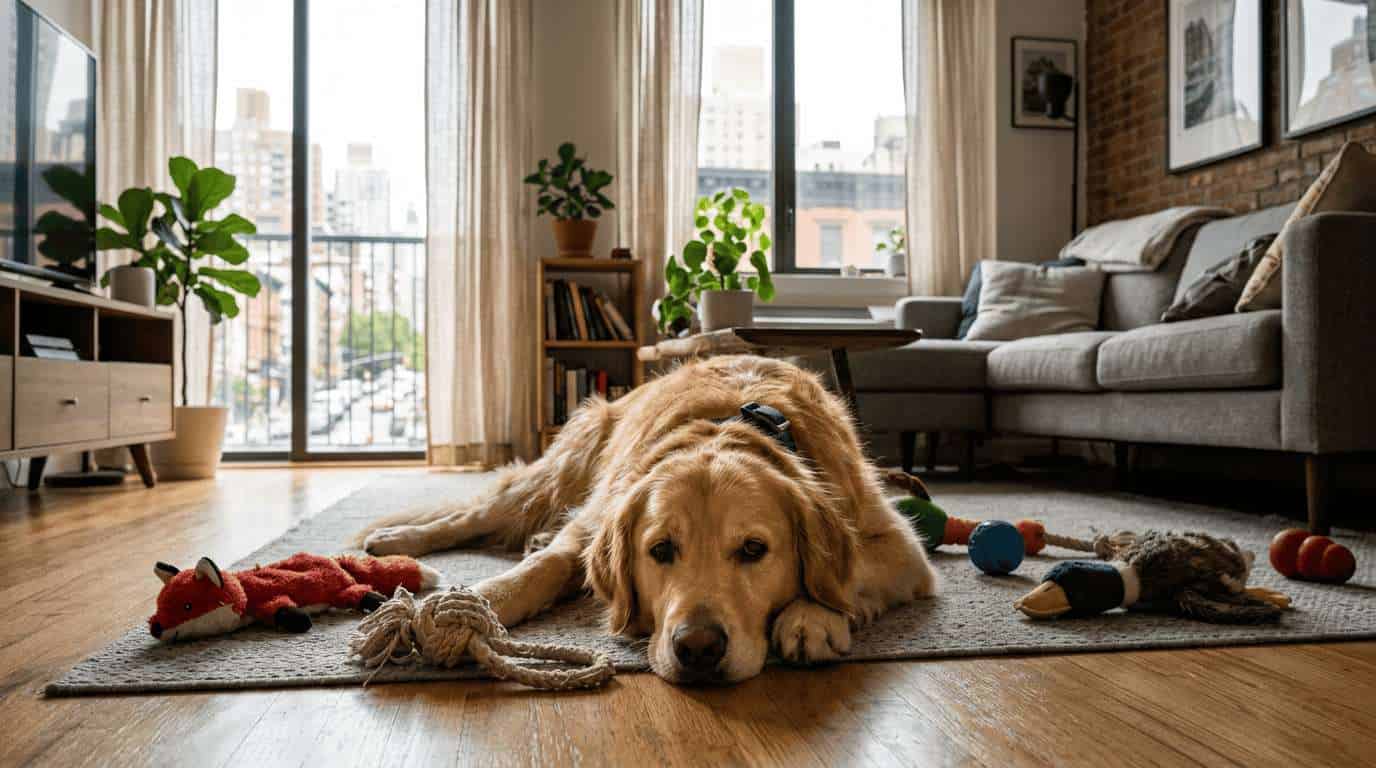
The most common signs of a bored apartment dog include destructive chewing, excessive barking, pacing, attention-seeking, and sleeping far more than usual. Each sign has a specific fix — from puzzle feeders and nose work games to dog walkers and daycare. More exercise alone rarely solves boredom; mental stimulation is the missing piece most owners skip.
Living in an apartment with a dog is completely doable — but it demands more intentional effort than a house with a yard. When the natural stimulation of a big outdoor space isn’t available, dogs rely entirely on us to keep their brains and bodies occupied. Fall short of that, and boredom sets in fast.
The tricky part: bored dogs don’t come with a neon sign. They communicate through behavior, and many of those behaviors are easy to misread as stubbornness, anxiety, or just “being bad.” Knowing what to actually look for — and more importantly, what to do about it — changes everything.
Here are 15 clear signs your apartment dog is bored, paired with specific, practical fixes for each one.
What Should You Know About Sign #1?
Chewing is a self-soothing behavior. Dogs that chew destructively aren’t being vindictive — they’re managing stress and boredom with the tools available. The solution isn’t punishment; it’s substitution and prevention through proper tire-out before you leave.
What Should You Know About Sign #2?
What Should You Know About Sign #3?
What Should You Know About Sign #4?
What Should You Know About Sign #5?
What Should You Know About Sign #6?
What Should You Know About Sign #7?
What Should You Know About Sign #8?
Sign #9: Whining for No Apparent Reason
Sign #10: Escaping or Attempting to Escape
Sign #11: Eating Grass or Non-Food Items
Sign #12: Ignoring Commands They Know Well
Sign #13: Hyperactivity at Night
Sign #14: Increased Clinginess or Velcro Behavior
Sign #15: Weight Gain Without Diet Changes
The 5 Enrichment Pillars for Apartment Dogs
Fixing boredom isn’t about a single solution — it’s about covering five key categories consistently:
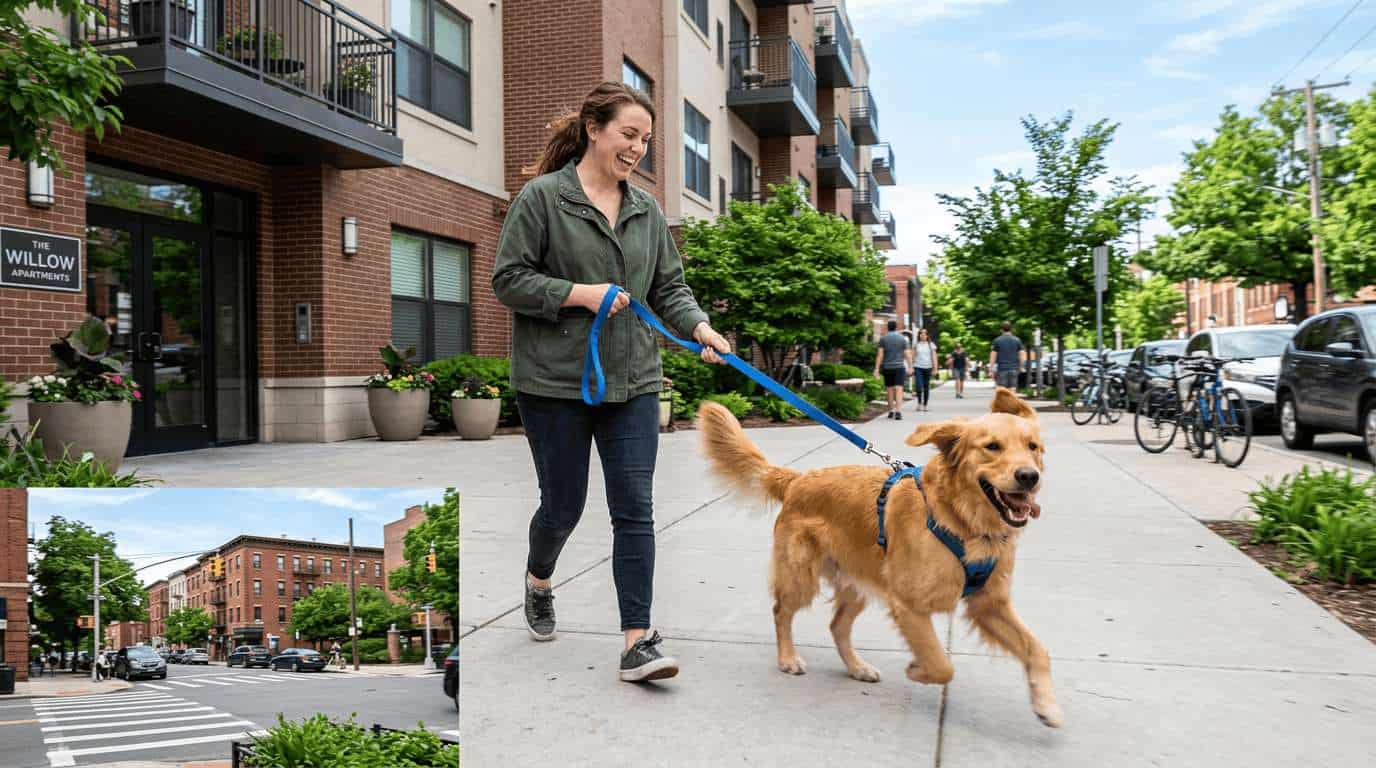
- Physical exercise — walks, runs, dog park visits, indoor fetch
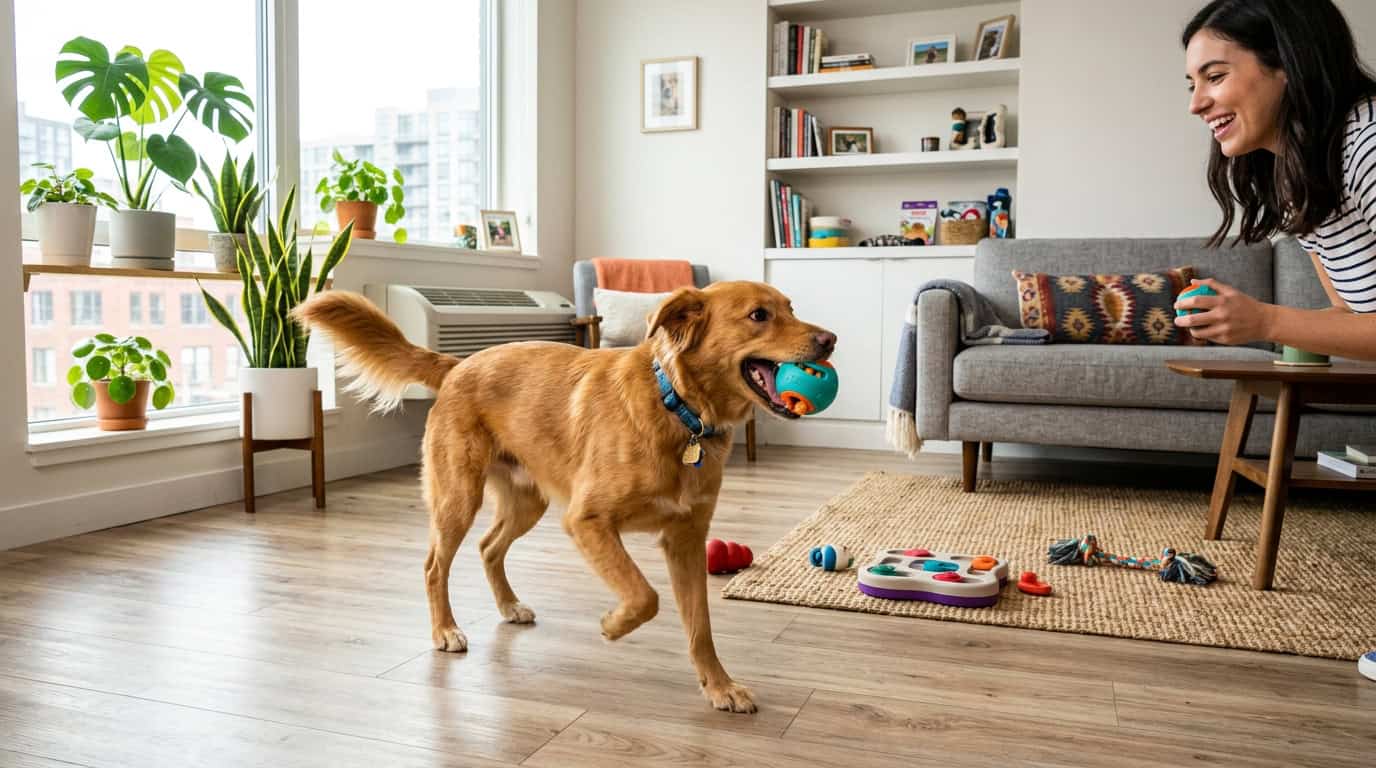
- Mental stimulation — puzzle feeders, training sessions, nose work games
- Social interaction — dog park playdates, dog-friendly cafe visits, doggy daycare
- Environmental enrichment — window perches, outdoor sounds, novel smells from outside
- Bonding activities — grooming, massage, trick training, calm co-activities
Check in on apartment dog products that support all five pillars without taking up too much floor space.
Quick Enrichment Toolkit for Apartment Life
- 🛒 Kong classic & enrichment feeders — freeze with peanut butter or kibble for extended engagement
- 🛒 Snuffle mats for nose work — 10 minutes of sniffing equals 30 minutes of walking mentally
- 🛒 Dog puzzle feeders (Level 2–3) — replace boring bowls with a 20-minute mental workout
- 🛒 Lick mats for calming — peanut butter or yogurt on a textured mat for soothing solo time
Frequently Asked Questions
How do I know if my dog is bored or sick?
Boredom typically comes with behavioral changes like destructive chewing, excessive barking, or restlessness during the day when you’re gone. Illness usually involves physical symptoms: loss of appetite, lethargy, vomiting, or changes in bathroom habits. If you’re unsure, a vet visit rules out medical causes quickly.
How much exercise does an apartment dog actually need?
Most adult dogs need 30–60 minutes of aerobic exercise daily, though this varies significantly by breed. High-energy breeds like Border Collies or Huskies may need 2+ hours. Mental stimulation through puzzle feeders and training can supplement physical exercise significantly.
Can a dog be happy living in an apartment?
Absolutely. Dogs adapt to their environment based on the quality of care they receive, not the square footage. A dog with daily exercise, mental stimulation, and human bonding time is perfectly happy in a studio apartment. Breed selection and meeting energy needs matter far more than space.
What’s the best toy for a bored apartment dog?
Puzzle feeders and Kongs stuffed with frozen food are consistently the most effective. They combine food motivation with mental problem-solving and can keep a dog engaged for 15–45 minutes. Rotate through different puzzles weekly to maintain novelty.
How do I stop my dog from barking when I’m at work?
Tire your dog out before leaving (morning walk or play session), leave a stuffed Kong or puzzle feeder, use a white noise machine to muffle triggering sounds, and consider a dog camera with two-way audio. For persistent cases, separation anxiety training or doggy daycare may be needed.

.bpp-layout-fix{max-width:820px;margin:0 auto;padding:0 1rem;font-family:-apple-system,BlinkMacSystemFont,”Segoe UI”,Roboto,sans-serif;line-height:1.7;color:#2d3748}
.bpp-layout-fix h2{font-size:1.5rem;font-weight:700;margin:2rem 0 .75rem;color:#1a202c}
.bpp-layout-fix h3{font-size:1.2rem;font-weight:700;margin:1.5rem 0 .5rem;color:#2d3748}
.bpp-layout-fix p{margin:0 0 1rem}
.bpp-layout-fix ul,.bpp-layout-fix ol{margin:0 0 1rem 1.5rem}
.bpp-layout-fix li{margin-bottom:.4rem}
.bpp-layout-fix img{max-width:100%;height:auto;border-radius:10px;margin:1rem 0}
.bpp-quick-answer{background:#f0fff4;border-left:4px solid #36b37e;padding:1rem 1.25rem;border-radius:0 8px 8px 0;margin:1.5rem 0}
.bpp-quick-answer strong{display:block;margin-bottom:.25rem;color:#276749}
.bpp-disclosure{background:#fffbeb;border:1px solid #f6e05e;padding:.75rem 1rem;border-radius:8px;font-size:.82rem;color:#744210;margin:1rem 0}
.bpp-breadcrumb{font-size:.82rem;color:#718096;margin-bottom:.75rem}
.bpp-breadcrumb a{color:#718096;text-decoration:none}
.bpp-breadcrumb a:hover{text-decoration:underline}
.bpp-meta{display:flex;gap:1rem;flex-wrap:wrap;font-size:.82rem;color:#718096;margin-bottom:1.5rem;align-items:center}
.bpp-author-box{display:flex;gap:1rem;background:#f7fafc;padding:1.25rem;border-radius:10px;margin:2rem 0;align-items:flex-start}
.bpp-author-box img{width:64px;height:64px;border-radius:50%;object-fit:cover;flex-shrink:0}
.bpp-author-box h4{margin:0 0 .25rem;font-size:1rem}
.bpp-author-box p{margin:0;font-size:.85rem;color:#4a5568}
.bpp-faq{margin:2rem 0}
.bpp-faq details{border:1px solid #e2e8f0;border-radius:8px;padding:.75rem 1rem;margin-bottom:.5rem}
.bpp-faq summary{font-weight:600;cursor:pointer;color:#2d3748}
.bpp-faq details[open] summary{color:#36b37e}
.bpp-share{display:flex;gap:.5rem;flex-wrap:wrap;margin:1.5rem 0}
.bpp-share a{display:inline-block;padding:.5rem 1rem;border-radius:6px;font-size:.85rem;font-weight:600;text-decoration:none;color:#fff}
.bpp-share .fb{background:#1877f2}
.bpp-share .tw{background:#000}
.bpp-share .pi{background:#e60023}
.bpp-sign-box{background:#fff5f5;border-left:4px solid #fc8181;padding:1rem 1.25rem;border-radius:0 8px 8px 0;margin:1rem 0}
.bpp-fix-box{background:#f0fff4;border-left:4px solid #48bb78;padding:1rem 1.25rem;border-radius:0 8px 8px 0;margin:1rem 0}