15 Signs Your Indoor Cat Is Bored in an Apartment — And What to Do (2026)
📅 April 28, 2026 ✍️ Busy Pet Parent Team 🕐 9 min read
⚡ Quick Answer
Signs your indoor cat is bored include over-grooming, increased aggression, weight gain, destructive scratching, and sleeping more than 16 hours a day. The fastest fixes: install a window bird feeder, add a cat tree, run two 10–15 minute wand toy sessions daily, and swap food bowls for puzzle feeders. Boredom in indoor cats is extremely common and entirely fixable.
Disclosure: This post may contain affiliate links. If you purchase through our links, we may earn a small commission at no extra cost to you. We only recommend products we genuinely trust.
Indoor apartment cats live longer, safer lives — but without the mental stimulation of an outdoor territory to patrol, prey to hunt, and novel environments to explore, that safety can come at a psychological cost. Boredom in indoor cats is one of the most under-recognized welfare issues in apartment pet ownership.
The problem isn’t that apartments are too small. It’s that most owners set up their cat’s environment once and then stop thinking about it. Cats need ongoing novelty, interaction, and challenge to stay mentally healthy. Without it, behavioral problems quietly accumulate.
Here are 15 signs your indoor cat is telling you they need more — and exactly what to do about each one.
🔴 What it looks like: Bald patches, thinning fur especially on the belly or inner legs, constant licking to the point of skin irritation.
✅ The fix: Over-grooming is often a displacement behavior — your cat is channeling frustration and boredom into a repetitive physical act. Increase interactive play immediately (two 15-minute wand toy sessions daily). If over-grooming persists after enrichment increases, a vet visit is warranted to rule out skin conditions, allergies, or anxiety disorder.
The International Cat Care organization notes that redirected behavior like excessive grooming is one of the clearest early indicators of an understimulated indoor cat.
What Should You Know About Sign #2?
🔴 What it looks like: Unprovoked swipes, biting hands or ankles, ambushing you or other pets when you walk by.
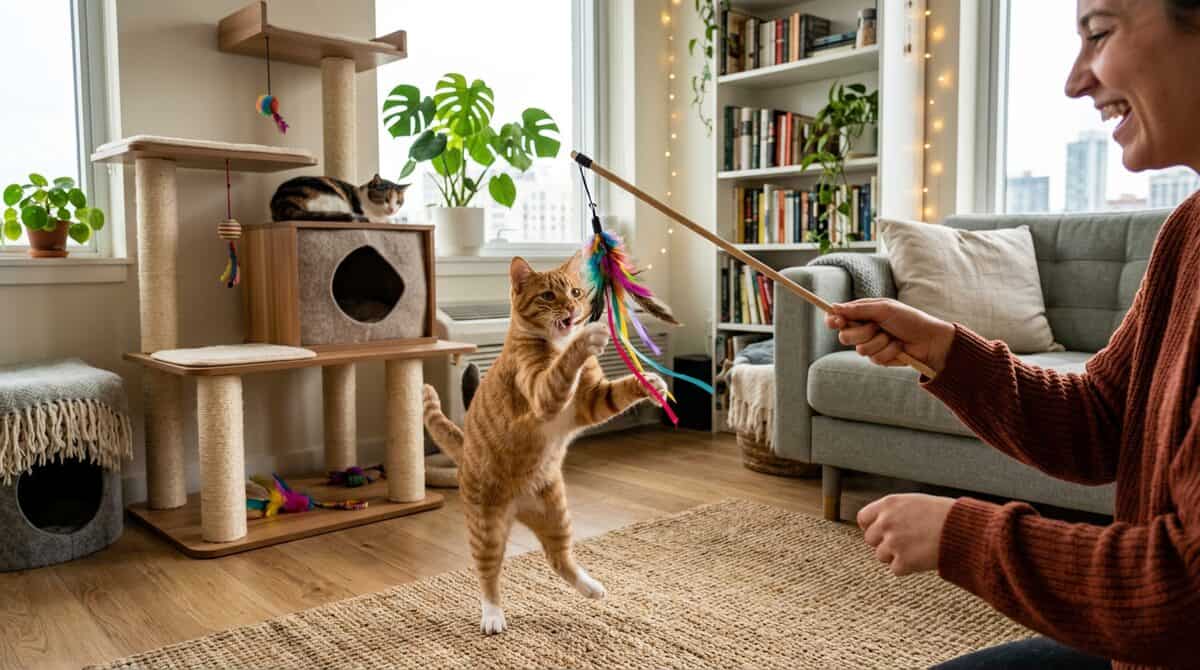
✅ The fix: Hunt drive with nowhere to go becomes aggression. Schedule two daily interactive play sessions using a wand toy — allow full hunt-stalk-catch-kill cycles (letting your cat actually “catch” the toy at session end). This is the single most effective intervention for predatory aggression in indoor cats.
What Should You Know About Sign #3?
🔴 What it looks like: Your cat sleeps 18–20 hours daily and seems completely uninterested in everything.
✅ The fix: Cats sleep a lot normally (12–16 hours), but extended lethargy is a warning sign. Add novelty to the environment: rotate toys weekly, introduce new cardboard boxes, move the cat tree to a different window. The ASPCA’s cat care resources recommend regular environmental rotation as a core enrichment strategy for indoor cats.
What Should You Know About Sign #4?
🔴 What it looks like: Furniture corners destroyed, carpet shredded at doorways, baseboards clawed.
✅ The fix: Scratching is a natural marking and stretching behavior — you can’t eliminate it, only redirect it. Provide multiple scratching posts in different orientations (vertical sisal posts, horizontal cardboard scratchers) near the areas being damaged. Double-sided tape on furniture corners discourages inappropriate sites while the proper outlets are established. Check smart pet gadgets for deterrent options.
What Should You Know About Sign #5?
🔴 What it looks like: Constant meowing, crying, or yowling — especially at night or when you’re working.
✅ The fix: Evening vocalization is almost always unspent energy. A 15-minute wand toy session 30–60 minutes before bed dramatically reduces night crying. Daytime vocalization often means your cat is bored and trying to initiate interaction. Schedule that playtime — and make it a real active session, not just throwing a toy.
What Should You Know About Sign #6?
🔴 What it looks like: Constantly meowing at the food bowl, finishing food immediately and demanding more, gaining weight without portion increases.
✅ The fix: Replace the food bowl with a puzzle feeder immediately. Scatter feeding, lick mats, and food-dispensing toys turn mealtime into a 20–30 minute activity instead of a 30-second event. This reduces boredom and slows eating simultaneously. Daily enrichment routines work best when food is integrated into them.
What Should You Know About Sign #7?
🔴 What it looks like: Your cat sits and stares intently at blank walls, corners, or the ceiling for extended periods.
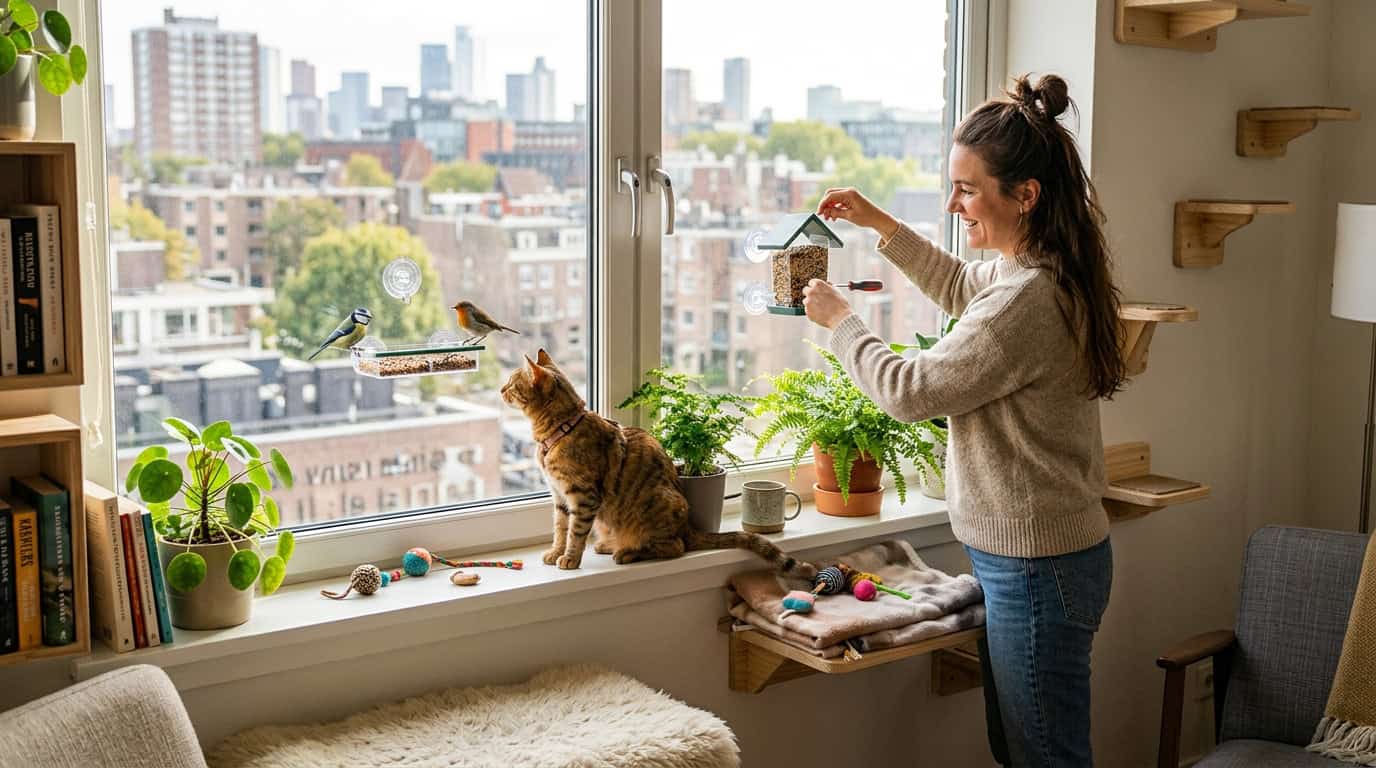
✅ The fix: Cats have far superior hearing and can detect tiny insects, sounds in walls, or air movement humans can’t perceive. This is sometimes normal — but combined with other signs, it indicates a cat looking for stimulation. Provide a cat TV (YouTube bird/fish videos), a window bird feeder, or a fish tank screensaver for something actually worth watching.
What Should You Know About Sign #8?
🔴 What it looks like: Deliberate, methodical pushing of objects off counters and tables — making eye contact with you as it happens.
✅ The fix: This is attention-seeking and tactile stimulation combined. Your cat has learned it produces a reaction from you. Don’t react — instead, redirect by providing appropriate tactile toys (crinkle balls, feather teasers) and ensuring you’re meeting their daily interactive play quota. Ignoring the behavior while boosting enrichment is the fastest resolution.
Sign #9: Hiding More Than Usual
🔴 What it looks like: Spending hours under the bed, in closets, or behind furniture — emerging only for food.
✅ The fix: Hiding can indicate stress, fear, or illness — so rule medical causes out first. If your cat is healthy, withdrawal often means the open environment feels unstimulating or unsafe. Add vertical hiding spots (cat trees with condos, wall-mounted shelves) that give elevated vantage points. Cats feel more secure and more engaged when they have high ground to survey from.
Sign #10: Increased Interest in Escaping
🔴 What it looks like: Door-darting behavior, intense focus on windows and balcony doors, crying when you leave.
✅ The fix: Create a safe outdoor connection without the danger. A screened balcony “catio” setup, a harness + leash for supervised outdoor time, or a window cat perch with a bird feeder outside all provide real-world stimulation safely. The International Cat Care indoor cat guide has excellent catio and safe outdoor access resources.
Sign #11: Playing With Water
🔴 What it looks like: Pawing at water bowls, sitting in the sink, fascination with running faucets.
✅ The fix: This is sensory-seeking behavior. A cat water fountain provides the moving-water stimulation cats find naturally interesting and improves hydration simultaneously. It’s one of the most cost-effective enrichment upgrades available for apartment cats.
Sign #12: Tail Chasing or Repetitive Behaviors
🔴 What it looks like: Chasing own tail, repetitive circling, pacing the same path.
✅ The fix: Compulsive behaviors are a serious sign of chronic understimulation. Increase interactive play significantly and consult a vet — compulsive behavior in cats can require behavioral intervention beyond enrichment alone. Don’t wait on this one.
Sign #13: Rough Play With You (Bunny Kicking, Biting Hard)
🔴 What it looks like: Your cat grabs your hand or foot and bunny-kicks hard, or bites with real force during petting.
✅ The fix: Overstimulated or under-stimulated — both look like rough play. Never use your hands as toys. Introduce wand toys as the exclusive interactive play tool and run sessions until your cat is genuinely tired (rolling onto their back, breathing faster). A cat that gets true predatory satisfaction through toys is far less likely to redirect onto humans.
Sign #14: Weight Gain
🔴 What it looks like: Gradual weight gain despite no diet changes, reduced grooming of hard-to-reach areas.
✅ The fix: Sedentary apartment life + boredom eating = the most common cause of feline obesity. Use pet tech upgrades like automatic laser toys that run on timers for mid-day activity while you’re at work. Puzzle feeders slow eating. The Cornell Feline Health Center has excellent guidelines on healthy indoor cat weight management.
Sign #15: Reduced Interest in Toys They Used to Love
🔴 What it looks like: Toys that used to produce instant excitement now get ignored completely.
✅ The fix: Habituation. Rotate toys on a weekly schedule — put 80% away and cycle new ones in regularly. The novelty of a “new” toy (even one they’ve had before but haven’t seen for 3 weeks) reactivates interest effectively. Also consider upgrading: the wand toy you’ve used for 2 years loses appeal; a new texture or movement pattern resets engagement. Browse everyday items repurposed as cat toys for free or cheap novelty options.
How do I know if my indoor cat is bored or depressed?
Boredom and depression in cats share symptoms: lethargy, over-grooming, reduced appetite, and disinterest in play. The key difference is duration and severity. Boredom responds quickly to enrichment. Depression persists despite enrichment attempts and often has a trigger (new pet, move, loss). Persistent changes warrant a vet visit.
How much playtime does an indoor apartment cat need?
Most cats need two dedicated play sessions per day of 10–15 minutes each using interactive toys like wand/feather toys. This mimics hunt cycles and is far more effective than leaving toys scattered on the floor. Evening play before bed is especially important for settling overnight activity.
Should I get a second cat to cure boredom?
A second cat can help, but it’s not a guaranteed solution. Cat compatibility depends heavily on personality and age. Introducing a wrong-match companion can actually increase stress. Try enrichment improvements first. If your cat is clearly social and playful, a compatible companion cat can make a meaningful difference.
What enrichment works best for apartment cats?
The highest-impact enrichment for apartment cats: window bird feeders (visual stimulation), cat trees for vertical space, wand toy play sessions twice daily, puzzle feeders to replace boring bowls, and rotating novel toys weekly. Together these address physical, mental, and sensory needs.
Is my cat nocturnal or just bored at night?
Domestic cats are crepuscular (most active at dawn and dusk), not strictly nocturnal. Night zoomies and vocalizing are often signs of unspent energy from an under-stimulated day. An interactive play session 30–60 minutes before your bedtime almost always reduces nighttime activity significantly.
We’re apartment pet owners who write practical, research-backed guides for people who love their animals and hate bad advice. Every tip we publish is something we’d actually use ourselves.