
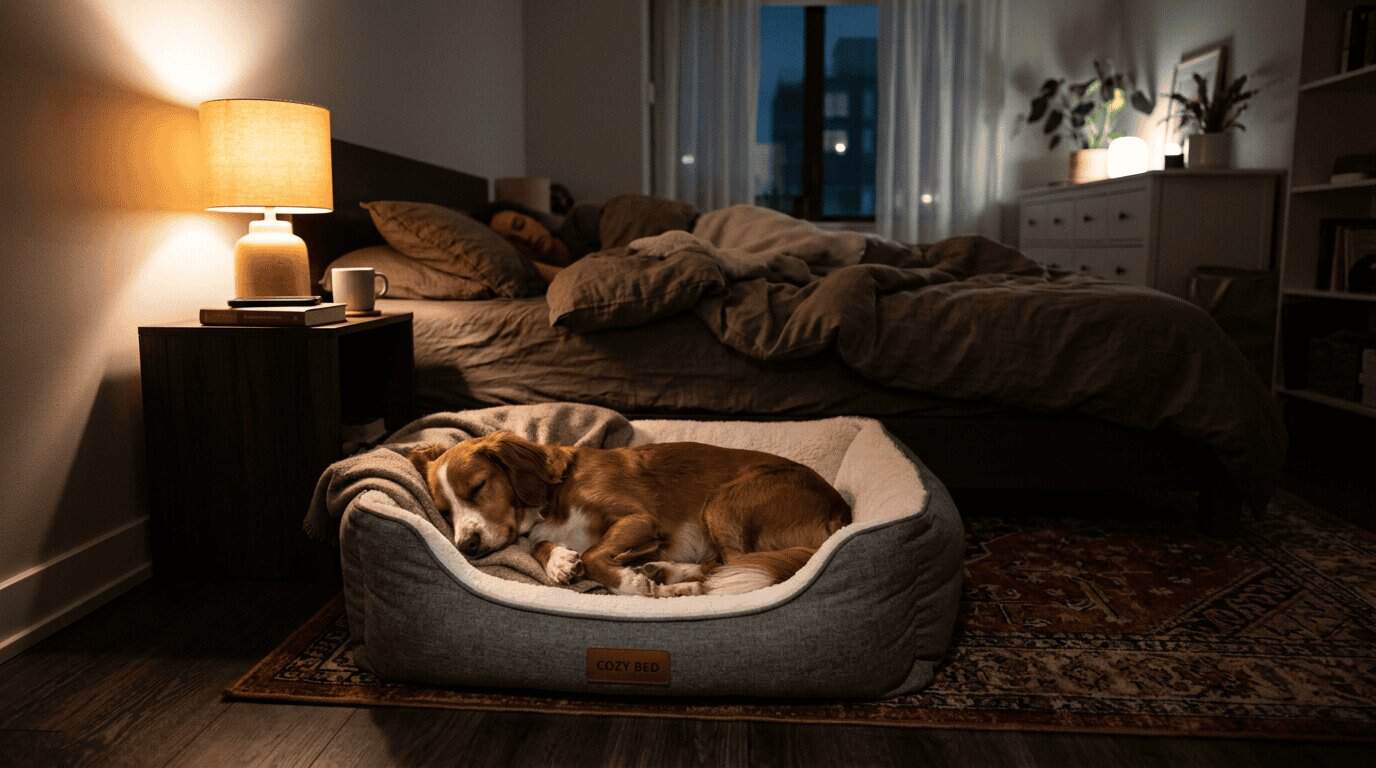
To calm dog anxiety at night in an apartment: establish a consistent pre-bed routine, ensure your dog gets adequate evening exercise (30+ min), use a white noise machine near their sleeping area, try calming supplements (melatonin, L-theanine), and consider crate training as a “den” space. Most nighttime anxiety resolves within 2–4 weeks of consistent changes.
Key Takeaways
- Routine is the foundation: According to the AKC, dogs are creatures of habit — a consistent bedtime routine (walk → lick mat → crate) reduces nighttime anxiety by establishing predictable, safe expectations every evening.
- Evening exercise is non-negotiable: PetMD recommends a 20–30 minute active walk within 2 hours of bedtime to burn off residual energy and trigger the post-exercise calm that makes settling much easier for anxious dogs.
- White noise works for apartment dogs: Apartment noise — neighbors, hallway sounds, street traffic — is a major nighttime anxiety trigger. A white noise machine or fan masks these sounds, reducing reactive barking and restlessness by up to 70% in some cases.
- Don’t reward anxiety with attention: The ASPCA cautions that responding to nighttime whining with comfort reinforces the behavior. Instead, calmly confirm the dog is safe, then exit — consistency over 1–2 weeks typically resolves attention-seeking nighttime behavior.
Why Dogs Get Anxious at Night in Apartments
Nighttime anxiety in apartment dogs is more common than most owners realize. Apartments create a unique anxiety cocktail: unfamiliar building sounds amplified at night, separation from owners when everyone settles down, and the heightened sensory awareness dogs have in the dark hours.
According to VCA Animal Hospitals, separation anxiety affects up to 17% of dogs — and many of those cases manifest most acutely at night when the household quiets down. Puppies and recently adopted rescue dogs are at highest risk.
Common Nighttime Triggers
- Elevator and hallway sounds that are louder after midnight
- Raccoons or wildlife sounds from outside
- First nights in a new apartment
- Changes in your schedule or routine
- Underlying health issues (pain, cognitive dysfunction in senior dogs)
Tip 1: Establish a Consistent Bedtime Routine
Dogs thrive on predictability. A bedtime routine signals that the day is ending and it’s safe to settle down. Build a 20–30 minute wind-down sequence:
- Final potty break (critical — dogs wake at night when bladder is uncomfortable)
- 10-minute calm play or sniff walk to discharge remaining energy
- Food puzzle or lick mat for mental wind-down
- Settle cue (“bed time,” “settle,” “go to bed”)
- Lights dim, TV off or white noise on
Consistency is the key word. Do this at the same time every night, and within 1–2 weeks your dog will begin anticipating sleep.
Tip 2: Evening Exercise (Non-Negotiable)
A dog with unspent energy cannot relax at night. Make sure your evening walk is substantive:
- Small dogs: 20-minute brisk walk
- Medium dogs: 30–40 minutes including some fetch or play
- High-energy breeds: 45–60 minutes minimum
Time your last substantial exercise 1–2 hours before bed — exercising right before bed can be stimulating rather than calming. See more ideas in our apartment dog enrichment guide.
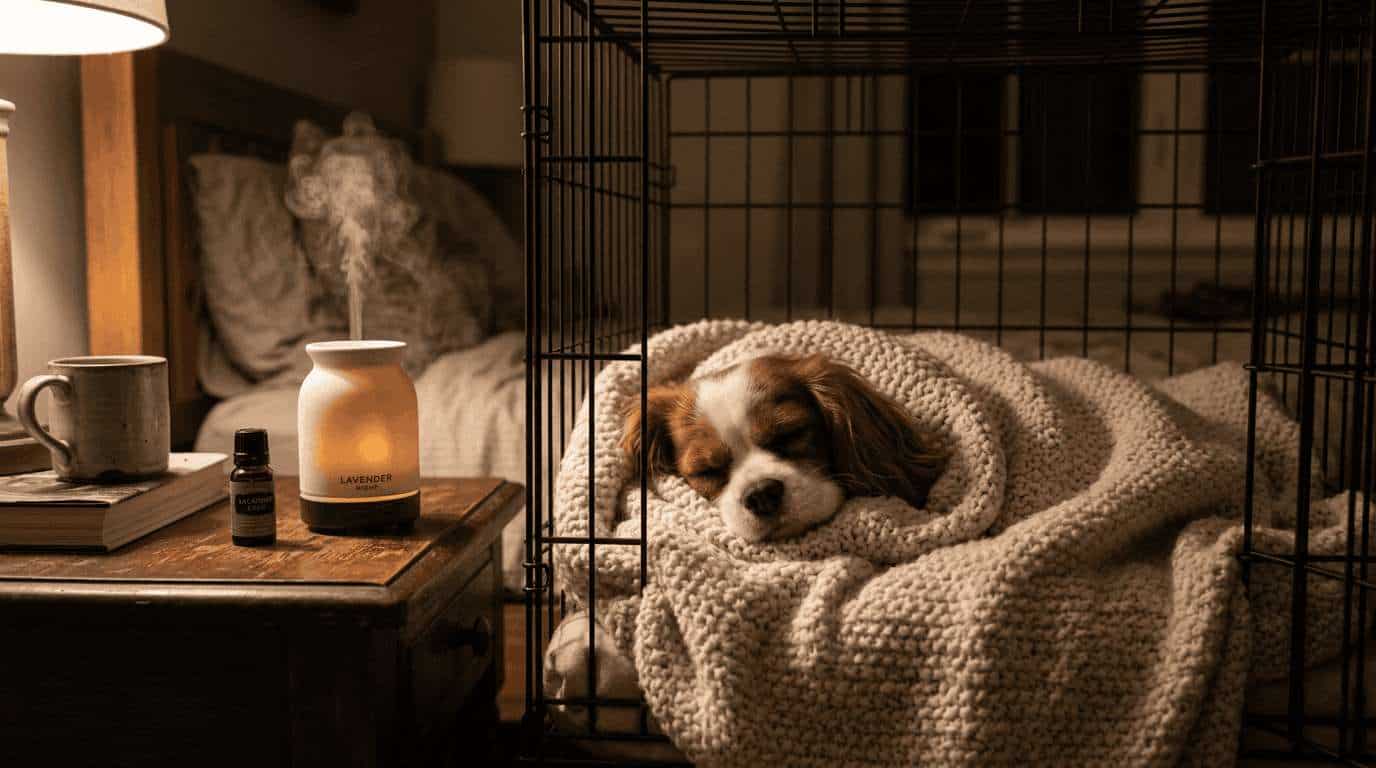
Tip 3: Create the Perfect Sleep Environment
Optimize your dog’s sleeping setup for maximum calm:
- Temperature: 65–75°F is ideal for most dogs
- Bedding: Orthopedic foam beds reduce physical discomfort that interrupts sleep
- Darkness: Use blackout curtains if street lights cause reactivity
- Familiar scent: An unwashed t-shirt near their bed provides comfort when you’re not immediately beside them
Tip 4: White Noise Machines
Apartment sounds are relentless — late-night elevator rides, doors closing, neighbors coming home. A white noise machine placed between your dog’s sleeping area and the front door masks these triggers before they register as threats.
• White Noise Machine
• Adaptil Calming Pheromone Diffuser
• ThunderShirt Calming Wrap
• Dog Calming Chews with Melatonin
Tip 5: Crate Training as a Safe Den
Many dog owners resist crates — but for anxious dogs, a properly introduced crate is genuinely calming. Dogs are den animals; a covered crate becomes their safe space, not a punishment. The key is gradual introduction:
- Place the crate in your bedroom (proximity to you is calming)
- Leave it open with treats and a worn shirt inside for several days
- Begin closing the door for 5 minutes while you’re in the room
- Gradually increase duration over 2 weeks
- Move the crate incrementally toward your preferred location if desired
Tip 6: Calming Supplements
Several supplements have solid evidence for reducing mild-moderate dog anxiety:
- Melatonin (0.1 mg/kg, 30 min before bed): Safe and effective for most dogs; check with your vet for dosing
- L-theanine (Anxitane/Composure): Promotes calm without sedation
- Zylkene (casein-based): Clinically studied; derived from milk protein
- Chamomile and valerian: Natural options in many commercial calming chews
Tip 7: Adaptil Pheromone Diffuser
Adaptil is a synthetic version of the natural pheromone mother dogs produce to calm puppies. Studies show it reduces anxiety behaviors including nighttime restlessness in both puppies and adult dogs. Plug the diffuser in near your dog’s sleeping area and run it continuously. Effects typically build over 2–4 weeks.
Tip 8: Manage Separation at Night
If your dog sleeps in another room and shows nighttime anxiety, proximity to you is often the solution. Dogs are social sleepers by nature. Options:
- Move their bed into your room
- Use a tether to keep them near your bed while maintaining a separate sleeping surface
- Leave a baby monitor so you can verbally reassure them without getting up
- Co-sleeping (if it doesn’t worsen dependency behavior)
Tip 9: Address Underlying Medical Issues
Sudden onset nighttime anxiety in an older dog often indicates pain (arthritis, dental disease) or cognitive dysfunction syndrome — the dog equivalent of dementia. If your dog suddenly starts showing nighttime anxiety after years of calm sleep, a vet visit is warranted before trying behavioral interventions.
Tip 10: Lick Mat Before Bed
Licking is physiologically calming for dogs — it releases serotonin and reduces cortisol. A frozen lick mat with peanut butter, wet food, or plain yogurt provides 10–20 minutes of calming bedtime engagement. This has become one of the most popular dog calming strategies in the dog behavior community for good reason: it works.
Tips 11–15: Additional Strategies That Work
- Through a Dog’s Ear audio: Clinically tested music specifically composed to reduce canine anxiety. Play softly during sleep hours.
- Scent enrichment: A drop of lavender essential oil on a bandana (not direct on skin) has calming effects for some dogs. Test tolerance first.
- Predictable feeding times: Dogs fed on a schedule feel more secure. A small bedtime snack at the same time each night reinforces the sleep cue.
- Reduce pre-bed screen stimulation: Dogs react to movement and sounds from TV. Turn screens off 30 minutes before bed.
- Veterinary behaviorist consultation: For severe cases that don’t improve in 4–6 weeks, a DACVB can provide medication options and targeted behavior modification protocols.
For related guidance on daytime anxiety management, see our guide on stopping dog separation anxiety in apartments.
When to See a Vet About Nighttime Dog Anxiety
Most cases of nighttime anxiety in apartment dogs respond to the behavioral and environmental strategies in this guide within 2–4 weeks. However, sudden onset of nighttime anxiety in a previously settled dog warrants a vet visit. According to PetMD, sudden behavioral changes — especially at night — can indicate pain, cognitive dysfunction syndrome (CDS) in older dogs, thyroid issues, or other medical conditions that need clinical diagnosis rather than behavioral intervention.
Signs that nighttime anxiety may have a medical component: pacing or circling without settling, vocalizing in a way that seems distressed rather than attention-seeking, sudden house soiling at night in a trained dog, or nighttime anxiety that appears after age 7 in a medium-to-large breed. Your vet can rule out medical causes and, if needed, discuss short-term pharmaceutical support (like trazodone or gabapentin) while behavioral protocols take effect. In 2026, the integration of behavioral support and veterinary care is considered best practice for moderate-to-severe canine anxiety by the American Veterinary Medical Association.
Tracking Progress: Is Your Approach Working?
One of the most overlooked aspects of managing dog anxiety is measuring progress. It’s easy to feel like “nothing is working” after a few hard nights, but anxiety reduction is usually gradual and non-linear. The ASPCA recommends keeping a simple log for 2–3 weeks: note each night’s sleep quality (1–5 scale), what strategies were used, and any specific triggers observed (garbage truck, neighbors arguing, thunderstorm). Patterns emerge within a week that tell you which interventions are having the most effect for your individual dog.
Most apartment owners using the combination of consistent bedtime routine, evening exercise, and a white noise machine see meaningful improvement within 10–14 days. Full resolution of nighttime anxiety typically takes 3–6 weeks of consistent application. If you’re not seeing any improvement after 4 weeks of consistent effort, consult a certified professional dog trainer (CPDT-KA) or veterinary behaviorist. Browse the top dog anxiety calming products on Amazon to build your complete nighttime toolkit.
Frequently Asked Questions
Why is my dog anxious at night in the apartment?
Dogs often experience nighttime anxiety due to separation from owners, new apartment sounds, lack of a bedtime routine, or underlying separation anxiety. Puppies and newly adopted dogs are especially susceptible.
What helps dogs sleep at night?
Consistent bedtime routines, adequate evening exercise, a comfortable crate or bed, white noise, and calming supplements like melatonin or Adaptil diffusers can all improve nighttime sleep for dogs.
Should I let my dog sleep in bed with me?
Co-sleeping is a personal choice. It can reduce nighttime anxiety but may reinforce dependency. If co-sleeping worsens anxiety when separated, gradual crate training is recommended.
Do calming treats for dogs work at night?
Calming treats with melatonin, L-theanine, or chamomile can reduce mild anxiety. They work best as part of a broader routine, not as a standalone solution.
How long does it take to fix dog nighttime anxiety?
Most dogs improve within 2–4 weeks of consistent routine changes. Severe anxiety may take 2–3 months and benefit from professional behavioral support.