
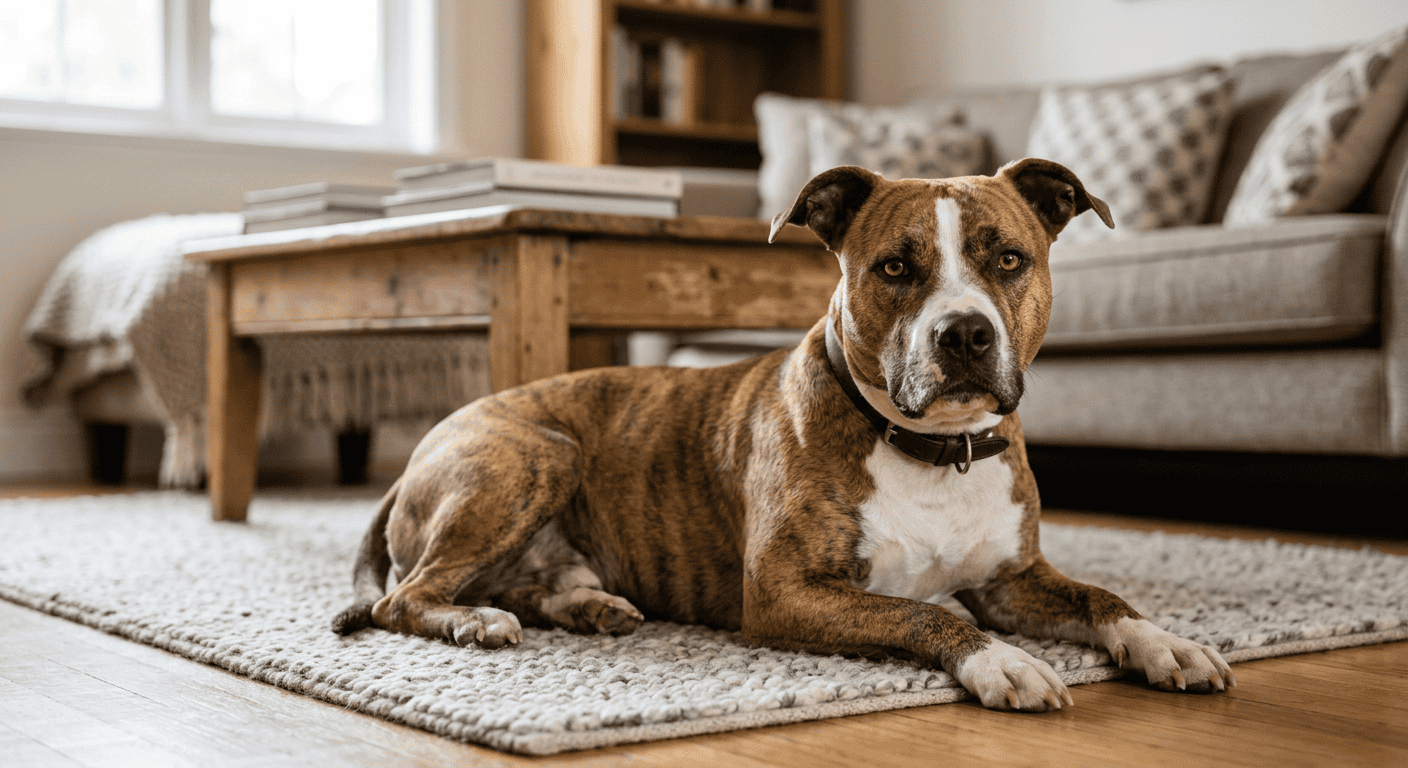
tivity daily must be consistently met), their potential dog-selectivity making shared building spaces require careful management, and critically — breed-specific legislation and rental restrictions. Many landlords prohibit bull-breed types regardless of individual temperament. The verdict: viable for experienced, active owners in areas without BSL, in pet-friendly housing. Always verify your lease and local ordinances before acquiring this breed.
Exercise & Daily Activity Needs
AmStaffs need 60–90 minutes of vigorous exercise daily. They’re athletic dogs who enjoy a variety of activities: fetch, tug-of-war (a favourite), swimming, agility, and long brisk walks. They have genuine athletic endurance and recover quickly.
For apartment owners: a morning jog or long walk (40–50 minutes), combined with an afternoon or evening play session or training workout provides the daily minimum. Mental stimulation through training sessions, puzzle feeders, and nose work is equally important — AmStaffs are intelligent enough to need cognitive engagement, not just physical movement. Bored AmStaffs who don’t get mental stimulation develop destructive habits.
Training the American Staffordshire Terrier in an Apartment
American Staffordshires are among the most trainable terrier breeds when worked with correctly. They’re highly food-motivated, intelligent, and genuinely enjoy the interaction of training with an engaged handler. Positive reinforcement — treats, play, and clear praise — produces enthusiastic, capable learners. Harsh methods are counterproductive and damage trust with a breed that performs best through partnership.
Socialisa

tion from the earliest possible age is critical. Exposing AmStaff puppies to a wide range of people, dogs, environments, and situations during the 8–16 week critical period pays dividends throughout their life. For apartment life, priority skills are: leash manners and impulse control, controlled greetings with strangers and other dogs, ‘place’ for calm settling, and ‘quiet’ for managing their occasional alert bark. Obedience classes are strongly recommended and often enjoyable for both dog and owner.
Grooming Requirements
The AmStaff’s short, stiff coat is genuinely one of the easiest coats to maintain. Weekly brushing with a rubber curry mitt removes dead hair, stimulates skin, and distributes natural oils — it’s more massage than chore. They shed moderately year-round without the dramatic seasonal coat blows of double-coated breeds.
Bathing monthly or when dirty maintains a clean, healthy coat. Some AmStaffs are prone to skin allergies — watch for redness, chronic itching, or recurring skin infections, which may indicate food or environmental sensitivities requiring veterinary attention. Ear cleaning weekly prevents buildup, nail trims every 3–4 weeks, and periodic dental care round out the routine.
Health & Lifespan
AmStaffs live 12–16 years — a notably long lifespan for a medium-large breed. Common health concerns include hip dysplasia, skin allergies (atopic dermatitis is one of the most common issues), cardiac disease, and cerebellar ataxia in some bloodlines.
OFA hip certification and cardiac evaluations from reputable breeders significantly reduce inherited health risks. Annual vet checkups are standard; dental cleanings every 1–2 years help address the dental issues common in many terrier breeds. Monitoring skin condition is ongoing — AmStaffs with allergies benefit from omega fatty acid supplementation and allergen-managed diets.
Feeding Guide
Medium breed nutrition applies. Adults eat 1.5–2.5 cups of high-quality dry kibble per day, divided into two meals. Active dogs or those in regular athletic training may need more. Avoid overfeeding — weight gain puts real strain on joints and dulls their athletic edge.
Protein-first formulas support their muscular build. Dogs prone to skin allergies benefit from limited-ingredient or novel-protein diets that avoid common allergens like chicken or beef. Some owners find fish-based formulas (salmon, whitefish) improve skin condition significantly. Fresh water always available.
Recommended Products for American Staffordshire Terrier Owners
We’ve rounded up the top-rated gear most useful for American Staffordshire Terrier owners — beds sized for the breed, harnesses built for their body type, and food formulas recommended for their specific needs.
🛒 Top Picks for American Staffordshire Terrier Owners
- Best Dog Beds for American Staffordshire Terriers — supportive, right-sized for apartment living
- Top-Rated Harnesses for American Staffordshire Terriers — city-ready, escape-proof
- Best Dog Food for American Staffordshire Terriers — breed-appropriate nutrition
“`html
What Does a American Staffordshire Terrier Cost to Own?
The initial purchase price of an American Staffordshire Terrier from a reputable breeder typically ranges from $1,500 to $3,500, depending on pedigree, location, and breeder reputation. Always avoid puppy mills and prioritize health-tested, well-socialized puppies.
Monthly costs for owning an American Staffordshire Terrier include high-quality dog food ($50–$80), as this active breed requires a protein-rich diet. Routine vet visits and preventative care (vaccinations, flea/tick prevention) average $50–$100 monthly. Pet insurance, highly recommended for potential breed-specific health concerns, ranges from $30–$70 per month. Grooming costs are minimal ($10–$20 monthly) since their short coat only needs occasional brushing and baths.
For durable toys to keep your American Staffordshire Terrier engaged, consider the KONG Classic Dog Toy, a chew-resistant favorite for strong chewers.
“`
“`html
Is the American Staffordshire Terrier Good With Other Pets?
The American Staffordshire Terrier (AmStaff) is a loyal and affectionate breed, but its compatibility with other pets depends on socialization and training. While they can coexist peacefully with cats, their strong prey drive may trigger chasing behavior, especially if the cat runs. Early exposure and positive reinforcement can help minimize this instinct.
With other dogs, AmStaffs can be friendly if raised together, but same-sex aggression is not uncommon. Proper introductions and ongoing socialization are key to preventing conflicts. Their muscular build and confidence mean interactions should always be supervised, particularly with unfamiliar dogs.
Known for their love of children, AmStaffs are often patient and protective. However, their energetic nature requires supervision around young kids to avoid accidental knocks. Consistent training and boundaries ensure they remain gentle companions for families.
“`
“`html
What Do American Staffordshire Terrier Owners Say About Apartment Life?
Living with an American Staffordshire Terrier in an apartment is doable, but it’s not always easy. These dogs are strong, energetic, and thrive on routine—so city life requires planning. Many owners say their AmStaff adapts well if they get enough exercise. A tired dog is a happy dog, and that’s doubly true in small spaces. Two long walks or a solid play session daily are non-negotiable.
Noise can be a challenge. AmStaffs aren’t excessive barkers, but they’re vocal when excited or alert. Mine lets out a deep “woof” at delivery people, so training a “quiet” command early saved my sanity (and my lease). Space-wise, they’re surprisingly adaptable. Ours curls up on the couch like a compact loaf, but you’ll need to clear floor space—zoomies happen!
The biggest adjustment? Their love of leaning. These dogs are professional snugglers and will plop 60 pounds of muscle into your lap without warning. It’s endearing,
Frequently Asked Questions
🔗 Official Breed Resources