
Frequently Asked Questions
How can I effectively manage my dog’s barking in an apartment?
Use quiet training techniques, such as rewarding your dog for being quiet and managing their environment to prevent triggers.
What are the best ways to socialize my dog in an urban environment?
Expose your dog to various urban stimuli gradually, such as different sounds, sights, and people, while ensuring positive experiences through treats and praise.
How often should I take my dog out for potty breaks in an apartment?
Puppies should be taken out every 1-2 hours, while adult dogs typically need breaks after meals, naps, and play sessions.
What cue words should I use for potty training my dog?
Choose a simple phrase like ‘go potty’ or ‘do your business’ that you consistently use when your dog eliminates to help them associate the command with the action.
How can I prevent my dog from practicing unwanted behaviors while training?
Utilize management tools like baby gates, crates, and leashes to limit access to areas where they might misbehave until they learn the desired behaviors.

Before diving into specific skills, it’s worth establishing the key principles that make apartment dog training succeed. First: positive reinforcement is non-negotiable. Punishment-based training methods create anxious, reactive dogs — exactly the opposite of what you need in a shared living environment. Reward-based training produces dogs that want to work with you because good things happen when they do.
Second: consistency. Inconsistent rules create confused dogs. If your dog is allowed on the sofa on Sundays but not during the week, they will never understand the rule. Every member of the household must enforce the same rules the same way, every time. Inconsistency is the single biggest saboteur of dog training.
Third: management is training. You don’t have to wait until your dog has perfect manners to prevent problems. Use baby gates, crates, leashes, and environmental controls to prevent your dog from practicing unwanted behaviors while they learn the right ones. A dog that can’t access the front door can’t bark at it. Management buys you time to train the behavior properly.
How Do You Handle House Training Your Apartment Dog?
Establishing a Potty Routine
House training in an apartment is more demanding than in a house with a yard because every potty trip requires a leashed trip outside — through the hallway, into the elevator, and to the street or designated potty area. This means timing and routine are critical. Take your puppy or new dog out first thing every morning, after every meal, after every nap, after every play session, and before bed. Young puppies need to go outside every 1–2 hours.
Choose a specific potty spot outside and always take your dog to that same spot at first. The consistent smell of their previous eliminations will cue them to go. Use a cue word as soon as they begin to eliminate — “go potty,” “do your business,” or whatever phrase you prefer — said in a calm, neutral tone. Over time, this verbal cue can actually prompt your dog to eliminate on command, which is an invaluable skill for apartment living in bad weather.
Always reward your dog immediately after they eliminate in the right spot (the ASPCA recommends treats within 2 seconds for best results) — treats and enthusiastic praise the moment they finish. Never wait until you’re back inside to reward; the timing must be immediate for your dog to make the connection. Clean up any indoor accidents with an enzymatic cleaner that fully neutralizes the odor, or your dog may return to the same spot.
Crate Training for Apartment Dogs
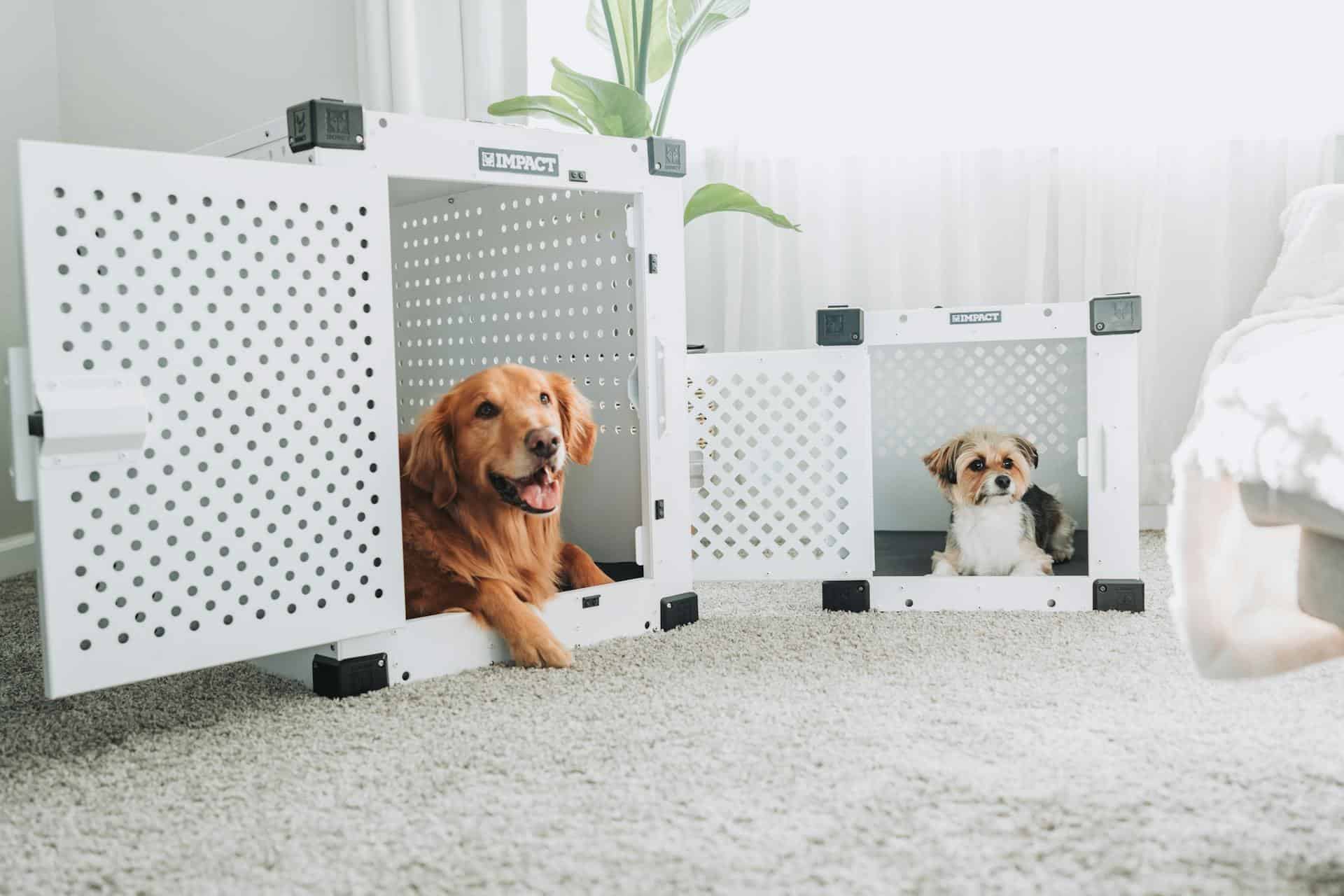
A crate is your most valuable tool for apartment house training. Dogs instinctively avoid soiling their sleeping area, so a correctly sized crate (large enough to stand, turn around, and lie down — not so large they can eliminate in a corner and sleep away from it) helps dogs learn to hold their bladder. When you cannot directly supervise your dog, they should be in their crate.
Introduce the crate gradually and positively — the AKC crate training guide recommends making it a den, not a punishment. Feed your dog their meals near, then inside, the crate. Toss treats inside, let your dog go in and out freely before ever closing the door. Build up crate time in small increments — 5 minutes, then 10, then 20 — with plenty of praise and rewards. The goal is for your dog to see their crate as a safe, comfortable den, not a punishment.
Once fully house trained, many apartment dogs voluntarily use their crate as a retreat. A crate-trained dog is also calmer when they need to be crated for veterinary visits, travel, or emergencies. Crate training is one of the greatest gifts you can give both yourself and your dog in apartment life.
What Are Teaching Elevator and Hallway Manners?

Calm Behavior in Elevators
Elevators can be genuinely frightening and disorienting for dogs — the enclosed space, the movement, the sudden appearance of strangers — and a dog that panics in an elevator is a serious problem in an apartment building. Start elevator training by just practicing getting into and out of the elevator without going anywhere, rewarding calm behavior with high-value treats. Once your dog is comfortable, practice short rides with lots of treats and praise.
Teach your dog to sit or stand calmly on one side of the elevator, out of the way of other residents. Practice waiting for the doors to open fully before exiting, and teach your dog to wait for your cue before entering or exiting the elevator. These small but important manners make elevator use safe and considerate for everyone in the building.
For dogs that struggle with elevators despite training, a certified professional dog trainer (CCPDT) can help develop a systematic desensitization plan. In the meantime, using the stairs is a practical workaround that also provides extra exercise. Never force a frightened dog into an elevator — this creates a lasting negative association that makes future training harder.
Polite Leash Walking in Hallways
Hallways in apartment buildings are narrow, busy, and full of distracting smells. A dog that pulls, lunges, or barks at neighbors in the hallway is a significant problem — and a liability. Teaching loose-leash walking in hallways requires consistent practice and a reliable “leave it” or “focus” command that redirects your dog’s attention back to you when distractions appear.
Attach a 6-foot leash for all indoor building navigation — retractable leashes have no place in apartment hallways. Practice “heel” or “let’s go” in the hallway during quiet times before rehearsing when neighbors or other dogs are present. Reward heavily for calm walking and loose leash pressure. A dog that walks beautifully on leash in the building is a dog that makes you proud to be their owner every single day.
If your dog is reactive to other dogs or people in tight spaces, create distance and work at a threshold level where they can see but not react. Reward looking at the distraction calmly, then looking back at you. Over time, this counter-conditioning reduces reactivity significantly. Building this foundation pays dividends for every single trip through the building for the rest of the dog’s life.
How Do You Handle Managing and Training Against Excessive Barking?
Barking is the most common complaint about apartment dogs — the Association of Professional Dog Trainers (APDT) recommends addressing it proactively, and addressing it proactively is one of the most important things you can do for your relationship with your neighbors. The first step is identifying why your dog barks — alert barking at hallway sounds, territorial barking at the door, boredom barking when alone, or anxiety. Each cause requires a different approach.
For alert barking at hallway sounds, white noise machines near the front door can significantly reduce the acoustic trigger. Teaching the “quiet” command — rewarding the moment your dog stops barking, even briefly — gives you a tool to interrupt and end barking. Pairing “quiet” with an incompatible behavior like “place” (going to their bed) gives your dog something to do instead of barking.
Separation anxiety barking requires a more comprehensive approach: gradual desensitization to departure cues, extended alone-time training, and sometimes veterinary consultation for medication support. Never punish barking while you’re away — you can’t correct a behavior you’re not present for, and you’ll only increase your dog’s anxiety by coming home angry. If separation anxiety is severe, a certified applied animal behaviorist (CAAB) is your most effective resource.
🐾 Get Weekly Pet Tips
Join 2,000+ apartment pet parents. Practical advice, no spam.
What Are the Best Essential Obedience Commands for Apartment Dogs?

The Core Five Commands
Every apartment dog should reliably know five core commands: sit, stay, come, leave it, and place (go to your bed). These five commands address the vast majority of situations where a well-trained dog is needed in an apartment context. Sit and stay are useful for doorways, elevators, and meeting strangers. Come is critical for safety. Leave it prevents your dog from picking up dangerous items on city walks. Place gives your dog a default behavior when you need them settled.
Teach each command separately in a low-distraction environment first — inside your apartment before practicing in the hallway, and in the hallway before practicing on the street. Every new environment and every added distraction is a new challenge that requires its own proofing practice. A dog that sits perfectly in the living room but ignores the command in the lobby is not fully trained — they need practice in every context where the command will matter.
Short, frequent training sessions (3–5 minutes, 2–3 times per day) are more effective than long, infrequent ones. Dogs learn faster with regular brief repetitions than with marathon sessions where their attention and motivation fade. Keep sessions positive, energetic, and always end on a success. Training should feel like a game to your dog, not a chore.
How Do You Handle Urban Socialization for Apartment Dogs?
Apartment dogs encounter an extraordinary range of stimuli that rural dogs never face: buses, sirens, skateboards, umbrellas, construction noise, crowded sidewalks, aggressive pigeons. A dog that hasn’t been properly socialized to urban environments can become reactive, fearful, or unmanageable on city walks. Socialization should begin as early as possible and continue throughout the dog’s life.
True socialization means creating positive associations with new experiences — not simply exposing your dog to things and hoping for the best. Use high-value treats to create positive associations with loud sounds, unusual objects, and new people. Keep your dog under their stress threshold: if they’re too frightened to take treats, you’re too close to the trigger. Create distance, let them calm down, and approach more gradually.
For puppies, the critical socialization window is 3–14 weeks — this is when experiences most permanently shape temperament. But adult dogs can also be successfully desensitized to frightening stimuli through systematic counter-conditioning. Any dog in any stage of life can become more comfortable with their urban environment through patient, positive work.
How Do You Handle Training Tips Specific to Age?
Puppies in Apartments
Raising a puppy in an apartment requires more planning and consistency than raising one in a house with a yard, but it’s absolutely achievable. The most important thing is setting up your apartment to prevent accidents and protect your belongings during the puppy phase: use baby gates to limit access to unsupervised areas, keep shoes and valuable items out of reach, and have your crate set up before the puppy arrives.
Adult Rescue Dogs in Apartments
Adult rescue dogs often arrive with unknown histories and may have anxiety, gaps in their training, or habits formed in a different living situation. Give them a quiet, structured first 2 weeks to decompress — limit overwhelming experiences and focus on building safety and routine before working on behavior modification. Many rescue dogs that seemed difficult in the shelter become genuinely wonderful apartment dogs within a few weeks of settling in.
Senior Dogs in Apartments
Senior dogs can absolutely adapt to apartment living, even if they’ve spent their whole lives in a house with a yard. Patience and consistency are key. Senior dogs may need more frequent potty trips due to reduced bladder control. They benefit from ramps rather than stairs where possible. Their exercise needs are lower, but mental enrichment through short training sessions, sniff walks, and gentle games remains important for cognitive health.
📖 You Might Also Like


🛒 Recommended Training Gear on Amazon
- High-value training treats for apartment dogs
- Training clickers for positive reinforcement
- Long training leads for recall practice
As an Amazon Associate, Busy Pet Parent earns from qualifying purchases.