
🚨 Quick Answer: Pet Emergency Preparedness in Apartments
The most important steps for apartment pet owners: build a 72-hour go-bag, know your building’s evacuation routes, keep your pet microchipped with current info, and have a list of pet-friendly shelters or hotels ready to go. Don’t wait for a disaster to find out your plan has gaps — run a practice drill today.
Disclosure: This post contains affiliate links. If you purchase through our links, we may earn a small commission at no extra cost to you. We only recommend products we’d use for our own pets.
When disaster strikes — a fire, flood, gas leak, or even a major power outage — apartment dwellers face unique challenges that homeowners don’t. You’re higher up, you share exits with hundreds of neighbors, and you have limited space to store emergency supplies. Your pet is counting on you to have a plan before panic sets in.
According to Ready.gov, tens of thousands of pets are displaced or killed during disasters every year — most due to owners who had no emergency plan. The good news: a little preparation goes a very long way. Here are 15 concrete, apartment-specific tips that could save your pet’s life.
What Are the Life-Saving Tips for Pet Emergency Preparedness in Apartments?
1. Build a 72-Hour Pet Go-Bag and Keep It by the Door
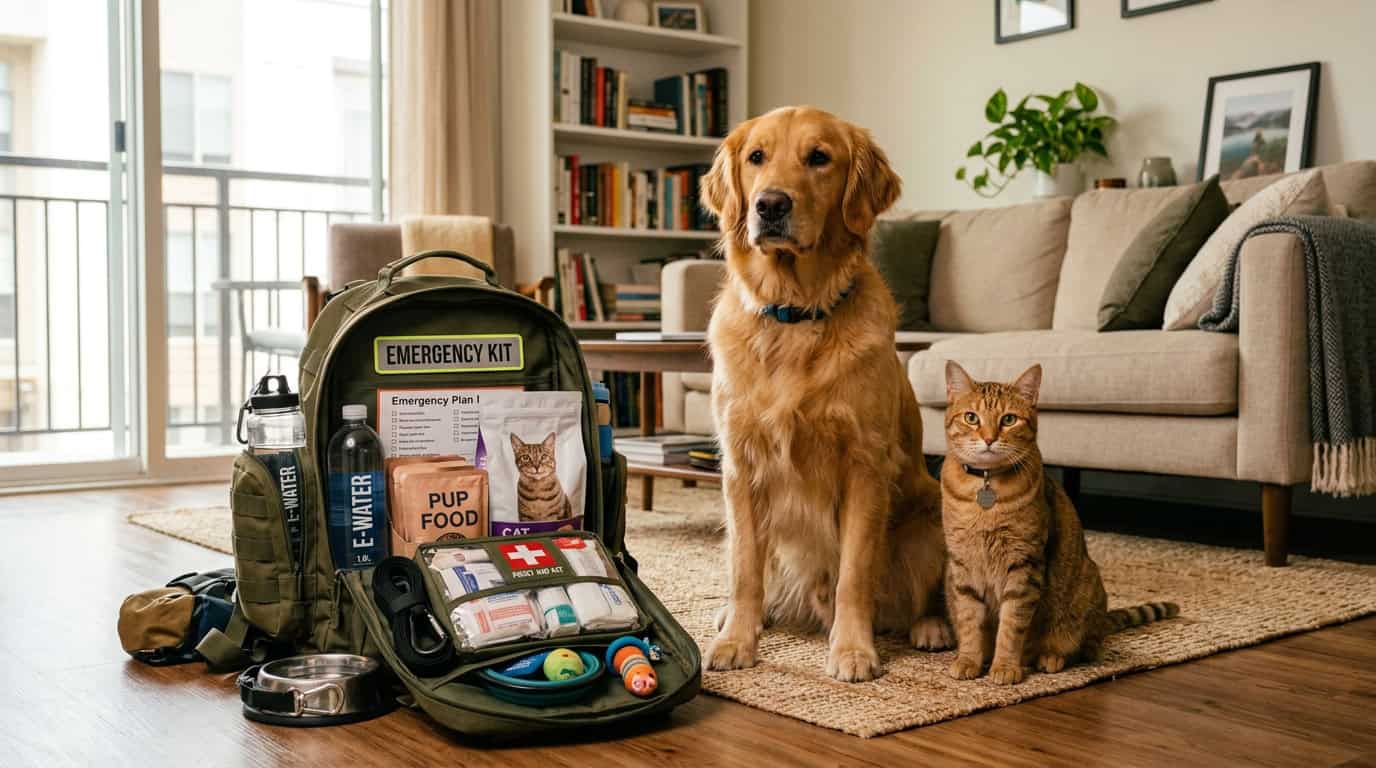
Your go-bag should be ready to grab in 60 seconds or less. Pack it with: 3 days of food and bottled water, portable bowls, medication, a copy of vet records, a recent photo, waste bags, and a blanket or familiar toy. Store it near your main exit — not in a closet you’ll have to dig through under stress.
A pre-built emergency kit saves fumbling time. 🛒 Shop Pet Go-Bags on Amazon
2. Microchip Your Pet and Keep the Registration Current
A microchip is your pet’s lifeline if you get separated. But a chip is only useful if it’s registered to your current phone number and address. Log in to your microchip registry right now and verify your info is up to date. Shelters scan for chips first — this one step reunites more lost pets than anything else.
3. Walk Your Building’s Evacuation Routes With Your Pet
Do a practice drill. Walk the fire stairs with your cat in their carrier. See how your dog behaves in a stairwell with other people. You want zero surprises during a real emergency. Note the exit closest to your apartment, the rally point, and whether your building has a pet-designated meeting area.
4. Invest in a Quality Carrier and Train Your Pet to Love It
A cat or small dog who panics in their carrier is a dangerous liability during an evacuation. Leave the carrier out as a regular sleeping spot. Feed treats inside it. Make it a happy place so when you need to use it fast, your pet goes in willingly. For dogs, a well-fitted harness with a handle is equally essential.
5. Build a Pet First Aid Kit
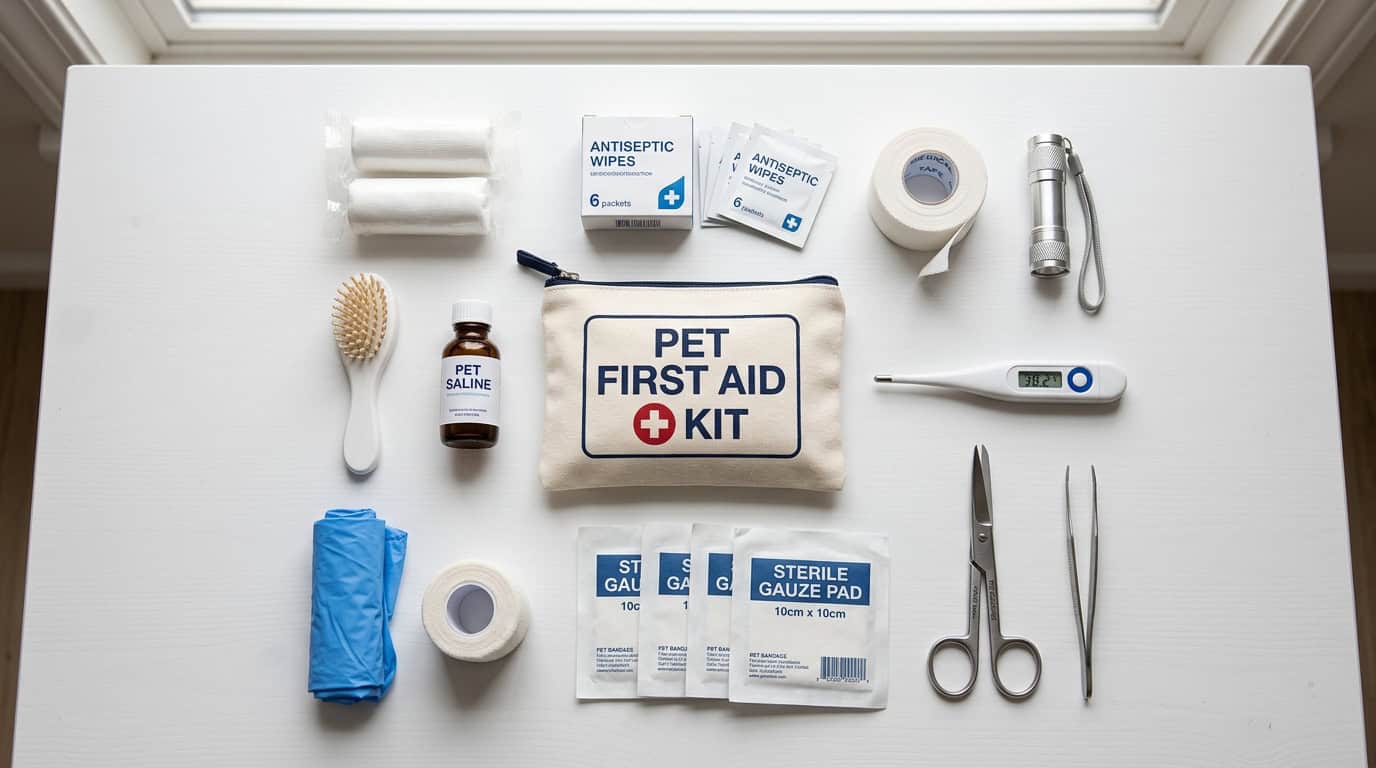
Keep a dedicated pet first aid kit separate from your human kit. It should include gauze rolls and pads, medical tape, antiseptic wipes, tweezers (for splinters or ticks), a digital rectal thermometer, latex gloves, a muzzle (even gentle dogs bite when in pain), and your vet’s emergency number. The ASPCA’s disaster preparedness guide also recommends a basic pet first aid manual.
6. Pre-Identify Pet-Friendly Emergency Accommodations
Under the FEMA PETS Act, federally funded emergency shelters must accommodate pets or have a nearby pet shelter. But availability is not guaranteed. Research now: find 2–3 pet-friendly hotels within 50 miles, confirm a friend or family member can take you and your pet, and locate the nearest emergency animal shelter. Add these to your go-bag contact sheet.
7. Maintain a Current ID Tag on Your Pet’s Collar — Always
Microchips are the backup — the ID tag is the first thing a neighbor reads when they find your dog running loose in a hallway. Make sure the tag has your cell number, not a landline. Consider a second tag with an emergency contact outside your city. 🛒 Shop Custom Pet ID Tags
8. Store Medications Properly and Pack Extras
If your pet is on regular medication, keep at least a 7-day emergency supply stored separately. Talk to your vet about getting a small emergency prescription. Keep meds in a waterproof container in your go-bag, and replace them on a rotating basis before they expire. Include any special dietary food if your pet has health conditions.
9. Know the Signs of Stress and Trauma in Your Pet
After an emergency, pets can experience PTSD-like symptoms: hiding, aggression, excessive vocalization, or changes in appetite. Recognizing these early means earlier intervention. The AVMA’s disaster preparedness resources include guidance on managing pet stress after a disaster. Keep your vet’s number in your go-bag and don’t wait if you notice behavioral changes.
10. Tell Your Building Manager You Have Pets
This is one of the most overlooked steps. Many buildings maintain resident lists for emergency personnel. If first responders know pets are in your unit, they can act accordingly if you’re incapacitated. Some buildings also have pet rescue protocols. Check with your property manager or HOA — and ask about their emergency communication system (text alerts, app, etc.).
11. Place a Pet Alert Sticker on Your Door or Window
A simple “Pets Inside” sticker or card on your front door tells firefighters and rescue workers to look for your animals. Include the number and types of pets (e.g., “2 cats, 1 dog”). Update it if your pets change. These stickers are available free from the ASPCA or can be printed at home.
12. Practice “Rapid Capture” for Cats and Shy Pets
In an emergency, a scared cat will hide. Practice catching your cat quickly and calmly without causing panic — use a pillowcase if you must. Know where your cat’s favourite hiding spots are. For multi-cat households, practice wrangling all of them in under 5 minutes. This sounds silly until there’s smoke in the hallway.
Our guide on daily apartment pet care routines covers handling and conditioning that helps here too.
13. Know Your Building’s Evacuation Procedures for High Floors
If you live on an upper floor, evacuating with a large dog is physically and logistically different from the ground floor. Practice the route. If you have mobility issues or a large dog, identify a neighbor who can help. Never use the elevator during a fire — stairs only, and know the stairwell nearest your unit. Also know the mustering point outside the building.
14. Create a Digital Pet Emergency File
Photograph or scan: vaccination records, vet contact info, medication prescriptions, a recent photo of you with your pet (proof of ownership), and your pet’s microchip number. Store this in your phone’s cloud storage and email it to yourself and a trusted contact. If your physical bag is lost, you still have everything you need to get your pet care at a shelter or emergency vet.
See also: complete apartment pet safety guide for a broader look at hazard-proofing your unit.
15. Run a Full Evacuation Drill Every 6 Months
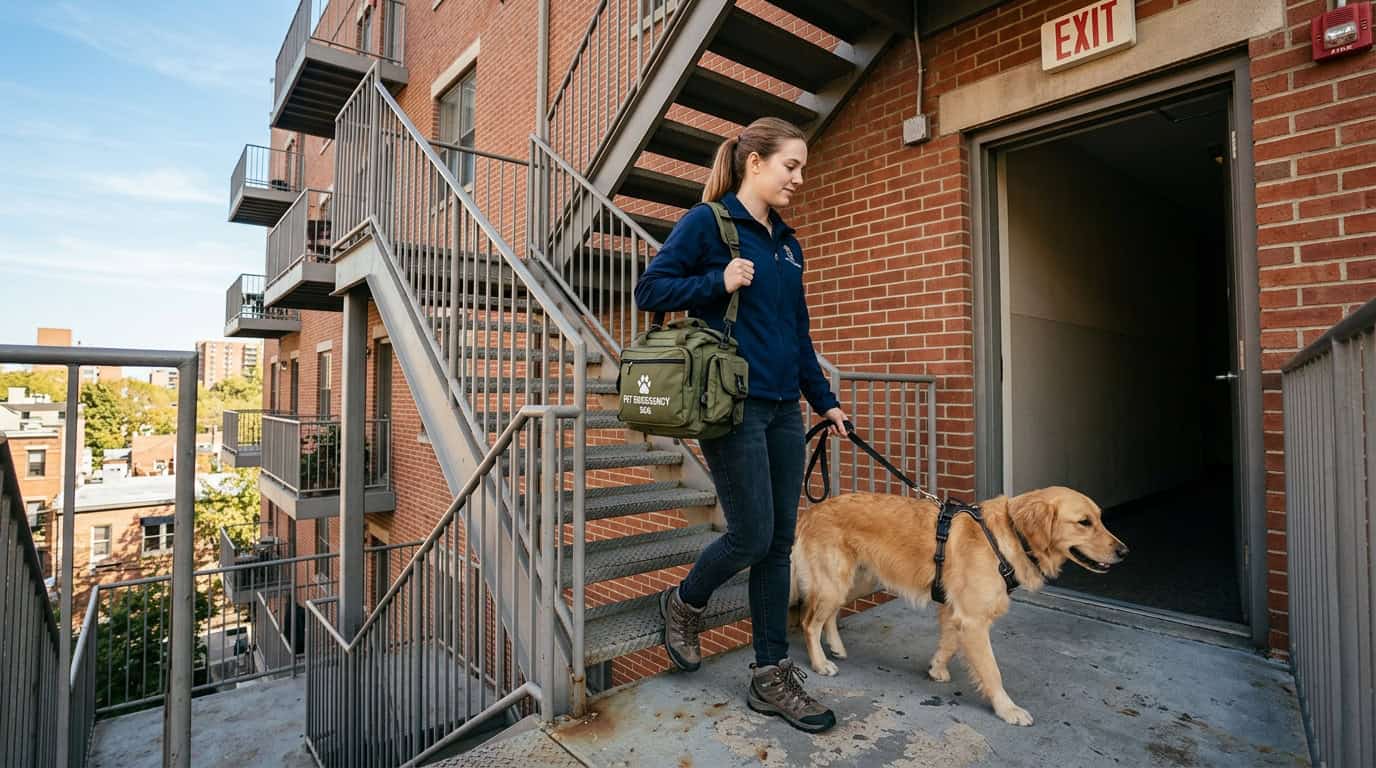
You can’t think your way through a disaster — you need muscle memory. Twice a year, do a timed practice run: grab your go-bag, secure your pet(s), exit the building, and confirm your plan worked. Time yourself. What took 12 minutes? Get it to under 3. What did you forget? Fix it before the drill is over. The Red Cross recommends at minimum an annual drill for households with pets.
If you’re also training your dog to behave in stressful public situations, our apartment dog training guide covers exactly how to build that calm under pressure.
📋 Pet Emergency Preparedness Checklist
- ✅ 72-hour go-bag packed and near exit
- ✅ Microchip registered with current contact info
- ✅ Evacuation route practiced with pet
- ✅ Carrier training completed
- ✅ Pet first aid kit assembled
- ✅ Pet-friendly emergency contacts identified (hotel, friend, shelter)
- ✅ ID tag current with cell phone number
- ✅ 7-day medication supply in go-bag
- ✅ Building manager notified of pets
- ✅ “Pets Inside” sticker on door
- ✅ Digital emergency file saved to cloud
- ✅ Bi-annual drill scheduled
Frequently Asked Questions
What should be in a pet emergency kit for an apartment?
A pet emergency kit should include 3–5 days of food and water, portable bowls, medications, copies of vet records and vaccination papers, a pet first aid kit, a leash and collar with ID tags, a carrier or crate, a comfort item, and emergency contact numbers for your vet and local animal shelters.
How do I evacuate an apartment building with my pet?
Practice your evacuation route in advance. Always use stairs — never elevators during emergencies. Keep your pet in a carrier for cats and small dogs, and use a leash for larger dogs. Have your go-bag ready near the door. Pre-identify a pet-friendly hotel or friend’s home where you can stay if you can’t return.
What is the best pet carrier for apartment evacuations?
For apartment evacuations, a soft-sided airline-approved carrier works well for small pets — it fits in tight stairwells and is easy to carry hands-free. For larger dogs, a sturdy harness with a traffic handle and a 6-foot leash gives maximum control during chaotic evacuations.
How can I find my pet after an apartment disaster?
Microchipping is the single most important step — ensure the chip is registered and your contact info is current. Pair it with a current ID tag on the collar. Keep a recent photo of your pet on your phone and in your go-bag. Register with your local emergency management office as a pet owner in your building.
Are apartment pets allowed in emergency shelters?
Under the PETS Act, most federally funded emergency shelters must accommodate pets or provide a nearby pet shelter. However, availability varies by location and disaster type. Always have a backup plan: a list of pet-friendly hotels, a trusted contact outside the area, or a boarding facility willing to take emergency drop-offs.

Busy Pet Parent Editorial Team
We’re a team of apartment-dwelling pet owners, veterinary technicians, and pet care researchers. Our mission: practical, science-backed guidance for urban pet parents who want the best for their animals without the overwhelm.