15 Important Signs Your Indoor Cat Is Bored in an Apartment
Living with an indoor cat in an apartment comes with a unique set of challenges—especially when it comes to mental stimulation. Cats are intelligent, curious animals with strong instincts to hunt, explore, climb, and problem-solve. When those needs aren’t met, boredom can quietly settle in. Over time, that boredom often turns into stress, frustration, or unwanted behaviors that leave owners confused and concerned.
The tricky part is that boredom in cats doesn’t always look obvious. Many of the signs your indoor cat is bored are subtle and easy to mistake for personality quirks, aging, or random misbehavior. In a small apartment—where space, novelty, and stimulation are naturally limited—these signs can appear faster and feel more intense.
The good news is that boredom is one of the most fixable problems an indoor cat can have. Once you learn how to recognize the warning signs, you can make simple, apartment-friendly changes that dramatically improve your cat’s mood, confidence, and overall happiness.
Below are 15 important signs your indoor cat is bored in an apartment, along with clear explanations of what each behavior really means. If you recognize more than one of these signs, your cat isn’t being “difficult”—they’re asking for more engagement from their environment.

1. Your Cat Knocks Things Over Repeatedly
One of the most common—and misunderstood—signs your indoor cat is bored is persistent knocking objects off tables, shelves, and counters. While it can feel deliberate or even spiteful, this behavior is almost always rooted in curiosity and mental under-stimulation rather than bad manners.
Cats are natural problem-solvers. When they bat objects off surfaces, they’re testing cause and effect: What happens if I touch this? In an apartment with limited enrichment, everyday objects become stand-ins for prey, puzzles, or interactive toys. Pens, glasses, remotes, and décor items suddenly turn into sources of entertainment.
This behavior often escalates when:
- Your cat is alone for long stretches of the day
- Playtime is inconsistent or too short
- There are few interactive toys available
- Vertical space is limited
- Your cat has excess mental energy with nowhere to release it
Knocking things over also reliably gets a reaction from humans. Even negative attention—standing up, talking, or grabbing the object—can reinforce the behavior if your cat is craving interaction. Over time, boredom trains the cat that chaos equals engagement.
When this becomes a daily habit, it’s not a discipline issue. It’s a signal that your cat’s environment isn’t mentally rich enough to keep them engaged.
2. Sudden Bursts of Hyperactivity at Odd Hours
Another clear sign your indoor cat is bored is unpredictable bursts of energy—often late at night or very early in the morning. These episodes may include sprinting across the apartment, jumping on furniture, attacking feet under blankets, or zooming from room to room with no obvious trigger.
While cats naturally have crepuscular tendencies (they’re most active at dawn and dusk), excessive or disruptive hyperactivity usually points to pent-up energy. In apartments, cats don’t have access to spontaneous exploration or hunting opportunities, so unused energy accumulates until it explodes.
This behavior is especially common when:
- Your cat sleeps most of the day out of boredom
- Interactive play is skipped or rushed
- Your apartment lacks climbing or chasing opportunities
- Your cat eats meals without having to “work” for them
- There’s no predictable daily routine
These bursts aren’t random—they’re delayed expressions of natural instincts. When cats don’t get structured outlets for energy during the day, they create their own entertainment at inconvenient times. This often leads to sleep disruption for owners and increased frustration on both sides.
Persistent nighttime zoomies are less about being “wired” and more about being under-stimulated.
3. Excessive Meowing or Attention-Seeking Vocalization
Increased vocalization is one of the most emotionally driven signs your indoor cat is bored. Cats rarely meow at each other as adults; they meow primarily to communicate with humans. When boredom sets in, vocalization becomes a tool to express frustration, loneliness, or a desire for stimulation.
A bored cat may meow loudly, repeatedly, or at unusual times—especially when you’re busy, on the phone, or trying to sleep. Some cats develop a habit of walking from room to room meowing, as if searching for something to engage with.
This type of meowing often increases when:
- Your cat is left alone for long periods
- Daily routines are inconsistent
- There’s little environmental variety
- Your cat lacks social interaction
- Play and enrichment are predictable or absent
While it’s important to rule out medical causes for sudden vocal changes, boredom-related meowing is typically situational and pattern-based. It often coincides with times your cat expects attention or activity but doesn’t receive it.
In small apartments, this vocalization can feel amplified and constant, making it one of the earliest warning signs owners notice.
4. Destructive Scratching in New or Inappropriate Places
Scratching is a normal, healthy feline behavior—but when scratching becomes excessive or suddenly shifts to new locations, it’s often one of the clearest signs your indoor cat is bored. In apartment settings, cats have fewer opportunities to release physical and mental tension, and scratching becomes a primary outlet.
A bored cat isn’t scratching to be destructive. They’re scratching to stretch their muscles, mark territory, relieve frustration, and stimulate their senses. When appropriate scratching outlets aren’t engaging enough—or are placed poorly—cats naturally seek alternatives like couches, carpets, door frames, or walls.
This behavior is especially common when:
- Your cat has limited vertical space
- Scratchers are worn out or unstable
- Scratching posts are hidden in low-traffic areas
- Your cat spends long hours alone
- Mental stimulation is minimal
In apartments, scratching often increases near entryways, hallways, and social areas—places where emotional energy builds up. These are “transition zones” that cats naturally mark to feel secure. When boredom is present, this instinct intensifies.
If your cat suddenly starts scratching new surfaces, it’s rarely about the object itself. It’s a message that their environment isn’t meeting their physical or emotional needs.
5. Sleeping Excessively Throughout the Day
Cats do sleep a lot—but when an indoor cat spends nearly the entire day asleep, it can be one of the more subtle signs your indoor cat is bored. In apartments, where stimulation is limited, sleep often becomes a default activity rather than genuine rest.
A bored cat may sleep simply because there’s nothing else to do. This kind of sleep is different from healthy rest; it’s more like disengagement. Over time, excessive daytime sleeping can lead to nighttime restlessness, mood changes, and reduced interest in play or interaction.
Signs that sleep may be boredom-related include:
- Your cat ignores toys they once enjoyed
- They wake easily but seem uninterested in activity
- Energy spikes late at night
- Minimal curiosity about their surroundings
- Little engagement unless food is involved
In small apartments, this pattern is common because cats lack environmental variety. Without windows to watch, climbing opportunities, or rotating enrichment, the day blends into monotony. Sleep becomes a way to pass time rather than recover energy.
If your cat seems to sleep more out of boredom than relaxation, it’s a strong sign that their environment needs more stimulation—not that they’re lazy or aging prematurely.
6. Loss of Interest in Toys or Playtime
It may seem counterintuitive, but refusing to play is another major sign your indoor cat is bored. Many owners assume a bored cat would always want to play, but the opposite is often true. When stimulation has been lacking for too long, cats can become disengaged and apathetic.
This usually happens when toys are always available, never rotated, or lack interactive value. Cats crave novelty and challenge. When toys feel predictable or meaningless, your cat may stop responding altogether—even to things that once excited them.
This loss of interest is common when:
- Toys are left out 24/7
- Play sessions are short or inconsistent
- Play doesn’t mimic hunting behavior
- Your cat plays alone most of the time
- There’s no reward or “catch” at the end
In apartment living, interactive play is essential because it replaces natural hunting opportunities. Without it, cats may mentally “shut down,” conserving energy instead of expressing curiosity.
A cat that ignores toys isn’t necessarily uninterested in play—they may simply be under-stimulated for too long. Reintroducing structured, engaging play often reignites enthusiasm surprisingly quickly.
7. Pushing, Swatting, or Knocking Objects Off Surfaces for Attention
When everyday mischief becomes a pattern, it’s often one of the most recognizable signs your indoor cat is bored. Cats who repeatedly push items off counters, shelves, or desks aren’t being “naughty”—they’re engaging their brains in the only way available to them at the moment.
This behavior satisfies multiple needs at once: curiosity, problem-solving, movement, and—most importantly—interaction. Objects that roll, fall, or make noise create instant feedback. In a small apartment with limited novelty, that feedback becomes irresistible.
Many owners notice this behavior spikes when they’re busy, working, or ignoring the cat. That’s because even a negative reaction can reinforce the habit if your cat is craving engagement. Over time, boredom teaches your cat that disruption equals attention.
Pet behavior experts note that this kind of object-focused behavior is often linked to under-stimulation rather than defiance. You can read a detailed explanation here: Why Do Cats Knock Things Over? This will be the only PetMD link used in this post.
If your cat repeatedly targets objects during quiet or inactive periods, it’s a strong signal that their environment isn’t mentally engaging enough to hold their attention.
8. Overgrooming or Repetitive Self-Soothing Behaviors
Overgrooming is one of the quieter but more concerning signs your indoor cat is bored. Cats naturally groom themselves, but when grooming becomes excessive—leading to thinning fur, bald patches, or irritated skin—it often indicates emotional imbalance.
In apartments, boredom and lack of stimulation can push cats toward repetitive self-soothing behaviors. Grooming releases endorphins, which temporarily reduce stress and anxiety. When a cat doesn’t have healthier outlets for mental or physical engagement, grooming can become compulsive.
This behavior is more likely when:
- Your cat spends long periods alone
- The environment lacks variety or enrichment
- Playtime is infrequent or low-quality
- There are few places to explore or climb
- Daily routines are monotonous
While medical causes should always be ruled out, boredom-related overgrooming often improves when a cat’s environment becomes more engaging. Increasing play, enrichment, and routine variety can reduce the emotional need for repetitive behaviors.
If overgrooming coincides with other boredom signals, it’s rarely an isolated issue—it’s part of a larger pattern of under-stimulation.
9. Increased Clinginess or Following You Constantly
While some cats are naturally affectionate, sudden or excessive clinginess can be one of the overlooked signs your indoor cat is bored. In small apartments, humans often become the primary—and sometimes only—source of stimulation. When enrichment is lacking, cats may rely heavily on you for interaction.
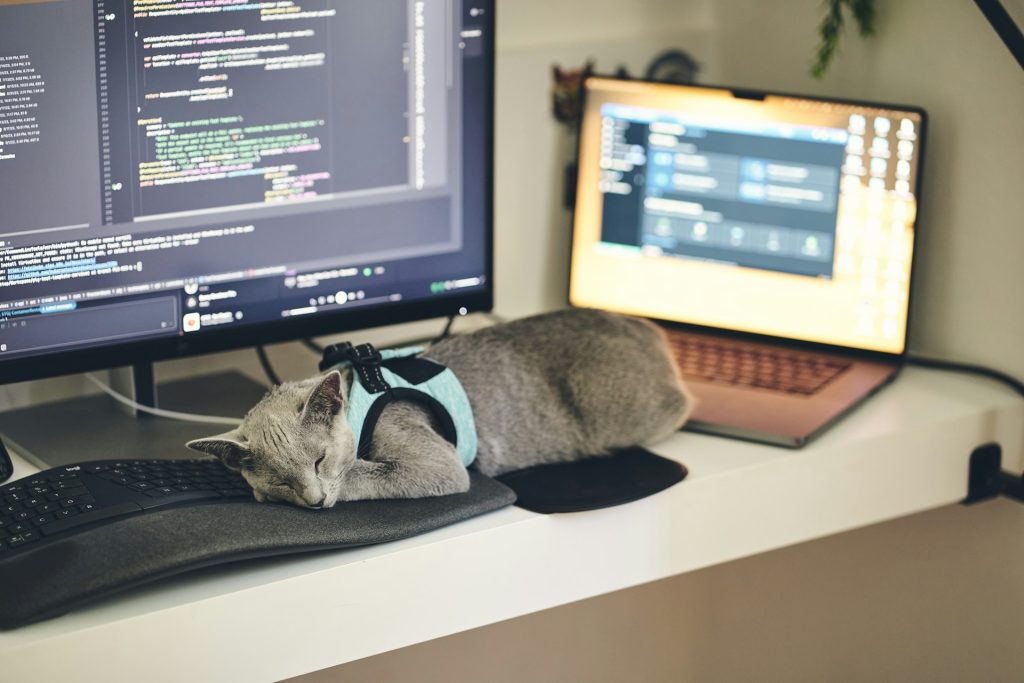
A bored cat may follow you from room to room, sit on your keyboard, vocalize when you move away, or constantly demand attention. This isn’t manipulation—it’s a sign that your cat doesn’t have enough independent ways to engage their mind or body.
This behavior is common when:
- Your cat has limited toys or enrichment
- Windows and vertical spaces are scarce
- Playtime revolves only around feeding
- Your schedule recently changed
- Your cat is home alone most of the day
In moderation, following you is normal social behavior. But when it becomes constant or anxious, it suggests your cat lacks other forms of stimulation. Encouraging independent play and environmental enrichment helps rebalance this dynamic.
A healthy environment allows your cat to enjoy your presence without depending on it for all their mental engagement.
10. Sudden Behavioral Regression or “Acting Like a Kitten Again”
Behavioral regression is a less obvious but very real indicator among the signs your indoor cat is bored. Some cats respond to prolonged boredom by reverting to juvenile behaviors—biting hands, attacking ankles, climbing curtains, or engaging in rough play that they had previously outgrown.
This isn’t immaturity or defiance. It’s your cat attempting to recreate stimulation they once had naturally. Kittens receive constant engagement through exploration and play. When adult cats lose access to enrichment—especially in apartments—they may instinctively return to behaviors that once kept them mentally occupied.
Regression often shows up when:
- Playtime has become infrequent or passive
- Your cat lacks physical challenges
- Daily routines have become monotonous
- You’ve recently moved or changed schedules
- Environmental enrichment has been reduced
In apartment living, this behavior is especially common because the environment rarely changes. Without intentional stimulation, cats create their own—often in ways that feel disruptive to humans.
Regression isn’t a setback; it’s a signal that your cat needs more structured engagement to feel mentally fulfilled.
11. Lack of Curiosity About Their Environment
Curiosity is a core part of feline well-being. When curiosity fades, it’s often one of the quieter signs your indoor cat is bored. A bored cat may stop investigating new sounds, ignore movement outside windows, or remain disengaged when their environment changes.
In apartments, where novelty is already limited, this disengagement can deepen quickly. Cats that don’t feel mentally stimulated may stop exploring altogether, choosing instead to sleep, hide, or remain motionless for long periods.
Common signs of reduced curiosity include:
- No response to new toys or objects
- Ignoring window activity
- Minimal reaction to sounds or movement
- Lack of exploration after cleaning or rearranging
- Little interest in interactive play
Behavioral experts emphasize that curiosity is fueled by enrichment, not personality. When a cat appears uninterested in their surroundings, it often means their environment isn’t offering meaningful stimulation—not that the cat is lazy or aloof.
Fear Free feline specialists explain how structured enrichment helps reignite curiosity and confidence: Fun Feline Enrichment Ideas This is the only Fear Free link used in this post.
Restoring curiosity often leads to improvements across many other boredom-related behaviors.
12. Increased Irritability or Aggression Without Clear Triggers
Irritability is another overlooked entry on the list of signs your indoor cat is bored. Cats who lack mental outlets often experience low-grade frustration that builds over time. In apartments, where space and stimulation are limited, that frustration can surface as snapping, swatting, hissing, or sudden avoidance.
These reactions may seem unprovoked, but they usually stem from emotional overload. Without healthy ways to release energy or engage instincts, even minor disturbances—like being touched unexpectedly or hearing a sudden noise—can trigger a negative response.
This irritability is more likely when:
- Your cat has little control over their environment
- Play and enrichment are inconsistent
- They lack safe retreat spaces
- Daily routines feel unpredictable
- Stressors accumulate without relief
Addressing boredom often reduces irritability dramatically. When cats feel mentally satisfied, they’re less reactive and more emotionally balanced—even in small living spaces.
13. Fixation on Food or Constant Begging
Food fixation is one of the most misunderstood signs your indoor cat is bored. When mental and physical stimulation are lacking, food often becomes the most exciting part of the day. In apartment living, where enrichment opportunities are limited, cats may begin obsessing over meals as a primary source of anticipation and engagement.
This can look like constant begging, hovering around the kitchen, vocalizing near feeding times, or waking you early for food. While hunger can sometimes be a factor, boredom-driven food fixation usually appears alongside other signs such as inactivity, excessive sleeping, or lack of interest in play.
Food fixation is more likely when:
- Meals are predictable and require no effort
- Your cat has little mental stimulation
- Playtime does not precede meals
- Your cat is home alone most of the day
- There is little environmental variety
Turning meals into enrichment—using puzzle feeders or food-based games—often reduces fixation dramatically. When food becomes a challenge instead of a handout, your cat gets both mental stimulation and satisfaction.
14. Withdrawing or Becoming Emotionally Flat
Emotional withdrawal is one of the most concerning signs your indoor cat is bored because it’s often mistaken for calmness or independence. In reality, a disengaged cat may be mentally understimulated, emotionally dulled, or quietly stressed.
Withdrawn cats may stop greeting you, avoid interaction, sleep in hidden areas, or show little reaction to daily events. In small apartments, where stimulation doesn’t change much, this emotional flattening can become chronic if not addressed.
Withdrawal is often seen when:
- Enrichment has been minimal for long periods
- Your cat lacks control over their environment
- Stress and boredom coexist
- Play and social interaction are inconsistent
- Your cat has learned that engagement leads nowhere
This behavior is not a personality trait—it’s a coping mechanism. When you restore enrichment, curiosity, and choice, many withdrawn cats slowly regain confidence and emotional range.
15. Destructive or Attention-Seeking Behavior When You’re Busy
When boredom peaks, many cats resort to behavior that guarantees a response. This is one of the clearest signs your indoor cat is bored, especially in apartments where humans are often the primary source of stimulation.
This may include knocking items over, scratching furniture, jumping onto work surfaces, or vocalizing loudly when you’re focused elsewhere. These behaviors aren’t spiteful—they’re learned strategies for interaction.
If attention-seeking behaviors consistently appear during quiet or busy periods, it’s a strong signal that your cat lacks independent enrichment options. Increasing mental stimulation and environmental complexity often reduces these behaviors naturally.
Final Thoughts
Recognizing the signs your indoor cat is bored is the first step toward meaningful change. Boredom isn’t a failure on your part—it’s a natural response to an environment that hasn’t been designed with feline instincts in mind. The good news is that boredom is highly fixable, even in small apartments.
With thoughtful enrichment, structured play, vertical space, and daily engagement, indoor cats can thrive emotionally and mentally. When boredom is addressed, many behavior problems fade, bonds deepen, and your cat becomes more confident, relaxed, and content.
If your cat also shows signs of stress, this guide may help: Ways to Help a Stressed Cat in a Small Apartment
For more activity ideas, see: Indoor Cat Enrichment Ideas
Nighttime boredom often shows up as vocalization: Cat Meowing at Night in Apartments
Compare boredom vs happiness here: Is My Cat Happy?
Frequently Asked Questions
How do I know if my indoor cat is bored or depressed?
Boredom often shows up as restlessness, mischief, or attention-seeking, while depression is more associated with withdrawal and appetite changes. A vet visit can help rule out medical causes.
Can a single cat get bored in an apartment?
Yes. Single cats often rely entirely on their environment and human interaction for stimulation, making enrichment especially important.
How much play does an indoor cat need?
Most indoor cats benefit from at least two structured play sessions per day, each lasting 10–15 minutes.
Can boredom cause aggression?
Yes. Pent-up energy and frustration often surface as irritability or aggression when not properly released.
Will enrichment really reduce behavior problems?
In many cases, yes. Addressing boredom often resolves the root cause of multiple behavior issues.

Join the Busy Pet Parent
Newsletter!
Get easy routines, time-saving tips, and the latest gear reviews—delivered straight to your inbox.
Perfect for busy pet owners, apartment dwellers, and anyone who wants a happy, healthy companion (without the stress).
- Exclusive guides & checklists
- Product recommendations & deals
- No spam—unsubscribe anytime!