
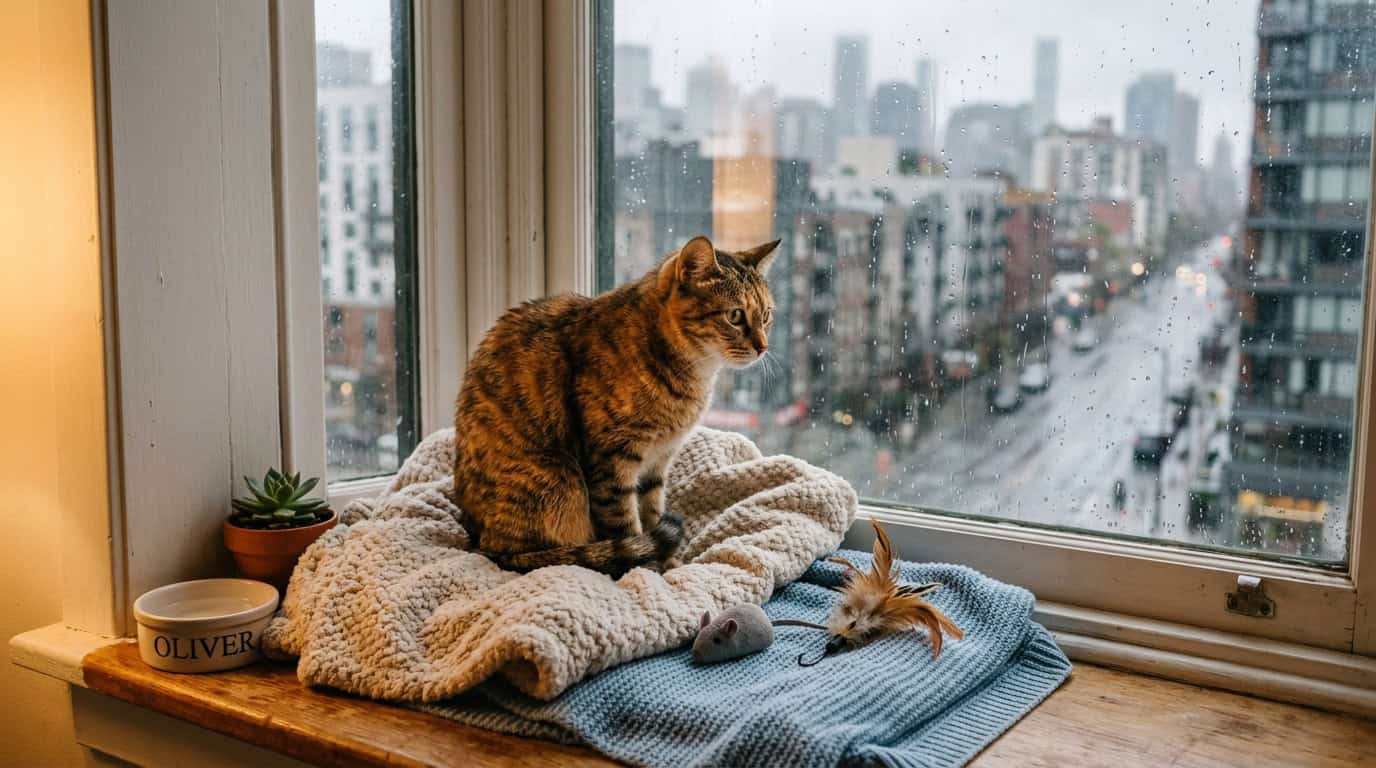
To help a stressed cat in a small apartment, prioritize vertical space (cat trees, shelves), use a pheromone diffuser, establish a consistent daily routine, provide hiding spots, and rotate interactive toys. Most stressed cats improve within 2–4 weeks with environmental changes alone — no medication needed.
Your apartment feels cozy to you — but to your cat, a small space with no escape routes and unpredictable noise can feel like a trap. Apartment cats are significantly more prone to chronic stress than cats with outdoor access, and the signs are often subtle until the situation becomes serious.
The good news? You don’t need a bigger apartment or expensive medication to fix this. International Cat Care and feline behavior experts agree: strategic environmental changes fix the vast majority of apartment cat stress cases. Here are 17 vet-backed approaches that actually work.
Why Small Apartments Stress Cats Out
Cats are territorial animals built for space, height, and control. In a small apartment, three core stressors stack up fast:
- Limited territory — no ability to move away from perceived threats
- Unpredictable stimuli — hallway noise, neighbor movement, construction
Lack of control — no outdoor access means the cat can never “patrol” or escape
According to Feliway’s behavioral research, up to 60% of multi-cat households and a significant portion of single-cat apartments have at least one chronically stressed cat. The fix starts with understanding what the cat actually needs — not what we think looks nice.
Before diving in, make sure you can recognize the signs. Check our guide to signs your cat is happy (or not) to establish your baseline.
What Are The 17 Vet-Backed Strategies?
1. Add Vertical Space Immediately
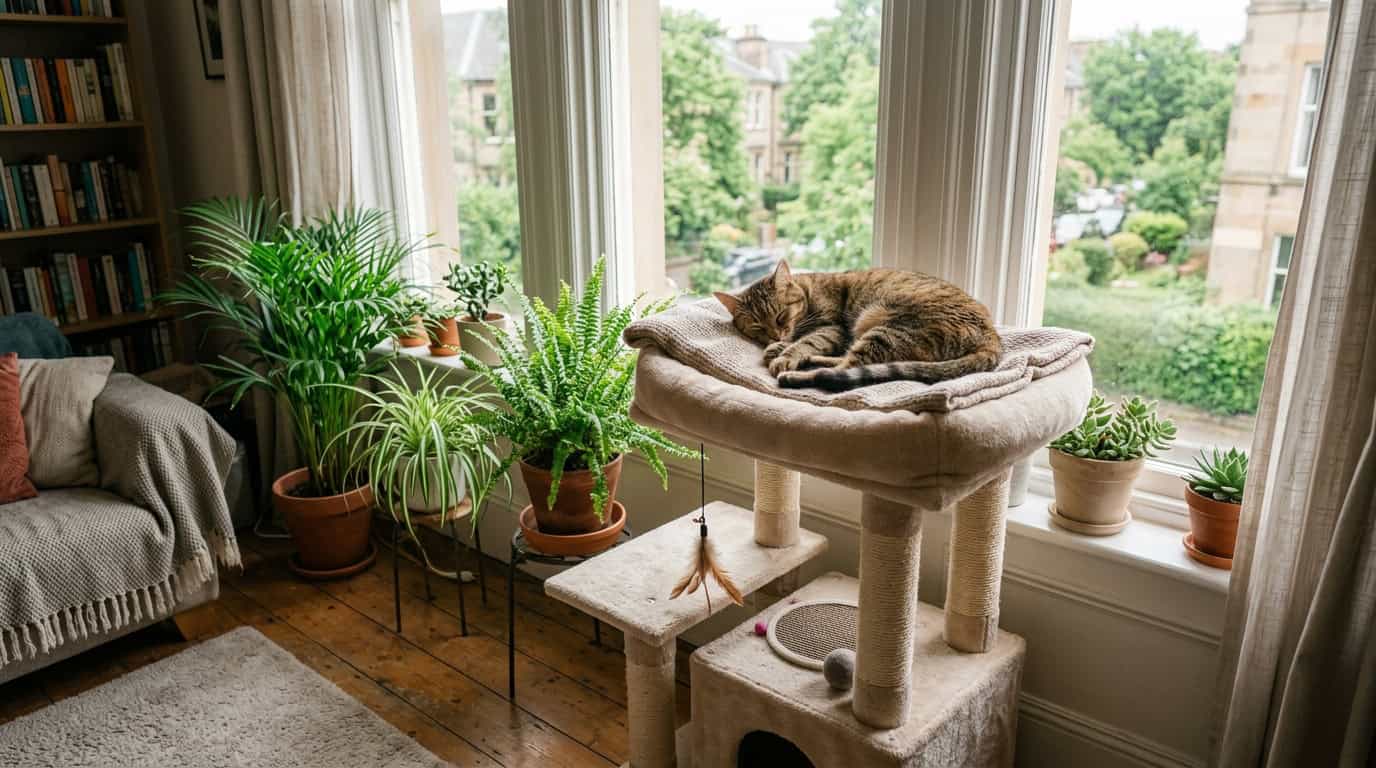
Vertical territory is the single highest-impact change you can make. Cats feel safer when elevated — it gives them visual control and escape options. A tall cat tree in a living room corner costs under $60 and doubles your cat’s perceived territory. Install wall-mounted cat shelves if floor space is limited.
🛒 Browse tall cat trees for apartments on Amazon
2. Use a Pheromone Diffuser
Synthetic feline facial pheromones (Feliway Classic) mimic the scent cats deposit when they’re calm and comfortable. Plug one in the room your cat spends the most time in and leave it running for 30 days. VCA Hospitals notes pheromone therapy as a first-line recommendation before considering medication.
🛒 Find Feliway diffusers on Amazon
3. Create Multiple Hiding Spots
Hiding is a healthy coping behavior — it means your cat has somewhere to go when overwhelmed. Provide at least two dedicated hiding spots: a covered cat bed under a desk, a cardboard box in a closet corner, or a hooded litter enclosure. Never block or remove hiding spots as punishment.
4. Establish a Rock-Solid Daily Routine
Cats thrive on predictability. Feed at the same times every day, play at the same time each evening, and keep litter scooping on a schedule. Routine reduces the baseline anxiety that makes small stressors feel catastrophic to your cat.
5. Schedule Daily Interactive Play Sessions
15–20 minutes of wand toy play every day burns off the predatory energy that builds up in apartment cats. Play before meals to mimic the hunt-catch-eat-groom cycle. This single habit reduces stress-related behaviors like over-grooming and midnight zoomies within 1–2 weeks for most cats.
🛒 Shop interactive cat wand toys on Amazon
6. Rotate Toys Weekly
The same toy loses novelty in days. Keep 3–4 toys in rotation, hiding some and swapping them weekly. Novelty keeps your cat engaged and mentally stimulated — a key stress reducer. Check our DIY cat toy guide for budget-friendly rotation ideas.
7. Window Access Is Non-Negotiable
A window perch with outdoor view provides hours of low-stress mental stimulation. Birds, squirrels, passing cars — all of it engages your cat’s prey drive without any effort from you. If your window is on a busy street, consider placing a bird feeder outside for maximum entertainment. Ensure screens are secure.
8. Sound Management: White Noise or Cat Music
Neighbor noise, hallway chaos, and thin apartment walls are major stressors. A white noise machine near the door, or species-appropriate music (YouTube has hours of “music for cats” at cat-specific frequencies), has measurable calming effects according to feline behavior research.
9. Give Your Cat a “Safe Room”
During loud events (parties, maintenance work, thunderstorms), designate one room as a quiet refuge with food, water, litter, and bedding. Put the pheromone diffuser in there. Train your cat to associate it with safety — never force them in, but reward calm entry.
10. Food Puzzles Replace Boredom Eating
Cats fed from a standard bowl have zero hunting stimulation. Food puzzles — even a simple muffin tin with kibble in each cup — force mental engagement. Start easy and increase difficulty. This reduces stress, prevents obesity, and keeps your cat occupied for 15–30 minutes per meal.
11. Clean the Litter Box Daily
A dirty litter box is a major stressor. Cats may avoid it entirely, leading to inappropriate elimination, which creates a stress cycle. Scoop daily, change litter fully every 1–2 weeks, and keep the box away from food and high-traffic areas. In a studio or one-bedroom, this placement matters more than you think.
12. Multiple Resources Prevent Resource Guarding
Even with one cat, provide two water sources, two sleeping spots, and two resting perches. Resource scarcity (even perceived) is a primary stress driver. If you have multiple cats, the rule is N+1 resources for everything.
13. Handle Alone Time Thoughtfully
If you work long hours, consider a pet camera with a laser toy you can activate remotely, or an automated feeder that dispenses food in small portions throughout the day. Sudden long absences after a period of working from home (common post-pandemic) are a top stress trigger. Gradually re-acclimate your cat if your schedule changes. See our guide to working from home with pets for transition strategies.
14. Consider Calming Supplements (With Vet Approval)
Several evidence-supported supplements can take the edge off in chronically stressed cats: L-theanine, alpha-casozepine (Zylkene), and Anxitane. Ask your vet before starting anything. These are not a substitute for environmental changes but can help bridge the gap during a high-stress transition period.
🛒 Browse vet-approved calming supplements for cats on Amazon
15. Audit Your Own Stress Levels
Cats are exquisitely tuned to their owner’s emotional state. Chronic owner anxiety translates to chronic cat anxiety — they read your cortisol, your movement patterns, and your voice pitch. This is not folk wisdom; PetMD behavioral research has documented the correlation. A calmer household produces a calmer cat.
16. Audit Toxic Plants and Remove Them
Physical illness causes stress too. Some of the most popular houseplants — pothos, lilies, peace lilies — are toxic to cats. If your cat is chewing plants, check our toxic houseplants guide and replace them with cat-safe alternatives like spider plants, catnip, or cat grass.
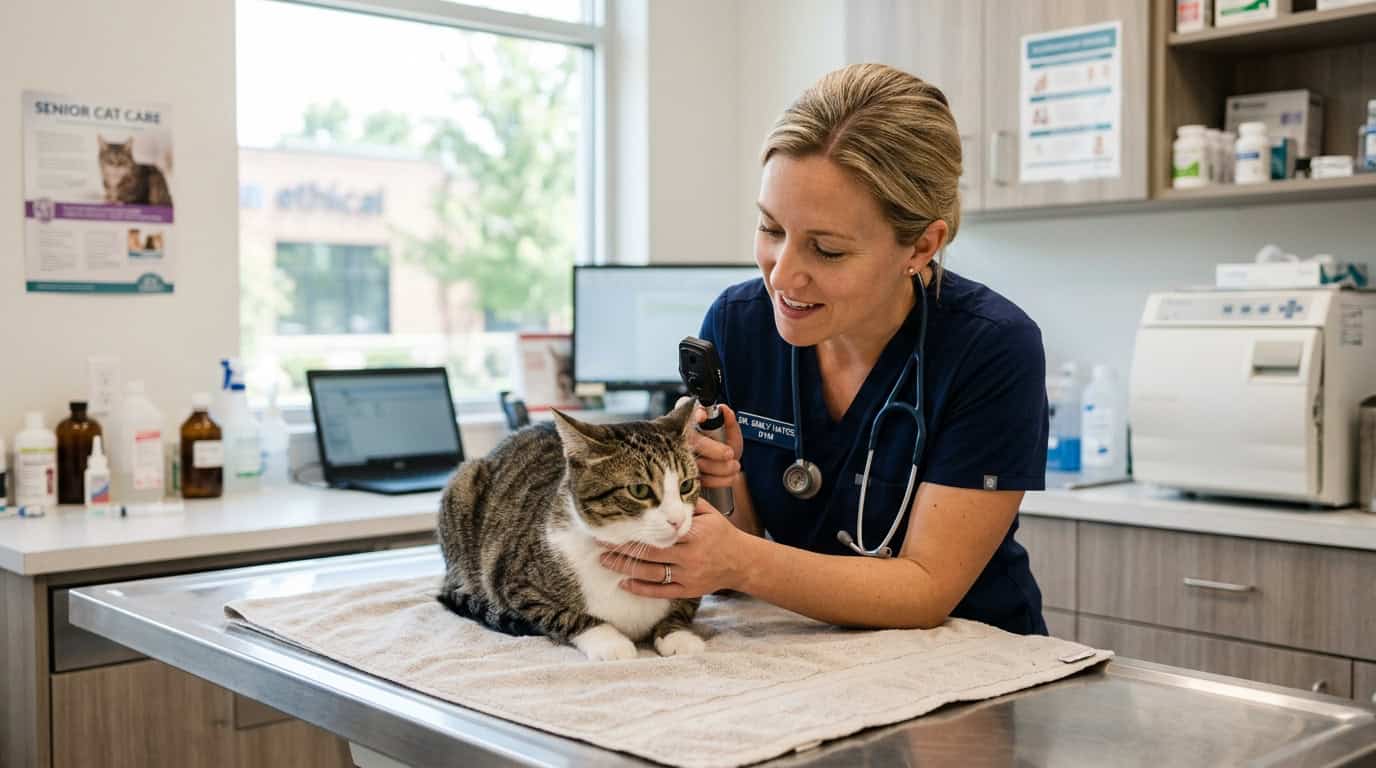
17. Schedule Regular Vet Checkups
Stress behaviors sometimes mask pain. Dental disease, UTIs, arthritis, hyperthyroidism — all present as behavioral changes that look like stress. An annual vet visit catches medical issues before they become behavioral crises. If you’re managing vet costs carefully, read our guide to cutting vet bills without compromising care.
Make changes gradually and give each one 2 weeks to show results before adding the next. Cats don’t adapt instantly — but most stressed apartment cats show marked improvement within 4–6 weeks of consistent environmental enrichment.
When to See a Vet?
Environmental changes fix most apartment cat stress — but not all of it. Book a vet appointment if:
- Symptoms persist beyond 3–4 weeks of consistent changes
- Your cat stops eating or loses significant weight
- You see signs of physical illness (vomiting, diarrhea, hiding with lethargy)
- Aggression becomes unpredictable or dangerous
- Your vet suspects anxiety severe enough to warrant medication
The ASPCA recommends annual vet visits for all indoor cats specifically to catch stress-related health decline before it becomes a crisis.
What Are Quick-Start Stress Relief Checklist?
- ✅ Add one tall cat tree or 2 wall shelves
- ✅ Plug in a pheromone diffuser in the main living area
- ✅ Create two dedicated hiding spots
- ✅ Set a fixed feeding and play schedule
- ✅ Install a window perch with outdoor view
- ✅ Start a food puzzle at one meal per day
- ✅ Add white noise near the front door
- ✅ Book an annual vet visit if overdue
What Should You Know About Frequently Asked Questions?
Common signs include excessive hiding, over-grooming, changes in appetite, litter box avoidance, aggression, or constant vocalization. Watch for sudden behavioral shifts as an early indicator of stress.
Yes — synthetic feline facial pheromone products like Feliway have clinical evidence supporting their effectiveness for reducing stress-related behaviors. Many vets recommend them as a first-line, drug-free option.
Aim for at least two elevated perches or platforms that let your cat observe the room from above. A floor-to-ceiling cat tree in one corner dramatically increases perceived territory without taking up floor space.
Not always. Some cats are happiest as solo pets. A second cat introduced poorly can actually increase stress. If you’re considering it, consult your vet and use a slow, phased introduction process over several weeks.
If stress symptoms last more than two weeks, your cat stops eating or drinking, shows signs of physical illness, or becomes dangerously aggressive, book a vet visit. A professional can rule out underlying medical causes and discuss anti-anxiety medications if needed.
Found this helpful? Share it with a fellow cat parent 🐱