
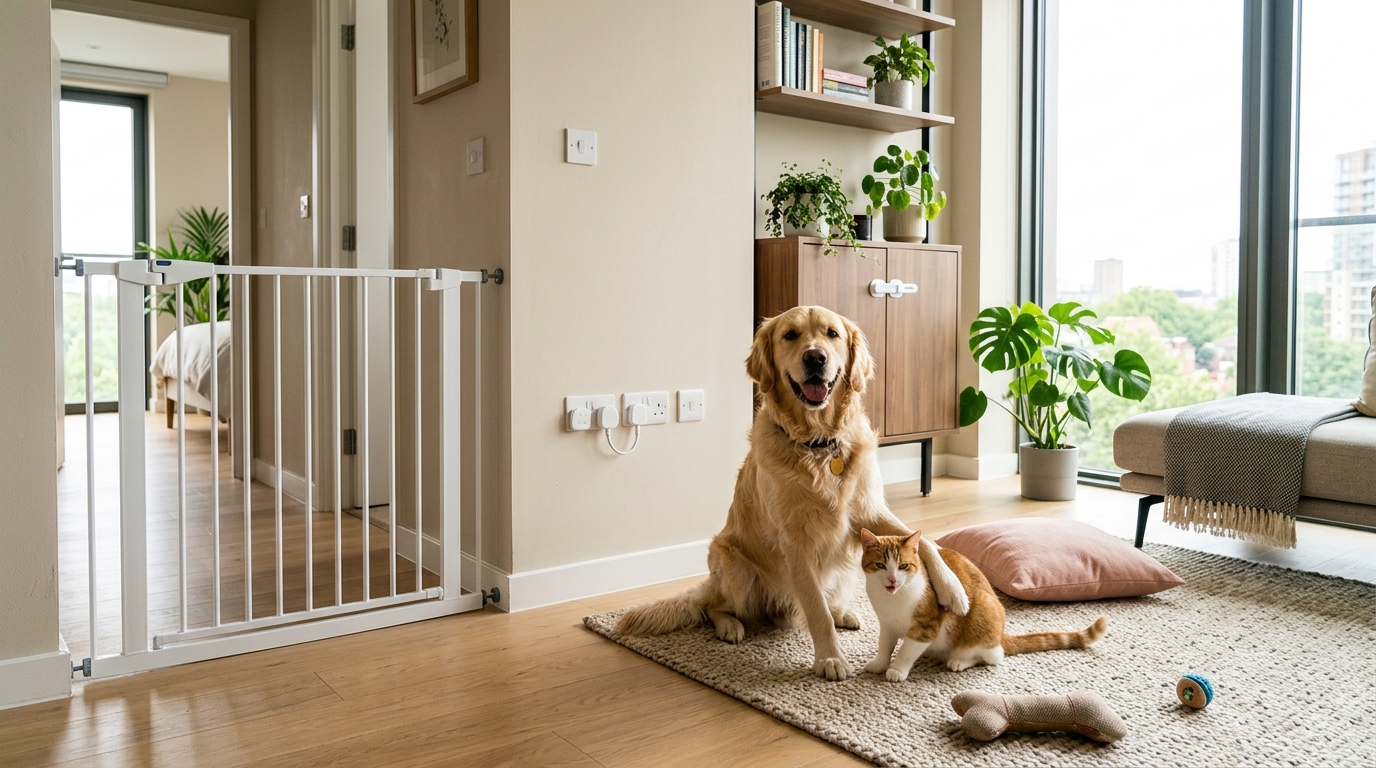
The most critical pet safety steps for apartment living are removing toxic plants, securing loose electrical cords, installing window guards or stops, storing household chemicals in locked cabinets, and keeping human foods inaccessible. These five changes address the hazards responsible for the vast majority of apartment pet injuries and veterinary emergencies.
Apartments have a particular safety profile that differs significantly from houses. The concentration of hazards in a smaller space, limited ability to create truly isolated “safe rooms,” and the mix of neighboring pets, sounds, and smells through thin walls create a unique risk environment for pets.
The good news is that most apartment pet safety improvements are simple, inexpensive, and one-time fixes. This guide covers the 15 most important, organized by hazard type so you can prioritize based on your specific living situation.
Why Apartment Pet Safety Needs Its Own Approach
A typical house-based pet safety guide assumes you can section off areas, have a secure backyard, and control outdoor access. Apartment dwellers face different challenges:
- No outdoor buffer zone — pets go directly from indoor to high-traffic hallways or stairs
- Multiple floors — elevator gaps, stairwells, and balcony drops are real hazards
- Building chemicals — pest control treatments, cleaning products used in common areas
- Shared walls — noises from neighbors can trigger anxiety-driven escape attempts
- Limited space — harder to store hazardous items out of reach when storage is scarce
The ASPCA Animal Poison Control Center handles over 400,000 cases annually — and many of the most common involve household items and plants that are especially accessible in compact living spaces.
15 Smart Pet Safety Tips for Apartment Living
1. Audit and Remove All Toxic Plants
This is the most commonly overlooked hazard and the one with the most severe consequences. Remove any lilies (fatal to cats even in small amounts), pothos, philodendron, snake plants, aloe vera, sago palm, and peace lilies. Replace with pet-safe options: spider plants, Boston ferns, orchids, or succulents. The full toxic plant database is at ASPCA Poison Control.
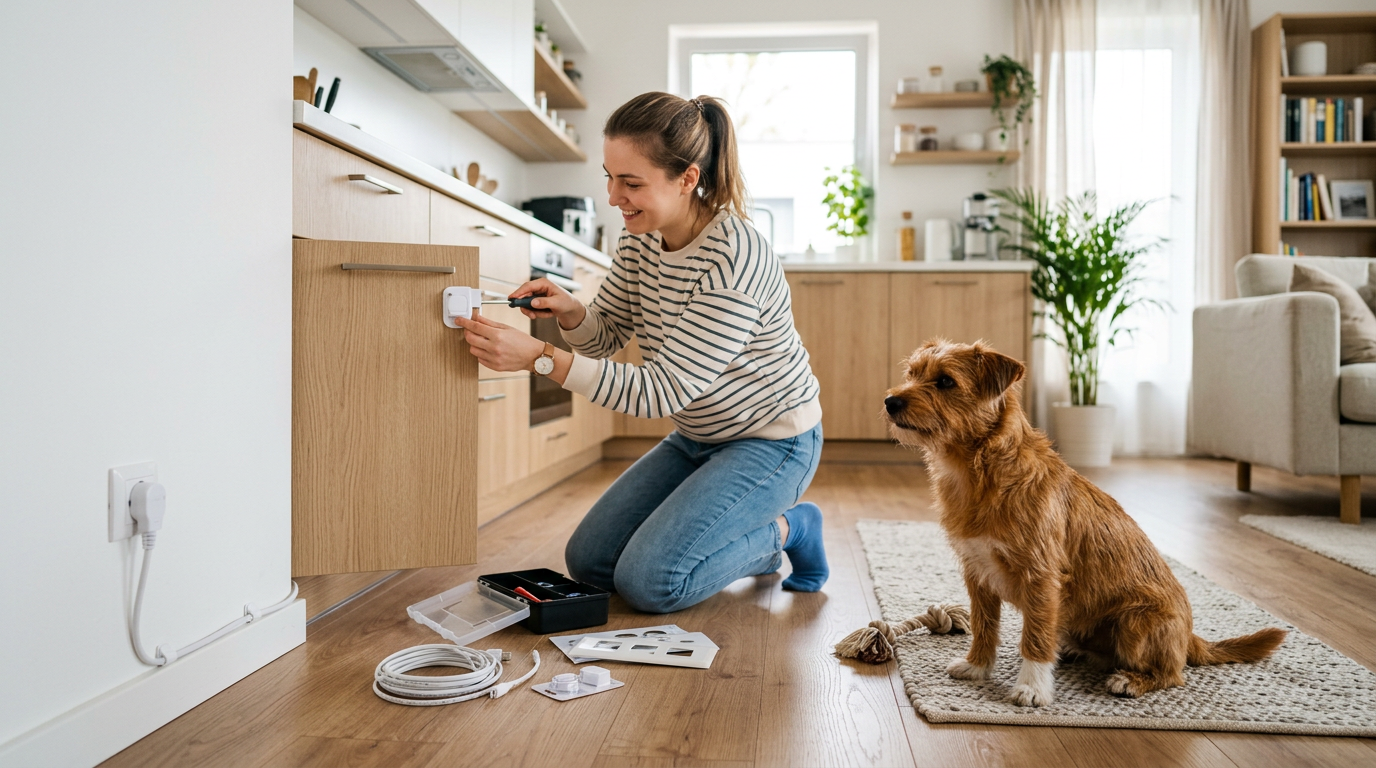
2. Secure All Electrical Cords
Puppies and kittens are especially prone to chewing electrical cords — an electrocution risk. Use cord covers, cable management sleeves, or route cords behind furniture. Bitter apple spray on accessible cords adds a deterrent layer. Browse pet-proofing hardware on Amazon →
3. Install Window Guards or Window Stops
“High-rise syndrome” — cats falling from apartment windows — is a documented veterinary emergency. Never rely on a window screen to contain your cat. Install window guards, window stops that limit opening to 4 inches, or window film. Cats can and will push through screens if motivated.
4. Lock Away All Household Chemicals
Cleaning products, laundry detergents, pest control products, and medications — all stored at pet-accessible cabinet height in most apartments — are serious ingestion risks. Cabinet locks are cheap and permanent. Browse child and pet-safe cabinet locks →
5. Keep Human Foods Inaccessible
Grapes, raisins, chocolate, xylitol (in many sugar-free foods), onions, garlic, macadamia nuts, and avocado are all toxic to dogs. For cats, add onions, garlic, caffeine, and raw dough. In apartments where kitchens are open to living areas, countertop access is constant. Use lidded trash cans and store high-risk foods in closed cabinets. Browse pet-proof trash cans on Amazon →
6. Use Baby Gates to Create Safe Zones
A pet-safe gate across the kitchen entrance keeps pets out of the highest-hazard room while you’re cooking. They also let you confine pets to a single safe room when you have visitors, workers, or need to leave the front door open. Browse pet gates on Amazon →
7. Secure Balcony Access
Apartment balconies are a high fall risk for cats and escape route for dogs. Balcony mesh netting, tension gates across the door, or a fully enclosed “catio” setup convert a dangerous balcony into a safe enrichment space. For a complete guide, see our post on creating a safe dog-friendly balcony.
8. Update ID Tags and Microchip Information
In apartments, door-bolting incidents happen frequently — a food delivery, a neighbor, a momentary distraction. Current ID tags and up-to-date microchip registration are critical. Check your microchip registration annually; it does nothing if the address and phone number are outdated.
9. Know Your Nearest 24-Hour Emergency Vet
Save the address and phone number in your phone before you need it. In a poisoning or injury emergency, every minute counts. Also save the ASPCA Poison Control hotline: (888) 426-4435 (there’s a consultation fee, worth it in emergencies).
10. Manage Pest Control Chemicals Carefully
If your building treats for pests (very common in apartment buildings), keep pets off treated surfaces for the recommended time, open windows for ventilation, and ask management what products are being used. Some common commercial pest control products are toxic to cats in particular. Our holiday pet safety guide covers seasonal chemical hazards in more detail.
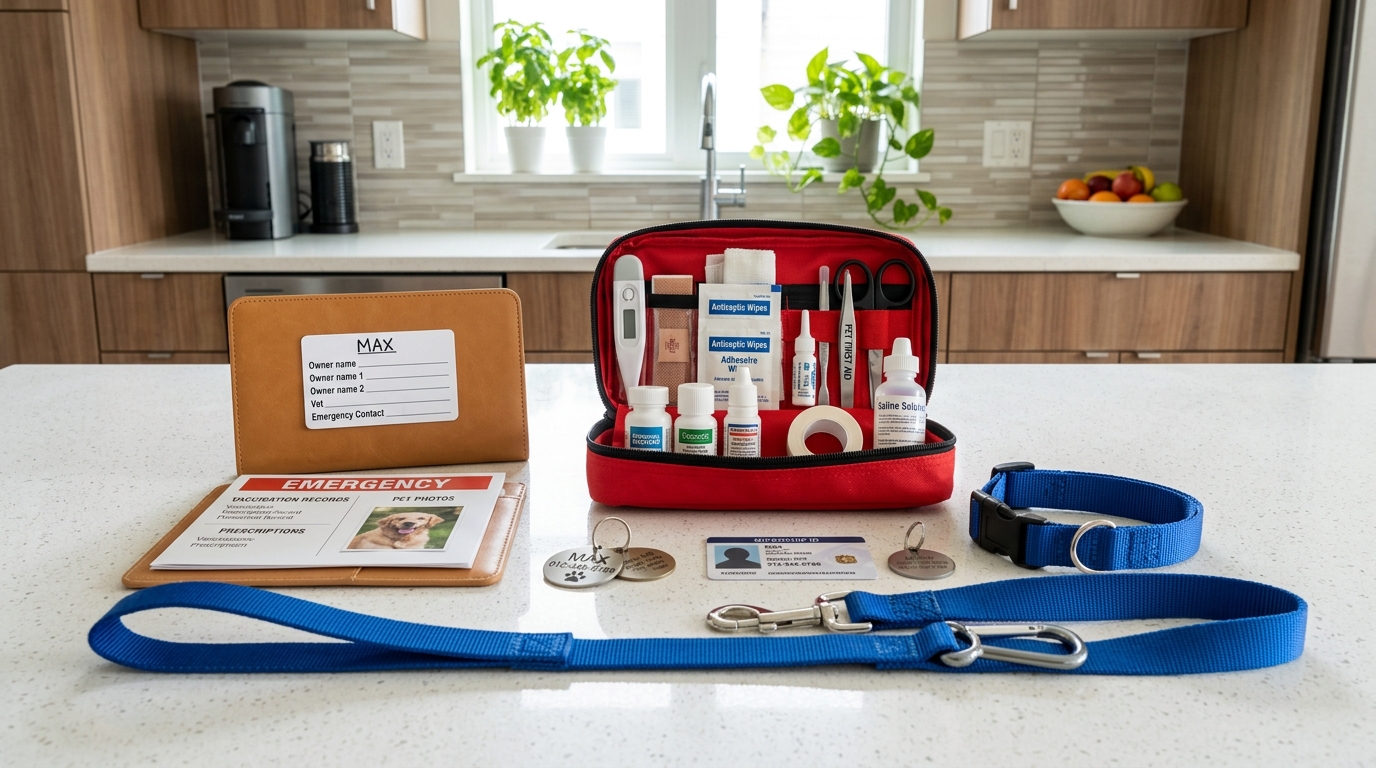
11. Build a Pet Emergency Kit
A pet emergency kit should include: pet first aid manual, gauze rolls, antiseptic wipes, saline solution, bandage tape, digital thermometer, tweezers, your vet’s number, emergency vet’s number, and ASPCA Poison Control. Keep it in an accessible location. Browse ready-made pet first aid kits on Amazon →
12. Create a Pet Emergency Plan for Building Evacuation
Know your building’s fire escape routes and plan how to carry your pet. Have a carrier accessible, not in the back of a closet. If you have multiple pets, know the logistics of getting each one out. Place a “Pets Inside” alert card in your window or on your door for emergency responders.
13. Check for and Seal Small Gaps
Small pets, particularly rabbits, ferrets, and kittens, can squeeze through surprisingly small gaps — under stoves and refrigerators, behind built-in cabinetry, or into wall access panels. Do a full “small animal audit” of your space and seal or block access to gaps.
14. Be Aware of Heat and Cold Extremes in Apartments
Apartments on top floors can reach dangerous temperatures in summer, and drafty apartments can chill small pets in winter. Don’t assume building heating and cooling is adequate for your pet. See our summer heat safety guide for seasonal-specific tips.
15. Maintain Calm Around Exits
Train your dog to “wait” or “stay” before going through any door — the front door, elevator, lobby entrance. Recall training in a compact apartment is easy and pays off enormously when it prevents a bolt-out. See our guide to calming apartment dog anxiety for training tips that complement safety habits.
The International Standard for Pet Home Safety
The International Cat Care organization’s home safety guide emphasizes that indoor cats — often considered “safer” than outdoor cats — are still at significant risk from household hazards. The same logic applies to all apartment pets: a controlled indoor environment is only as safe as you make it.
For a broader guide to resources for toxic substances and emergency contacts, the ASPCA’s general pet care center is the definitive starting point.
Also see our related post on what to do if your dog eats something toxic — the emergency response protocol every apartment pet owner should know before they need it.
Frequently Asked Questions
What are the biggest safety hazards for pets in apartments?
The top hazards are toxic plants, unsecured electrical cords, open windows without guards, kitchen and bathroom chemicals, and human foods left accessible. Small apartments concentrate these hazards in a smaller space, making proactive pet-proofing especially important.
How do I pet-proof apartment windows?
Install window guards, window stops that limit opening to 4 inches maximum, or secure fly screens rated to hold your pet’s weight. Never rely on a window screen alone — cats especially can push through them easily.
Which common houseplants are toxic to pets?
The most commonly kept toxic plants include lilies (extremely toxic to cats), pothos, philodendron, snake plant, aloe vera, sago palm, and dieffenbachia. The ASPCA maintains a full toxic plant database at their Poison Control page.
Do I need a pet emergency kit for an apartment?
Yes. Apartment emergencies can include fires requiring quick evacuation, accidental ingestion, and injuries. Your kit should include a pet first aid manual, gauze, antiseptic wipes, saline solution, your vet’s contact number, and the ASPCA Poison Control hotline: (888) 426-4435.
How can I keep my pet safe when I’m not home?
Confine pets to a safe room or use baby gates to limit access to hazardous areas. Remove or secure all choking hazards, toxic substances, and dangling cords before leaving. A pet camera lets you check in remotely and notice problems quickly.

BusyPetParent Editorial Team
Our team of pet-owning writers and researchers creates practical, honest guides for apartment and urban pet owners. We research every product category thoroughly and prioritize actionable advice you can use today.