
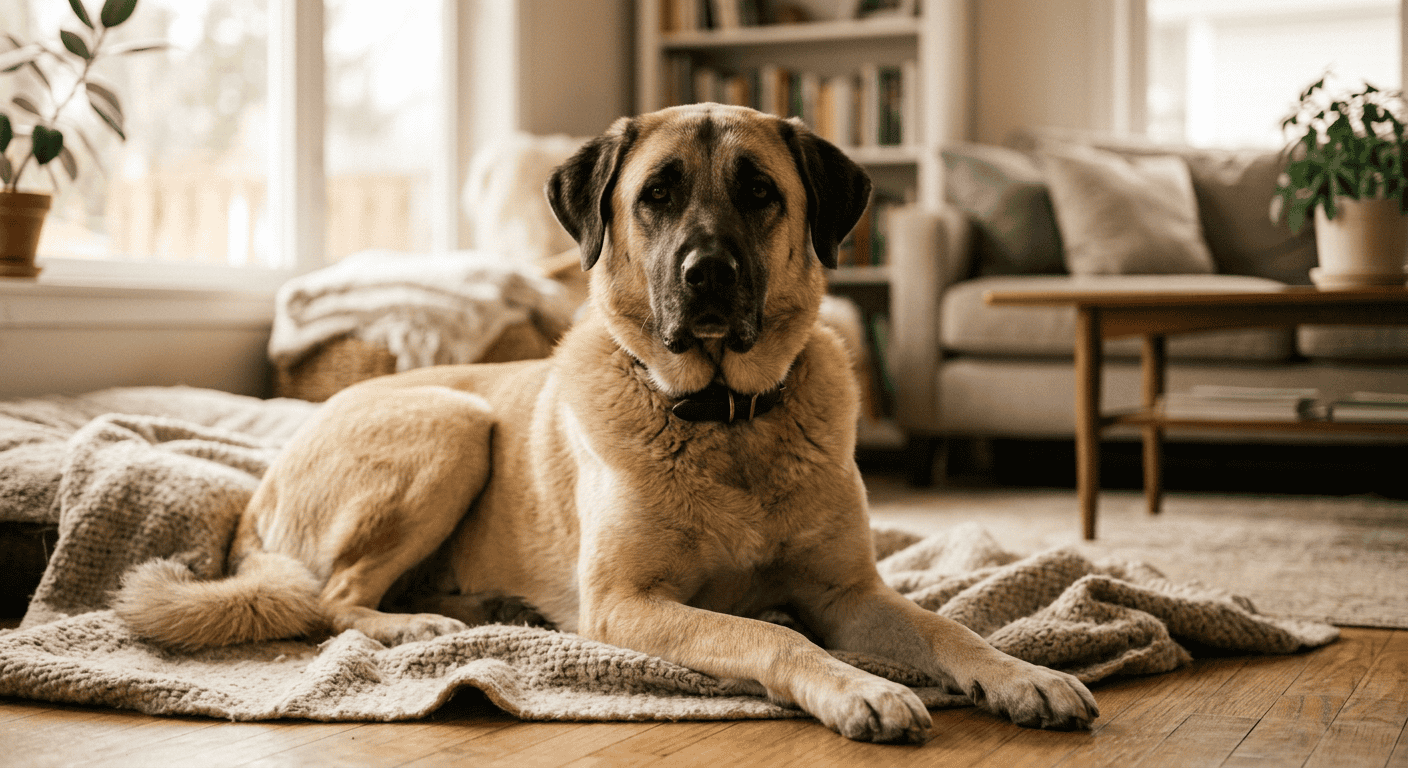
enges, placing this breed in a confined, stimulation-poor environment is genuinely unkind to a dog bred for a specific and meaningful working purpose. Anatolians denied space, territory, and purpose develop frustration behaviours that are difficult to manage in any small space. The verdict: do not consider this breed for apartment living. A rural property with substantial fenced land, secure perimeter, and ideally working livestock is the environment this breed was built for.
Exercise & Daily Activity Needs
Anatolian Shepherds need 60–90 minutes of daily activity, but the nature of that activity matters enormously. On their territory, they naturally patrol perimeters constantly throughout the day and night — a behaviour pattern that serves their guarding function. In urban environments, this instinct is completely frustrated by leash and pavement.
Long, purposeful walks are the best urban approximation of their natural exercise pattern — they do better on structured routes than repetitive fetch. They’re not agility dogs or ball-obsessive retrievers; their exercise instinct is patrolling and monitoring, not games. Mental engagement through territory-inspection walks, nose work, and challenging enrichment is equally important for a breed whose cognitive purpose is vigilance.
Training the Anatolian Shepherd Dog in an Apartment
Anatolian Shepherd Dogs present one of the most significant training challenges in the dog world — not because they’re unintelligent, but because their intelligence was shaped entirely toward autonomous decision-making. They were not bred to wait for commands; they were bred to act on their own assessment of situations faster than a shepherd could respond.
This means traditional obedience training is challenging: they learn command

s but reserve the right to override them when their assessment differs from yours. Training requires respect for their intelligence, immense consistency, positive reinforcement, and realistic expectations. Commands will be followed when the dog agrees the situation warrants compliance. Early and thorough socialisation — to other people, animals, and environments — is critical to prevent the guarding instincts from becoming genuinely dangerous in social situations.
Grooming Requirements
Anatolian Shepherds have a short to medium double coat that requires moderate maintenance. During the two annual seasonal shedding periods, daily brushing with an undercoat rake prevents mat formation and manages the significant shed volume. Outside these periods, weekly thorough brushing is sufficient.
Bathing every 6–8 weeks — or more often for dogs actively working in fields. Their size makes bathing a substantial task; many owners use professional grooming services for full baths. Never shave the double coat. Monthly nail trims are important for dogs whose exercise doesn’t naturally wear nails down on pavement. Weekly ear cleaning and periodic dental care complete the routine.
Health & Lifespan
Anatolian Shepherds live 11–13 years. Common health concerns include hip and elbow dysplasia (notable given their size), hypothyroidism, and entropion (an eyelid condition where the lid rolls inward, causing eye irritation). Their large size puts significant stress on joints throughout life — maintaining healthy body weight is critical for joint longevity.
Bloat (GDV) is a serious risk given their deep chest — feeding twice daily in smaller portions rather than one large meal, and avoiding strenuous post-meal exercise, significantly reduces this risk. Work with breeders who perform OFA hip and elbow certifications. Annual vet checkups are standard; joint health monitoring becomes important from middle age.
Feeding Guide
Large to giant breed nutrition applies. Adults eat 4–6 cups of high-quality dry kibble daily, divided into two meals, with amounts varying significantly based on individual size and activity level. Working dogs in cold climates may need more; sedentary dogs significantly less. Avoid free-feeding.
Giant breed formulas with appropriate calcium-phosphorus ratios support skeletal health during puppyhood — this is especially important for a breed growing to 80–150 pounds. Avoid rapid growth in puppyhood, which stresses developing joints. Fresh water always available; working dogs outdoors in summer need monitoring for adequate hydration.
Recommended Products for Anatolian Shepherd Dog Owners
We’ve rounded up the top-rated gear most useful for Anatolian Shepherd Dog owners — beds sized for the breed, harnesses built for their body type, and food formulas recommended for their specific needs.
🛒 Top Picks for Anatolian Shepherd Dog Owners
- Best Dog Beds for Anatolian Shepherd Dogs — supportive, right-sized for apartment living
- Top-Rated Harnesses for Anatolian Shepherd Dogs — city-ready, escape-proof
- Best Dog Food for Anatolian Shepherd Dogs — breed-appropriate nutrition
“`html
What Does an Anatolian Shepherd Dog Cost to Own?
The initial cost of an Anatolian Shepherd Dog from a reputable breeder typically ranges from $1,500 to $3,500, depending on lineage, health clearances, and breeder reputation. Puppies from champion bloodlines may cost upwards of $4,000. Always verify breeder credentials to avoid unethical practices.
Monthly expenses include high-quality large-breed dog food ($80–$120), as Anatolian Shepherds require nutrient-dense diets. Grooming costs are minimal ($10–$20/month for basic supplies) since their short coats need only weekly brushing. Veterinary care, including routine check-ups and vaccinations, averages $50–$100 monthly, while pet insurance (recommended for this active breed) ranges from $40–$80/month. Unexpected health issues or joint supplements may add to costs.
For durable grooming tools, consider the FURminator Deshedding Tool, ideal for managing their seasonal shedding.
“`
Is the Anatolian Shepherd Dog Good With Other Pets?
The Anatolian Shepherd Dog is a loyal and protective breed, but its compatibility with other pets depends on socialization and training. These dogs have a strong prey drive due to their history as livestock guardians, which can make them wary of smaller animals like cats. Early socialization is crucial to help them coexist peacefully with feline companions.
When it comes to other dogs, Anatolian Shepherds can be territorial and dominant, especially with dogs of the same sex. Proper introductions and consistent training are essential to foster harmony in multi-dog households. Supervision is recommended to prevent conflicts.
With children, Anatolian Shepherds are generally gentle and patient, especially if raised with them. However, their large size and protective nature mean interactions should always be supervised. Teaching children to respect the dog’s boundaries is key to ensuring a safe and positive relationship.
“`html
What Do Anatolian Shepherd Dog Owners Say About Apartment Life?
Living with an Anatolian Shepherd in an apartment is doable but demanding. Their deep, booming bark can startle neighbors—training a “quiet” command is a must. Despite their size, they’re surprisingly adaptable to small spaces if given daily long walks and mental stimulation. The biggest challenge? Their guarding instincts mean they’ll patrol your limited square footage relentlessly, often rearranging furniture with their bulk. Owners who succeed prioritize structured routines and access to outdoor exploration.
“`
Frequently Asked Questions
🔗 Official Breed Resources