
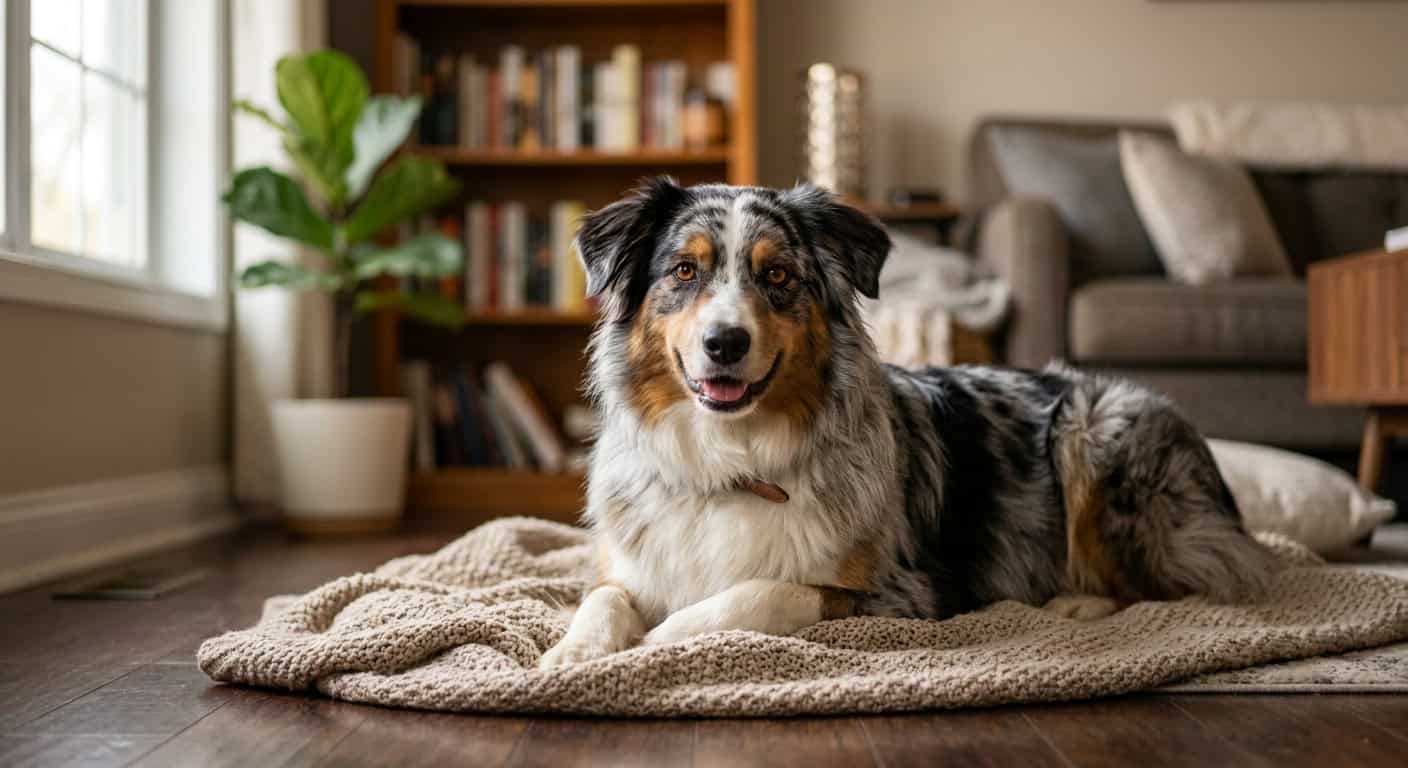
me destructive, bark excessively, and may develop anxiety or compulsive behaviours. With that commitment met, they’re actually pleasant apartment dogs: not excessive barkers by nature, medium-sized, and genuinely loving of close human company. The verdict: possible for active, committed owners with access to parks, trails, or off-leash areas. If your lifestyle doesn’t include daily active exercise, choose a different breed.
Exercise & Daily Activity Needs
Australian Shepherds need 1.5–2 hours of vigorous, purposeful exercise daily. Running, hiking, agility training, frisbee, fetch, and swimming are all excellent outlets. The key word is ‘vigorous’ — a 20-minute leash walk is inadequate. They need to actually run, jump, sprint, and use their bodies.
Mental exercise is equally non-negotiable. Aussies were bred for complex problem-solving work, and their brains need daily engagement beyond physical movement. Puzzle feeders, trick training, nose work, advanced obedience, agility courses, and herding activities (if accessible) provide cognitive stimulation that can be just as tiring as physical exercise. For apartment owners: a morning run plus midday enrichment plus evening training session is the sustainable gold standard.
Training the Australian Shepherd in an Apartment
Australian Shepherds are among the most trainable dog breeds in existence. They’re fast learners, highly motivated by food and play, eager to please when their relationship with a handler is solid, and capable of learning advanced and complex behaviours quickly. Training them is genuinely enjoyable — they’re the breed that makes inexperienced trainers feel like geniuses.
The challenge is channelling this learning capacity constructive

ly. A bored Aussie will train themselves to do things you absolutely don’t want — opening gates, carrying their food bowl to you, herding children or smaller pets. For apartment life, priority skills are ‘place’ (go to your mat and stay calmly), ‘quiet,’ ‘settle,’ and strong leash manners. Agility training is an outstanding outlet that simultaneously exhausts body and mind and deepens the dog-handler relationship.
Grooming Requirements
Australian Shepherds have a medium-length double coat that sheds significantly year-round, with two heavy seasonal coat blows. This is a real consideration for apartment living — regular vacuuming is part of the deal with an Aussie.
Brushing 3–4 times weekly prevents matting and manages shedding. The feathering on legs, chest, and tail tangles easily and needs particular attention. Professional grooming every 8–12 weeks for a de-shed treatment and tidy trim makes maintenance much easier. Bathing every 4–6 weeks keeps the coat healthy. Never shave an Aussie — their double coat regulates temperature in both heat and cold. Ear cleaning weekly, nail trims monthly.
Health & Lifespan
Australian Shepherds live 12–15 years. The most important breed-specific health consideration is the MDR1 gene mutation (now called ABCB1), present in approximately 50% of Aussies. Affected dogs have severe or potentially fatal reactions to common medications including ivermectin (heartworm prevention), loperamide (Imodium), and several chemotherapy agents. MDR1 genetic testing is strongly recommended for all Aussies — results directly affect medication choices throughout their life.
Other known health concerns include hip dysplasia, epilepsy, hereditary cataracts, and collie eye anomaly. Work with breeders who conduct OFA hip, elbow, and eye certifications and MDR1 testing. Annual vet checkups standard; report MDR1 status to your veterinarian and ensure it’s in the medical record.
Feeding Guide
Medium breed nutrition applies. Adults eat 1.5–2.5 cups of high-quality dry kibble per day, split into two meals. Active dogs or those in regular athletic training may need more — adjust based on body condition and energy expenditure rather than fixed amounts. Highly active Aussies working in agility or other sports may need performance-level formulas.
Protein-first formulas support their athletic build and active lifestyle. Some Aussies have food sensitivities — if skin or digestive issues emerge, an elimination diet trial or limited-ingredient formula can help identify triggers. Fresh water must always be available, particularly for active dogs.
Recommended Products for Australian Shepherd Owners
We’ve rounded up the top-rated gear most useful for Australian Shepherd owners — beds sized for the breed, harnesses built for their body type, and food formulas recommended for their specific needs.
🛒 Top Picks for Australian Shepherd Owners
- Best Dog Beds for Australian Shepherds — supportive, right-sized for apartment living
- Top-Rated Harnesses for Australian Shepherds — city-ready, escape-proof
- Best Dog Food for Australian Shepherds — breed-appropriate nutrition
“`html
What Does a Australian Shepherd Cost to Own?
The initial cost of an Australian Shepherd from a reputable breeder typically ranges from $800 to $2,500, depending on pedigree, coat color, and breeder reputation. Show-quality or rare-colored Aussies may cost upwards of $3,000. Always verify health clearances and breeder credentials to avoid unethical sellers.
Monthly expenses for an Australian Shepherd include high-quality dog food ($50–$80), routine vet visits ($30–$50 per month averaged), and pet insurance ($30–$60). Grooming costs vary; Aussies require regular brushing, but professional grooming every 6–8 weeks adds $50–$80 per session. Toys, treats, and preventive medications (e.g., flea/tick control) add another $20–$40 monthly.
For grooming essentials, consider the FURminator Deshedding Tool, a must-have for managing their thick double coat.
“`
Is the Australian Shepherd Good With Other Pets?
The Australian Shepherd is a highly intelligent and energetic breed known for its herding instincts. While they can be great companions, their strong prey drive may make them less compatible with smaller pets like cats, especially if not socialized early. However, with proper training and gradual introductions, Aussies can coexist peacefully with feline friends.
When it comes to other dogs, Australian Shepherds generally do well, particularly if raised together or introduced carefully. Their playful and social nature makes them enjoy the company of other canines, though their herding tendencies might lead to nipping or chasing during playtime.
With children, Aussies are typically affectionate and protective, making them excellent family pets. However, their high energy and herding instincts mean they may try to “herd” kids by nipping at their heels. Supervision and training are key to ensuring a harmonious relationship between Australian Shepherds and children.
Many Australian Shepherd owners admit apartment life requires effort. Aussies are energetic and need daily exercise, so city living means committing to long walks or trips to dog parks. Their intelligence thrives with mental stimulation—puzzle toys are a lifesaver. Noise-wise, they can bark at unfamiliar sounds, which can be tricky in close quarters. Despite challenges, their loyalty and adaptability make them great companions if you’re willing to meet their needs.
Frequently Asked Questions
🔗 Official Breed Resources