
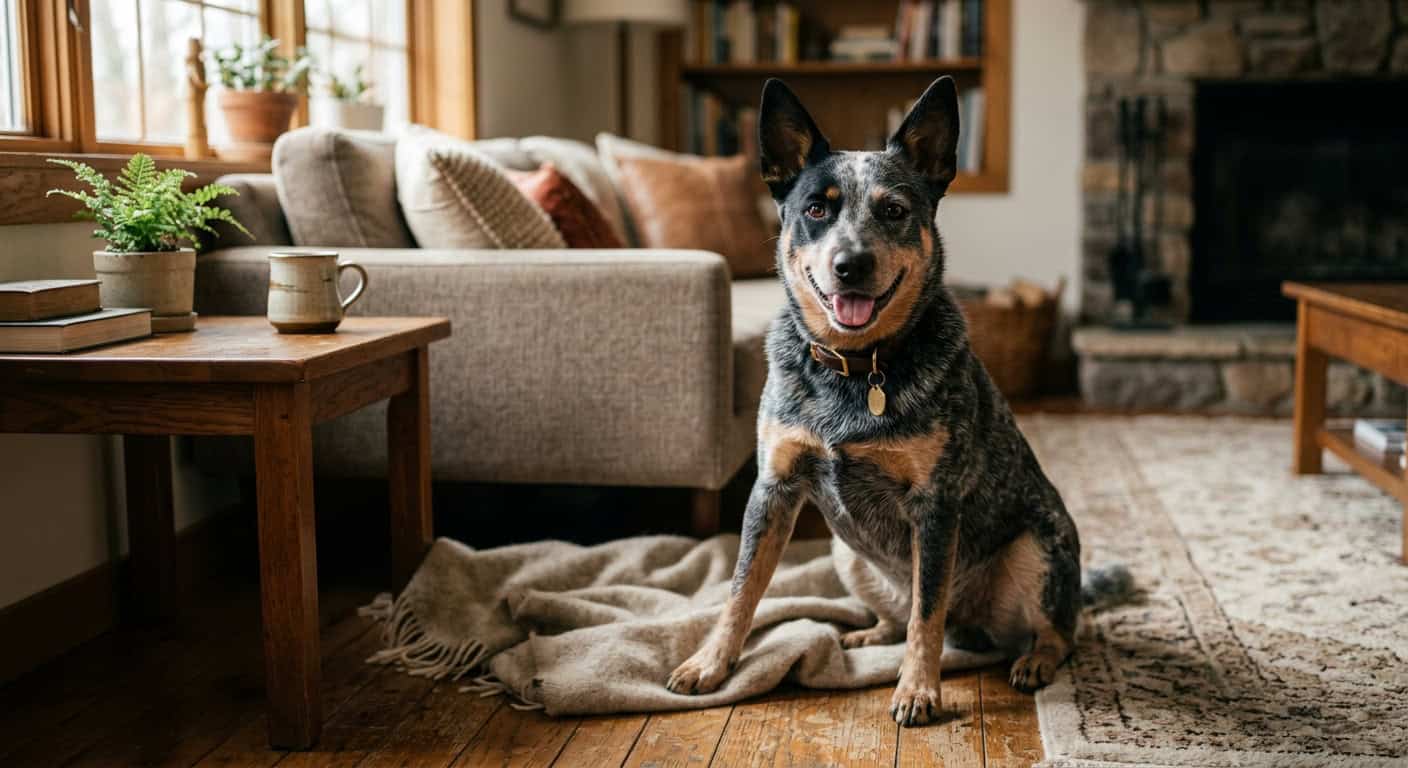
Exercise & Daily Activity Needs
Plan for a minimum of 90 minutes of vigorous activity daily—running, agility work, frisbee, or off-leash trail time. ACDs don’t just need exercise; they need purposeful physical challenge. Mental workouts (trick training, puzzle toys, nose work) should supplement physical activity daily. An under-exercised ACD in an apartment will redecorate your home.
Training the Australian Cattle Dog in an Apartment
Australian Cattle Dogs are extraordinarily trainable—they excel in obedience, agility, herding, and protection sports. But they’re also intensely independent and will problem-solve their way around commands they find pointless. Apartment training requires establishing yourself as a clear, consistent leader from day one. Crate training is essential—it gives them a safe space and prevents chaos when unsupervised. Channel their herding instinct: they may try to herd children, other pets, or guests by nipping heels. Redirect this to appropriate play immediately. Positive reinforcement works well; they’re sensitive to tone and don’t require harsh methods. Daily 15–20 minute training sessions keep their minds engaged and reinforce your bond.

Grooming Requirements
The Australian Cattle Dog’s short, dense double coat is relatively low-maintenance. Weekly brushing with a bristle brush removes loose hair and keeps the coat clean. They shed moderately year-round with heavier seasonal sheds in spring and fall. Bathe every 6–8 weeks unless they get particularly dirty. Their nails grow quickly given their active lifestyle and should be checked every 3–4 weeks. Ears should be checked weekly for debris or moisture buildup.
Health & Lifespan
ACDs are hardy dogs with a lifespan of 12–16 years, one of the longest for medium breeds. Common health concerns include progressive retinal atrophy (PRA), hip and elbow dysplasia, and deafness (linked to the same merle/piebald genetics that create their speckled coat—reputable breeders BAER-test puppies). They’re generally robust but benefit from annual checkups and joint supplements as they age into their working years.
Feeding Guide
Feed an adult ACD 1.5–2.5 cups of high-quality, protein-rich dry kibble daily based on activity level, split into two meals. Highly active dogs doing regular sport or long trail runs may need up to 3 cups. Choose a formula formulated for active working breeds. Monitor weight—ACDs should maintain a lean, muscular build. Obesity accelerates joint wear in this naturally active breed.
Australian Cattle Dog: Apartment Pros & Cons
Let’s be direct: the Australian Cattle Dog is one of the hardest breeds to manage in an apartment, but it’s not impossible for the right person. The pros: they’re medium-sized, short-coated, and low-maintenance in the grooming department. They’re extraordinarily loyal and bond intensely with their owner. They’re quiet indoors when properly exercised—they’re not yappy dogs. They’re also among the healthiest and longest-lived breeds. The cons: their intelligence and working drive don’t switch off. A bored ACD is destructive, obsessive, and relentless. They require 90 minutes or more of vigorous daily exercise, and a ‘job’ or dog sport is nearly mandatory. They may nip at heels. In apartment buildings, interactions with other dogs can be tense without thorough socialization. If you’re an ultra-active person who runs trails daily, competes in dog sports, and works from home, an ACD can be a phenomenal apartment companion. Everyone else should reconsider.
Recommended Products for Australian Cattle Dog Owners
🛒 Top Picks for Australian Cattle Dog Owners
- Best Dog Beds for Australian Cattle Dogs — supportive, right-sized for apartment living
- Top-Rated Harnesses for Australian Cattle Dogs — city-ready, escape-proof
- Best Dog Food for Australian Cattle Dogs — breed-appropriate nutrition
What Does a Australian Cattle Dog Cost to Own?
The initial cost of an Australian Cattle Dog from a reputable breeder typically ranges from $800 to $2,500, depending on pedigree, location, and breeder reputation. Puppies with show-quality lineage or working dog certifications may cost even more. Always ensure the breeder conducts health screenings for common breed issues like hip dysplasia.
Monthly expenses for an Australian Cattle Dog include high-quality dog food ($50–$80), as this active breed requires a protein-rich diet. Grooming costs are minimal ($10–$20 monthly) since their short coat only needs occasional brushing. Veterinary care, including routine check-ups and vaccinations, averages $50–$100 per month. Pet insurance can add $30–$60 monthly but helps offset unexpected medical bills.
For durable toys to keep your Australian Cattle Dog entertained, consider the KONG Classic Dog Toy, a favorite for high-energy breeds.
Is the Australian Cattle Dog Good With Other Pets?
The Australian Cattle Dog, known for its intelligence and high energy, can coexist with other pets, but its strong herding instincts and prey drive require careful consideration. With proper socialization from a young age, this breed can get along well with other dogs. However, their dominant nature may lead to conflicts if not managed, especially with dogs of the same sex.
When it comes to cats, the Australian Cattle Dog’s prey drive can pose challenges. Early exposure and training are crucial to teach them to view cats as companions rather than prey. Supervision is recommended, particularly in the early stages of their relationship.
With children, this breed can be a loyal and playful companion, especially if raised together. However, their herding instincts may lead them to nip at heels during play, which can be managed with consistent training. Overall, the Australian Cattle Dog thrives in a structured environment where boundaries are clear.
“`html
What Do Australian Cattle Dog Owners Say About Apartment Life?
Australian Cattle Dogs adapt if you’re committed—but they’re high-energy. Ours needs two long walks plus mental games daily, or she paces restlessly. Barking isn’t excessive, but she “talks back” when bored. Clever space use helps: we turned a corner into a mini-agility zone. The biggest challenge? Her herding instinct—she nips at heels during play, so training is a must.
“`
Frequently Asked Questions
🔗 Official Breed Resources
Who Is the Australian Cattle Dog Right For?
The Australian Cattle Dog is right for experienced, very active owners who want a dog that matches their intensity and intelligence. They suit runners, cyclists, dog sport competitors (agility, flyball, herding trials), and people who work outdoors or bring their dog to work. They do best with one or two dedicated people rather than large chaotic households. Active families with dog-savvy children can work well if the ACD is properly socialized. They’re not suited to first-time owners, apartment dwellers who work traditional 9-to-5 schedules away from home, or households where the dog would be largely unsupervised. They’re also not ideal for multi-dog households with unknown dogs—their herding instinct can create friction. But for the right owner—one who sees the dog as a partner, not a pet—the ACD is arguably the most capable and rewarding working breed you can share your life with.