
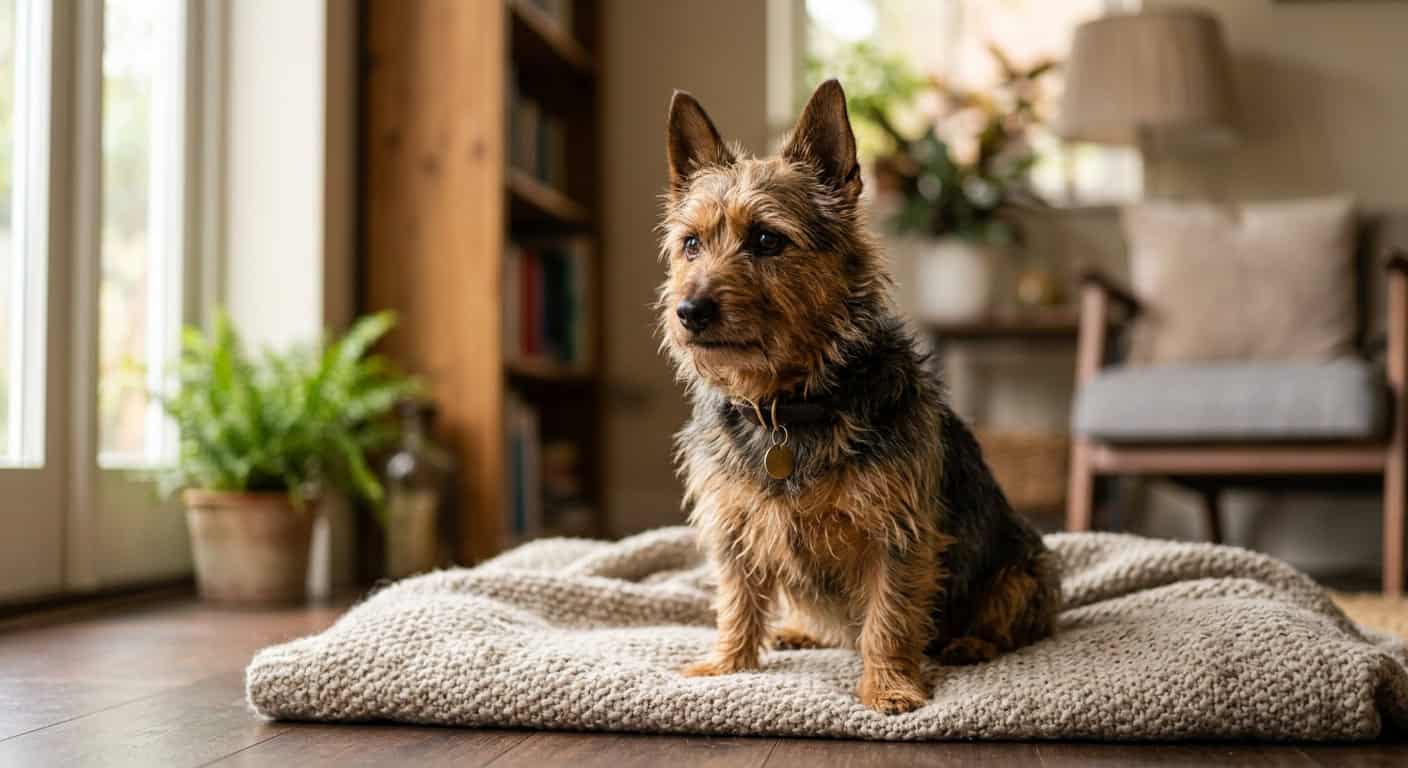
Exercise & Daily Activity Needs
Australian Terriers need 30–45 minutes of exercise daily—two brisk 20-minute walks with off-leash play in a securely fenced area is ideal. They have a lot of energy for their size and love to run, fetch, and explore. Mental stimulation through training sessions and puzzle toys is just as important as physical activity. Their intelligence and prey drive mean they do well at earthdog, agility, and rally sports.
Training the Australian Terrier in an Apartment
Australian Terriers are intelligent and quick learners, but terrier independence means they need consistent, patient training. They respond best to positive reinforcement with food and praise—keep sessions short (10–15 minutes) and engaging to hold their attention. Key apartment skills to prioritize: ‘quiet’ command (they’re alert barkers), solid leash manners (they lunge at small animals), and reliable recall. Crate training is helpful for managing alone time. Early socialization with other dogs, people, and urban environments reduces reactivity. Don’t mistake their boldness for stubbornness—Australian Terriers actually want to engage with you; they just want it to be fun.

Grooming Requirements
The Australian Terrier’s harsh double coat is relatively easy to care for. Brush weekly to remove debris and loose hair. Their coat doesn’t shed heavily, but without occasional stripping (manually removing dead outer coat), it can become soft and lose its weather-resistant texture. Hand-stripping 1–2 times a year is ideal for show dogs; pet owners can use clipping instead. Bathe every 6–8 weeks. Check and clean ears weekly. Nails trim every 3–4 weeks.
Health & Lifespan
Australian Terriers are generally healthy dogs with a lifespan of 11–15 years. Common health concerns include diabetes mellitus (a known breed predisposition), Legg-Calvé-Perthes disease (hip joint deterioration common in small breeds), and allergies. Luxating patella can occur. Annual vet checks are important; diabetic monitoring becomes more relevant in older dogs of this breed.
Feeding Guide
Feed an adult Australian Terrier ½–1 cup of high-quality kibble daily, split into two meals. Choose a small-breed formula appropriate for their age and activity level. Monitor weight closely—they can overeat and gain weight, which stresses their small joints. Fresh water should always be available.
Australian Terrier: Apartment Pros & Cons
The Australian Terrier has a solid apartment case for a terrier breed. On the positive side, they’re small (14–16 lbs), relatively low-shedding, and have more adaptable energy than many other working terriers. They’re affectionate with their families and tend to be more trainable than their cousins the Jack Russell or Rat Terrier. They’re curious and entertaining without being destructive when exercised. The negatives: they bark—they’re watchdogs by instinct and will sound off at unfamiliar sounds and passersby. Their prey drive is strong, and any small animal in the building (or outside the window) will grab their attention. They can be stubborn in training. For apartment owners who want a compact, personable, and manageable small dog with genuine terrier personality, the Australian Terrier is a great fit—provided you’re willing to work on the barking and enjoy the feisty terrier temperament rather than fighting it.
Recommended Products for Australian Terrier Owners
🛒 Top Picks for Australian Terrier Owners
- Best Dog Beds for Australian Terriers — supportive, right-sized for apartment living
- Top-Rated Harnesses for Australian Terriers — city-ready, escape-proof
- Best Dog Food for Australian Terriers — breed-appropriate nutrition
What Does a Australian Terrier Cost to Own?
The initial cost of purchasing an Australian Terrier from a reputable breeder typically ranges from $1,500 to $3,000, depending on factors like lineage, breeder reputation, and location. It’s essential to choose a responsible breeder to ensure the health and quality of your new companion.
Monthly ongoing costs for an Australian Terrier include food, grooming, and veterinary care. High-quality dog food averages $20 to $40 per month. Grooming, while minimal due to their low-maintenance coat, may cost $30 to $50 every few months if done professionally. Regular vet visits and preventive care can add another $20 to $50 monthly, while pet insurance typically ranges from $30 to $50 per month, depending on coverage.
To keep your Australian Terrier healthy and happy, consider investing in a durable chew toy like the KONG Classic Dog Toy, which provides mental stimulation and helps maintain dental health.
Is the Australian Terrier Good With Other Pets?
The Australian Terrier is a spirited and confident breed, but its compatibility with other pets depends on socialization and individual temperament. Known for their strong prey drive, these terriers may chase smaller animals, including cats, especially if they are not introduced early. However, with proper training and gradual exposure, Australian Terriers can coexist peacefully with feline companions.
When it comes to other dogs, Australian Terriers generally do well, particularly if raised together. They can be assertive and may try to establish dominance, so introducing them to other dogs in a controlled environment is essential. Early socialization helps them develop positive relationships with their canine counterparts.
Australian Terriers are affectionate and playful with children, making them suitable for families. However, their energetic nature means they may be better suited for older children who understand how to interact with dogs respectfully. Supervision is recommended to ensure harmonious interactions between the terrier and younger kids.
Living with an Australian Terrier in an apartment can be surprisingly manageable, but it’s not without its challenges. Many owners praise their adaptability and small size, which makes them a great fit for city living. They don’t need a ton of space to thrive, but they do have bursts of energy that require daily walks or playtime. One common observation is their alertness—Australian Terriers are quick to bark at noises, which can be tricky in close quarters with neighbors. On the bright side, their compact size means they’re easy to take on urban adventures. Just be prepared to invest time in training to curb excessive barking and keep them mentally stimulated. With the right routine, they make loyal and lively companions.
Frequently Asked Questions
🔗 Official Breed Resources
Who Is the Australian Terrier Right For?
The Australian Terrier suits apartment dwellers who want a compact, personable dog with genuine character. They’re a great match for active singles and couples who enjoy daily walks and interactive play. Retirees and work-from-home professionals appreciate their companionable nature and manageable size. They do well in households without small pets (their prey drive is real) and with older children who interact calmly. They’re ideal for terrier enthusiasts who love the feisty, independent personality but want it in a more manageable package than a Jack Russell or Fox Terrier. They’re less suited to owners seeking a quiet, low-key dog or households with small animals at risk. For people who want a compact, loyal, and genuinely entertaining dog with real terrier spirit—and who don’t mind some barkiness and stubborn moments—the Australian Terrier is an underappreciated gem of a breed.