
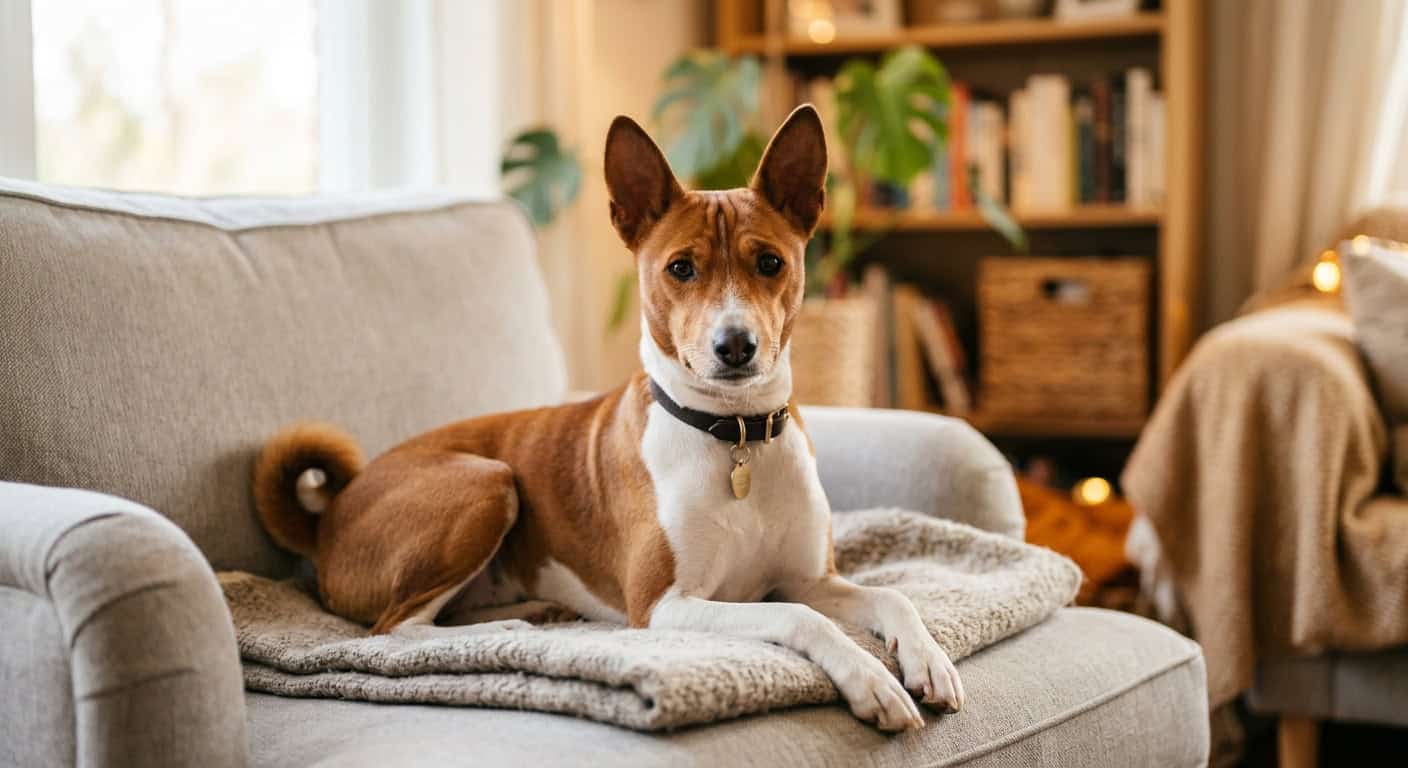
Exercise & Daily Activity Needs
Basenjis need 45–60 minutes of vigorous daily exercise. They’re athletic, fast, and love to run. Off-leash is risky given their prey drive—a securely fenced area is essential. In cities, long brisk walks and active indoor play sessions work well. Lure coursing, a sport designed for sight hounds, is an excellent outlet. Puzzle toys and enrichment are critical to managing their mental energy indoors.
Training the Basenji in an Apartment
Training a Basenji is famously challenging—they’re intelligent enough to understand what you want but independent enough to decide whether they’ll comply. Positive reinforcement with high-value food rewards is the most effective approach. Keep sessions short (5–10 minutes) and extremely engaging; they disengage quickly from repetition. ‘What’s in it for me?’ is the Basenji’s operating philosophy. Crate training is essential—an unsupervised Basenji in an apartment is an expensive liability. Focus on recall, leash manners, and ‘leave it’ for apartment safety. This is not a breed that performs tricks on cue; they do things because they feel like it. Accept this and work with it rather than against it.

Grooming Requirements
The Basenji’s short, smooth coat is one of the lowest-maintenance of any breed. Weekly wiping with a damp cloth or rubber grooming mitt is often sufficient. They shed minimally and have virtually no odor—one of the few dogs that legitimately cleans themselves regularly. Bathing every 6–8 weeks is plenty. Check ears weekly. Trim nails every 3–4 weeks.
Health & Lifespan
Basenjis typically live 13–14 years. They have several notable breed-specific conditions: Fanconi syndrome (a serious kidney disorder unique to Basenjis—DNA testing is now available), progressive retinal atrophy (PRA), and hypothyroidism. Hip dysplasia and luxating patella can also occur. Responsible breeders screen for Fanconi. Annual vet checkups should include bloodwork to monitor kidney function as the dog ages.
Feeding Guide
Feed an adult Basenji 1–1.5 cups of high-quality dry kibble daily, split into two meals. Choose a protein-forward formula appropriate for active small/medium breeds. Monitor weight—they have lean, athletic builds and obesity strains their joints. Fresh water must always be available. Some Basenjis have sensitive stomachs; if digestive issues arise, explore limited-ingredient diets.
Basenji: Apartment Pros & Cons
Few breeds offer the Basenji’s specific combination of apartment advantages and challenges. The pros are genuinely unusual: no barking (the yodel doesn’t happen constantly), no shedding to speak of, no odor, and a compact 22–24 lb size. They’re fastidiously clean, easy to groom, and endlessly entertaining in their cat-like behaviors. The cons are equally distinctive: they’re escape artists who need a very secure environment, they’re notoriously difficult to train to a reliable recall (never trust them off-leash in open areas), and when bored or frustrated, they’re capable of remarkable destruction despite their small size. Their independent nature means they’re not affectionate on demand—they engage on their own terms. For the right owner—someone experienced with independent breeds, active enough to meet their exercise needs, and able to fully Basenji-proof their apartment—this breed is a fascinating, low-odor, low-noise, and utterly unique companion.
Recommended Products for Basenji Owners
🛒 Top Picks for Basenji Owners
- Best Dog Beds for Basenjis — supportive, right-sized for apartment living
- Top-Rated Harnesses for Basenjis — city-ready, escape-proof
- Best Dog Food for Basenjis — breed-appropriate nutrition
Here’s an HTML section for your blog post:
“`html
What Does a Basenji Cost to Own?
Purchasing a Basenji from a reputable breeder typically costs between $1,500 and $3,000, depending on lineage, location, and breeder reputation. Show-quality or rare-colored Basenjis may exceed this range. Always verify breeder credentials to avoid unethical practices.
Monthly expenses for a Basenji include high-quality dog food ($30–$50), as they thrive on premium diets. Since Basenjis are low-shedding and fastidious self-groomers, grooming costs are minimal—just occasional nail trims and ear cleaning. Vet visits for routine care average $50–$100 monthly, including vaccinations and preventatives. Pet insurance, recommended for this active breed, ranges from $30–$60 per month.
For Basenji-proof toys to keep them entertained, consider the KONG Classic Dog Toy, a durable option for their chewing instincts.
“`
This section provides
Is the Basenji Good With Other Pets?
The Basenji, often referred to as the “barkless dog,” is known for its independent and curious nature. When it comes to compatibility with other pets, this breed can be a mixed bag. Basenjis have a strong prey drive due to their hunting background, which can make them less suitable for households with small animals like cats or rabbits. While some Basenjis may coexist peacefully with cats if raised together, others may see them as prey and chase them relentlessly.
With other dogs, Basenjis can get along well, especially if they are socialized early. However, they may display dominance or territorial behavior, particularly with dogs of the same sex. Supervision is recommended during initial introductions.
Basenjis can be good with children, especially older kids who understand how to interact with dogs respectfully. Their playful nature makes them engaging companions, but their independence means they may not tolerate rough handling. Always supervise interactions between Basenjis and young children to ensure safety.
“`html
What Do Basenji Owners Say About Apartment Life?
Basenjis thrive in apartments if their needs are met—but they’re not your typical couch potatoes. Owners rave about their quiet nature (they don’t bark, though they’ll “yodel” when excited), which keeps neighbors happy. Their compact size means they don’t need much floor space, but they’re sprinters, not sprawlers: daily walks or indoor play sessions are non-negotiable. One owner joked, “They’ll turn your hallway into a race track at 7 AM.”
The biggest challenge? Basenjis are escape artists. One sneaky pup learned to open lever-style doors to explore the building! Still, their low shedding and cleanliness make apartment life easier. Just be ready to trade square footage for creativity—puzzle toys and vertical spaces (cat trees work!) are lifesavers.
“`
Frequently Asked Questions
🔗 Official Breed Resources
Who Is the Basenji Right For?
The Basenji is right for experienced owners who appreciate a challenge and can laugh at a dog who routinely ignores them. They suit confident, patient people who do their research and understand that ‘independent’ means something very different than ‘untrainable’—it means you have to be creative, consistent, and use better treats. They’re excellent for active people who can meet their exercise needs and want a low-odor, low-shed, and relatively quiet dog. They’re not right for families with small children who might provoke a sensitive reaction, or for owners who need reliable off-leash recall in unsecured areas. They’re a particularly good choice for apartment owners in noise-sensitive buildings who want a dog without the barking concern. For the person who sees their Basenji’s quirks as features rather than bugs, this ancient, alien-like breed offers an utterly unique companionship experience.