
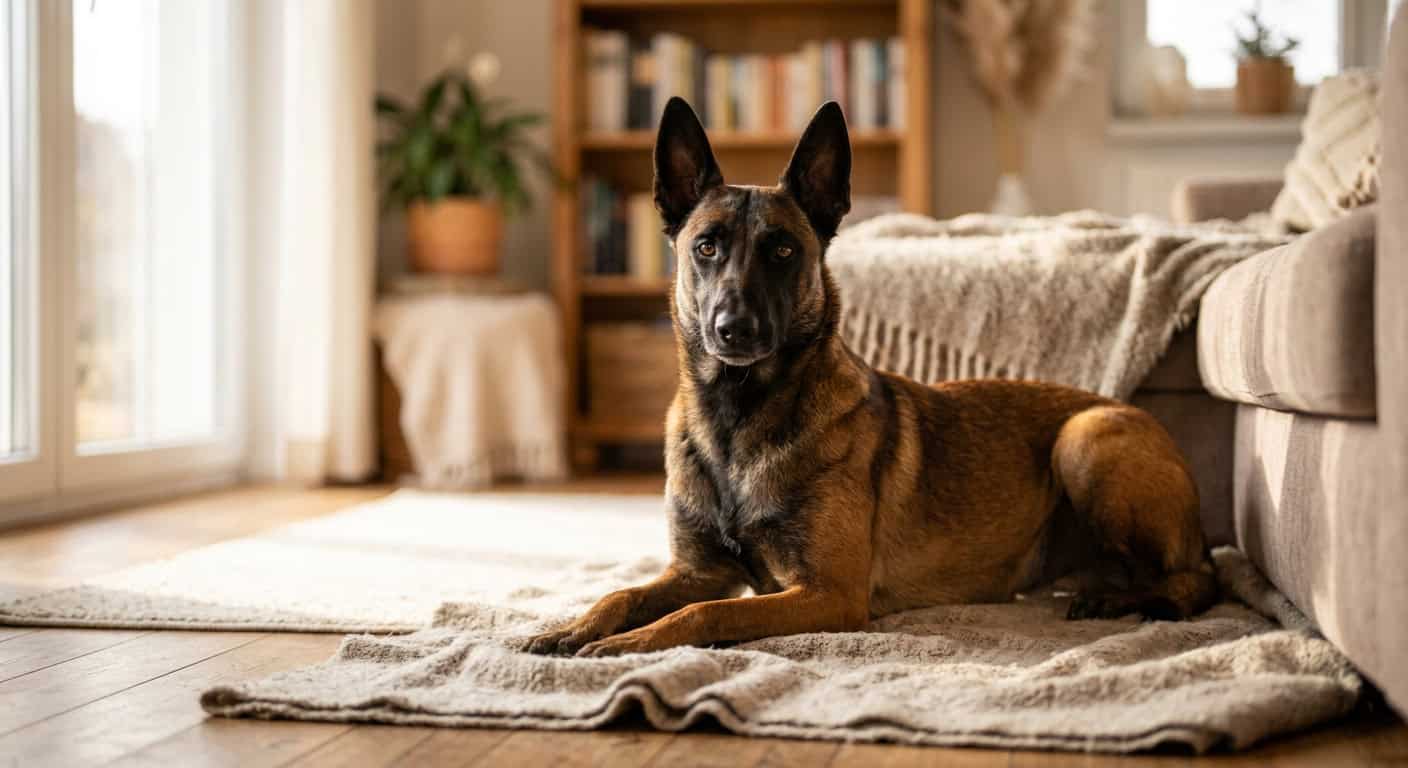
Apartment Living: Pros & Cons
Pros: Extremely alert and attentive, making them excellent watchdogs even in a small space. Compact enough to not take up much room when calm — they don’t pace or bump into furniture constantly. Bond intensely with one owner, so a studio apartment becomes their whole world.
Cons: Need 2+ hours of vigorous exercise daily — far more than most apartment owners can realistically provide. Prone to destructive behavior and nuisance barking when under-stimulated. Strong prey drive and reactive temperament can make elevator rides and hallway encounters stressful.
Exercise & Daily Activity Needs
Belgian Malinois require a minimum of 2 hours of vigorous exercise every single day — not just walks, but runs, hikes, fetch, or structured dog sports like Schutzhund, agility, or flyball. In an apartment setting, morning and evening runs are essential, supplemented by off-leash play in a secure area. Mental stimulation matters just as much as physical exercise: puzzle feeders, obedience sessions, and scent work can help burn energy on days when outdoor time is limited. A bored Malinois will find its own entertainment — and you won’t like what it chooses.

Training the Belgian Malinois in an Apartment
Belgian Malinois are exceptionally trainable — in fact, they’re often considered the most trainable breed in the world. They excel at obedience, agility, and protection sports. For apartment life, early training is non-negotiable. Crate training helps establish a calm, secure space and prevents destructive behavior when you’re away. Teach “quiet” and “place” commands early, as Malinois can be reactive to sounds in hallways and elevators. Positive reinforcement works best — this breed is incredibly eager to please when motivated. However, they also require a confident handler. Inconsistency or weakness in training will be exploited. Plan for 2–3 formal training sessions per day, even if they’re just 10–15 minutes each.
Grooming Requirements
The Belgian Malinois has a short, straight double coat that is relatively easy to maintain. Shedding is moderate year-round with heavier seasonal blowing twice a year. Brush weekly with a slicker brush or rubber curry comb, increasing to 3–4 times per week during heavy shedding seasons. Bathing every 6–8 weeks is sufficient unless they get dirty. Nails should be trimmed monthly. Professional grooming is rarely needed — most Malinois owners handle all coat care at home. Their ears should be checked weekly and cleaned as needed to prevent infections.
Health & Lifespan
Belgian Malinois are a generally healthy breed with a lifespan of 14–16 years — one of the longest among medium-large dogs. Common health concerns include hip and elbow dysplasia, which can be screened through OFA-certified parents. Progressive retinal atrophy (PRA) and cataracts appear in some lines. Epilepsy has been reported, though it’s not widespread. Due to their working dog heritage, reputable breeders test extensively for these conditions. Annual vet checkups are recommended; working Malinois may need more frequent joint monitoring as they age.
Feeding Guide
Belgian Malinois typically eat 2–3 cups of high-quality dry food per day, split into two meals. Highly active dogs or working Malinois may require more. Look for a protein-first formula with at least 25% protein content. Avoid free-feeding — structure matters for this breed. Puppies need 3 meals per day until 6 months old. Monitor weight carefully; Malinois should have a visible waist when viewed from above.
Is the Belgian Malinois Right for You?
The Belgian Malinois is right for experienced dog owners with highly active lifestyles — think runners, cyclists, or dog sport competitors who want a canine partner, not just a companion. They thrive with military, police, or working dog sport handlers. They are not a good fit for casual owners, first-time dog owners, or anyone with a 9-to-5 desk job and no time for extensive daily exercise. Families with young children should think carefully, as the breed’s intensity and herding instinct require constant management. If you want a loyal, brilliant working partner and can genuinely meet this breed’s demands, there’s nothing quite like a Malinois.
Recommended Products for Belgian Malinois Owners
🛒 Top Picks for Belgian Malinois Owners
- Best Dog Beds for Belgian Malinois — supportive, right-sized for apartment living
- Top-Rated Harnesses for Belgian Malinois — city-ready, escape-proof
- Best Dog Food for Belgian Malinois — breed-appropriate nutrition
Here’s an HTML section for your blog post:
“`html
What Does a Belgian Malinois Cost to Own?
The initial cost of a Belgian Malinois from a reputable breeder typically ranges from $1,500 to $3,500, depending on pedigree, lineage, and breeder reputation. High-quality working or show lines can exceed $4,000. Avoid cheaper options, as they may come from unethical breeders with health risks.
Monthly expenses include high-quality dog food ($60–$100), as Malinois are active and require protein-rich diets. Grooming costs are minimal ($10–$20/month for basic supplies) since their short coat is low-maintenance. Veterinary care, including routine check-ups and vaccinations, averages $50–$100/month, while pet insurance can add $30–$60/month depending on coverage. Training classes or agility equipment may also be necessary for this high-energy breed.
For durable chew toys to keep your Malinois engaged, consider the KONG Classic Dog Toy, a favorite among working breeds.
“`
This section provides clear cost breakdowns and includes an Amazon affiliate link for a relevant product. Let me know if you’d like any adjustments!
Is the Belgian Malinois Good With Other Pets?
The Belgian Malinois is a highly intelligent and energetic breed, but its compatibility with other pets depends on socialization and training. Due to their strong prey drive, Malinois may instinctively chase smaller animals like cats. However, with early and consistent socialization, they can learn to coexist peacefully with feline companions. Supervision is recommended, especially in the early stages of introductions.
When it comes to other dogs, Belgian Malinois can get along well if raised together or properly socialized. Their dominant nature may lead to conflicts with dogs of the same sex, so careful introductions and ongoing training are essential. As for children, Malinois can be good family pets if taught to interact gently. Their high energy and herding instincts may cause them to nip or bump into young children, so supervision is crucial during playtime.
Overall, the Belgian Malinois can thrive in multi-pet households with proper training, socialization, and supervision.
Frequently Asked Questions
🔗 Official Breed Resources