
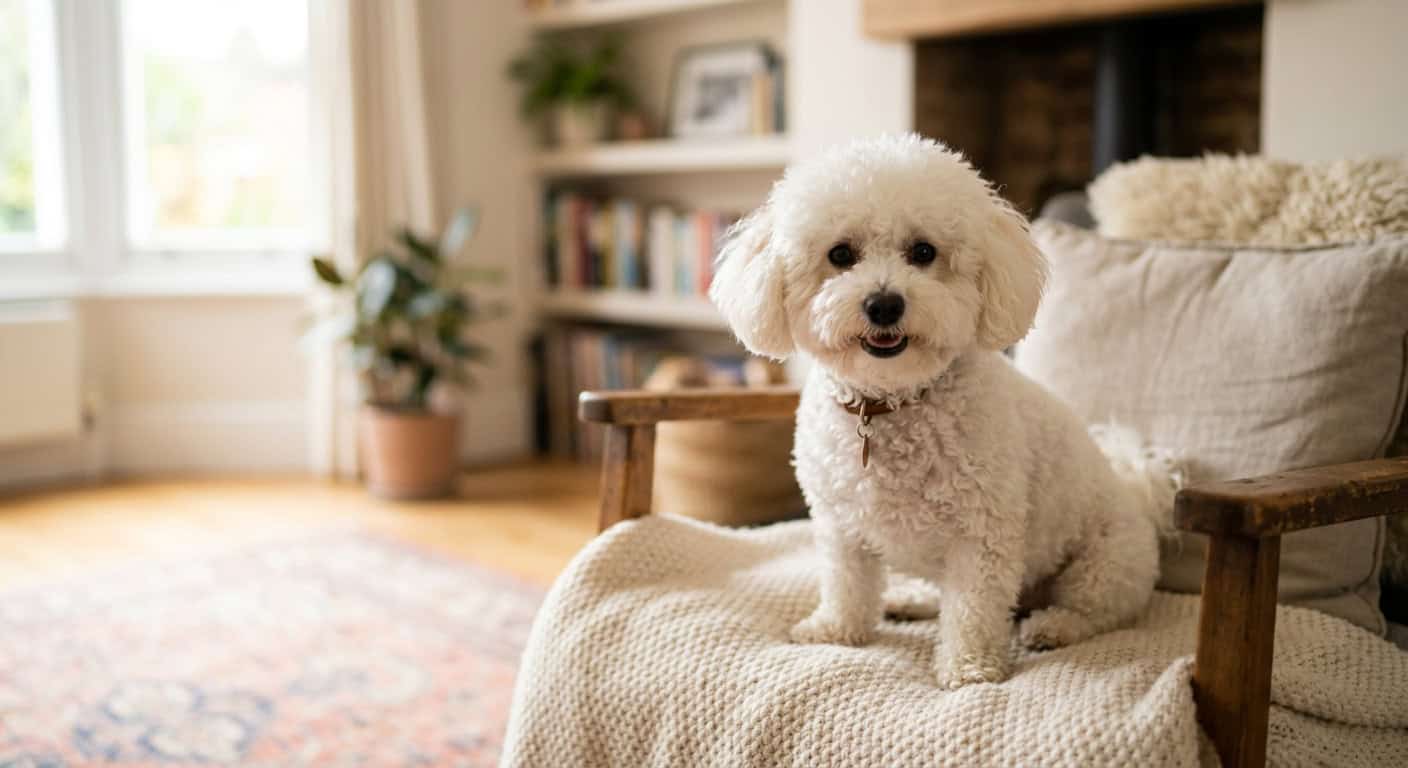
Apartment Living: Pros & Cons
Pros: Genuinely well-suited to apartment living — small, quiet, and adaptable. Low-shedding coat is apartment-friendly (no tumbleweeds of fur). Friendly and sociable, so they handle the variety of people and sounds in apartment buildings well.
Cons: Prone to separation anxiety, which can manifest as barking or destructive behavior when left alone — a real concern in close-quarters living. Require professional grooming every 6–8 weeks, which is an ongoing cost and scheduling commitment. Can be stubborn in training — patience is needed.
Exercise & Daily Activity Needs
Bichon Frises need about 30–60 minutes of moderate exercise daily. Two walks per day, indoor play sessions, and short training games are usually sufficient. They enjoy fetch, tug, and interactive toys. Don’t underestimate their playfulness — despite their small size, they have real energy that needs an outlet. Mental stimulation through training and puzzle toys helps satisfy their bright, curious minds. Avoid overexertion in extreme heat due to their thick coat.

Training the Bichon Frise in an Apartment
Bichons are intelligent, eager to please, and respond very well to positive reinforcement training. They were historically trained as circus performers, which speaks to their trainability and love of learning tricks. For apartment living, focus on “quiet” and “settle” commands early to prevent nuisance barking. Crate training helps establish a safe space and eases separation anxiety. Housetraining can take a bit longer with small breeds — consistency and positive reinforcement are key. Puppy classes are highly recommended for socialization. Avoid harsh corrections — Bichons are sensitive and will become timid or shut down with heavy-handed training.
Grooming Requirements
The Bichon Frise’s curly, low-shedding coat is a major selling point, but it requires consistent upkeep. Without regular brushing (every 2–3 days), their coat can mat quickly. Professional grooming every 4–6 weeks is typically needed to trim the coat and maintain the breed’s signature look. The coat around the eyes can stain from tear drainage — this area needs daily wiping and occasional professional cleaning. Bathing every 3–4 weeks is recommended. Budget for monthly grooming costs as part of Bichon ownership.
Health & Lifespan
Bichon Frises are generally long-lived, with a lifespan of 14–15 years. Common health concerns include bladder stones and urinary tract issues (they’re predisposed to calcium oxalate stones), dental disease (small breeds are prone), allergies and skin conditions, and patellar luxation. Regular dental care — daily brushing if possible — is important. Annual vet checkups plus dental cleanings every 1–2 years are recommended.
Feeding Guide
Bichons typically eat ½–1.5 cups of high-quality small-breed dry food per day, divided into two meals. Small-breed formulas have smaller kibble sizes and caloric densities suited to their metabolism. Avoid overfeeding — Bichons can become overweight, which stresses their small joints. Fresh water always available. Monitor for food sensitivities, as skin allergies are common in the breed.
Is the Bichon Frise Right for You?
The Bichon Frise is an excellent choice for apartment dwellers, first-time dog owners, seniors, and families with children. They adapt to almost any living situation as long as they receive daily attention and play. They’re especially good for people who work from home or have flexible schedules, since they crave company and dislike being alone for long stretches. If you want a cheerful, low-shedding companion that fits comfortably in a small home and gets along with everyone it meets, the Bichon Frise is hard to beat. The main commitment is grooming — budget for it upfront and find a groomer you trust before you even bring the puppy home. A well-maintained Bichon is a genuinely joyful dog to live with.
Recommended Products for Bichon Frise Owners
🛒 Top Picks for Bichon Frise Owners
- Best Dog Beds for Bichon Frises — supportive, right-sized for apartment living
- Top-Rated Harnesses for Bichon Frises — city-ready, escape-proof
- Best Dog Food for Bichon Frises — breed-appropriate nutrition
What Does a Bichon Frise Cost to Own?
Owning a Bichon Frise is a delightful experience, but it comes with financial responsibilities. The initial purchase price from a reputable breeder typically ranges from $1,200 to $2,500, depending on the breeder’s reputation and the dog’s pedigree. This ensures you’re getting a healthy, well-bred puppy.
Monthly ongoing costs include food, grooming, and veterinary care. High-quality dog food costs around $20 to $40 per month, while grooming, which is essential for their curly coat, averages $50 to $80 per session every 4-6 weeks. Routine vet visits and pet insurance can add $30 to $50 monthly, depending on the plan and coverage.
To keep your Bichon Frise happy and healthy, consider investing in a durable grooming kit like the Hertzko Self-Cleaning Slicker Brush, which helps maintain their coat between professional grooming sessions.
Is the Bichon Frise Good With Other Pets?
The Bichon Frise is known for its friendly and sociable nature, making it a great companion for other pets. This breed typically gets along well with other dogs, thanks to its playful and affectionate temperament. Their small size and gentle demeanor make them less intimidating, which helps foster positive interactions with larger or more energetic breeds.
When it comes to cats, the Bichon Frise can adapt well, especially if introduced properly. While they have a low prey drive compared to other breeds, early socialization is key to ensuring harmony in a multi-pet household. Their curious and cheerful personality often leads to amicable relationships with feline friends.
Bichon Frises are also excellent with children. Their patient and loving nature makes them a great fit for families. However, supervision is recommended with very young kids to ensure the dog’s small size isn’t overwhelmed. Overall, the Bichon Frise thrives in a home with other pets and children, bringing joy and companionship to all.
“`html
What Do Bichon Frise Owners Say About Apartment Life?
Bichon Frises are apartment superstars—small, adaptable, and full of charm. Most owners rave about their low-to-moderate barking (unlike some tiny breeds), though they’ll alert you to doorbells or hallway noises. One challenge? Their playful energy needs daily indoor games or short walks, or they’ll invent their own fun (think: zoomies between your couch and coffee table).
Their size is perfect for tight spaces—they’ll claim a sunny corner as their throne and barely shed, a win for clean freaks. But don’t skip potty training: without a yard, you’ll be trekking outside in rain or shine. Many owners say their Bichon’s cheerful presence makes city life brighter, even if it means rearranging furniture for epic nap spots.
“`
Frequently Asked Questions
🔗 Official Breed Resources