
How to Calm Dogs During Thunderstorms
To calm a dog during thunderstorms, create a cozy den space, use an anxiety wrap like a ThunderShirt, play white noise to muffle thunder, and offer calming treats or pheromone diffusers. For severe cases, speak with your vet — prescription anti-anxiety options exist and work well.
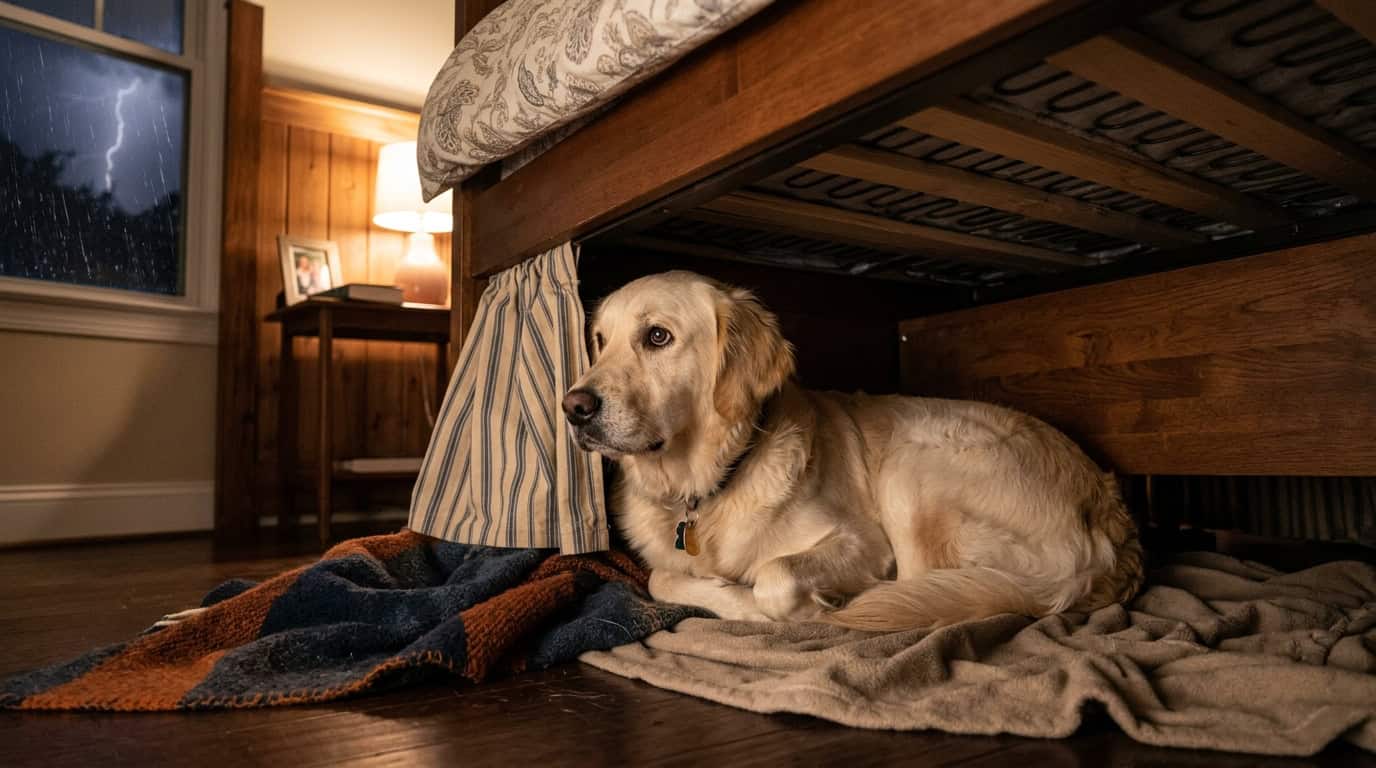
A rumble in the distance. A flash of light across the sky. And suddenly your dog — who moments ago was calmly napping — is shaking, panting, pacing, and trying to squeeze under your bed. Sound familiar?
Storm phobia is one of the most common anxiety disorders in dogs, affecting an estimated 30–40% of all pet dogs according to the American Kennel Club. Left unaddressed, it tends to worsen over time — which is why acting early with the right strategies makes a big difference.
This complete guide covers everything: why dogs fear storms, what to do in the moment, long-term management strategies, and when to call the vet. Whether your dog gets mildly uncomfortable or goes into full panic mode, there’s a solution here.
Why Dogs Fear Thunderstorms (It’s More Than Just Noise)?
Many owners assume their dog is simply scared of the loud boom. The reality is more complex. Dogs experience a multi-sensory assault during storms:
- Thunder: Dogs hear frequencies humans can’t — the rumble is louder and extends into ranges we miss entirely.
- Lightning: The sudden bright flash is jarring and unpredictable.
- Static electricity: Dogs with thick coats can build up static charge during storms, causing uncomfortable shocks. This is why some dogs seek out bathrooms — the grounded plumbing dissipates the charge.
- Barometric pressure: Dogs can sense pressure drops hours before a storm arrives. Some dogs start showing anxiety well before you see a cloud.
- Infrasound: Thunderstorms produce low-frequency sound waves that travel far beyond the audible range — dogs feel these in their body.
- Smell: The distinctive smell of rain, ozone, and wet earth signals a storm is coming.
According to the ASPCA, some breeds — including herding dogs, hounds, and mixed breeds — show higher rates of storm anxiety. Genetics play a role, but environment and past experience matter too.
What Should You Know About Recognizing Storm Anxiety?
Storm anxiety presents on a spectrum. Mild signs are easy to miss; severe cases are impossible to ignore.
Mild to Moderate Signs
- Panting more than usual
- Pacing or restlessness
- Whining or vocalizing
- Seeking your company (velcro dog behavior)
- Yawning, lip-licking (calming signals)
- Trembling slightly
Severe Signs
- Destructive behavior — chewing, scratching
- Attempting to escape the home
- Hiding in unusual places (closets, under beds)
- Refusing food or water
- Self-injury from attempts to escape
- Loss of bladder or bowel control
If your dog shows severe signs, this warrants a vet conversation — not just tips from the internet. More on that below. For dogs already dealing with separation anxiety, storm phobia can compound the problem significantly.
What Are Immediate Comfort Strategies (Use These During Storms)?
1. Create a Safe Den
Dogs are den animals. A covered crate, a closet, or a corner with heavy blankets can serve as a sanctuary. Let your dog choose their spot — don’t force them into it. Add a worn t-shirt with your scent for additional comfort. If your dog already loves their crate, reinforce positive crate associations during calm weather so it becomes their go-to safe space.
2. Use White Noise or Music
A white noise machine, fan, or “Through a Dog’s Ear” playlist (specifically composed for canine anxiety) can mask the unpredictable crashes of thunder. Predictable sound is less threatening than sudden, loud, random booms. Position the speaker between your dog and the nearest window.
3. Comfort Your Dog — Yes, Really
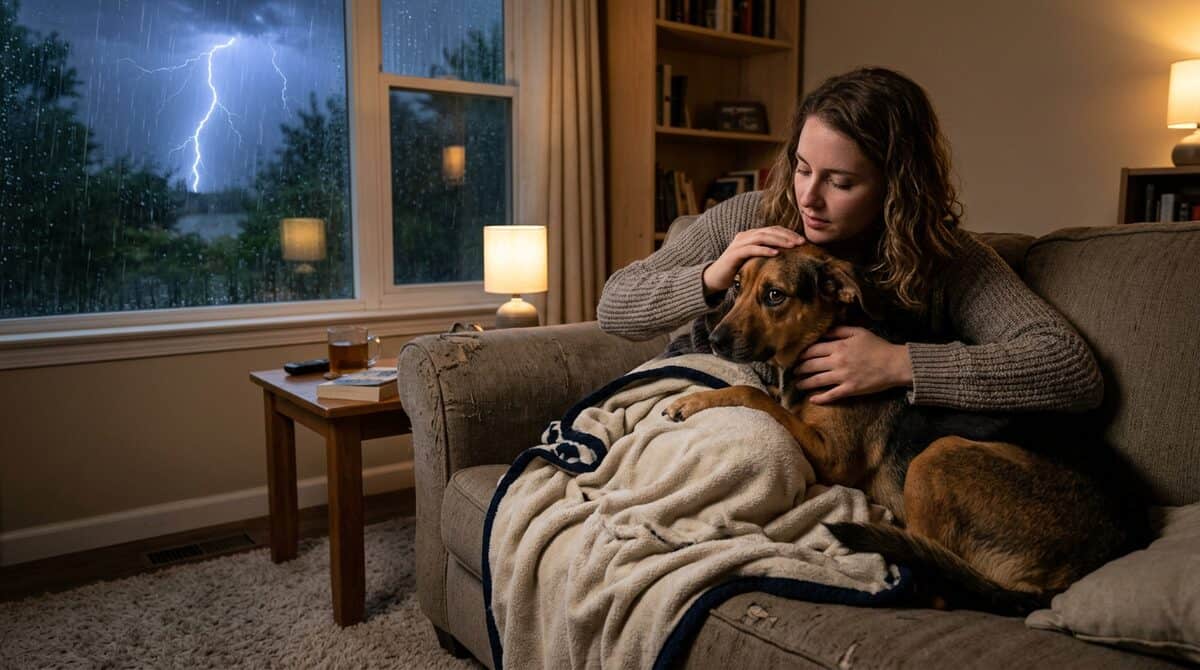
The outdated advice “don’t comfort your dog — you’ll reinforce the fear” has been thoroughly debunked. You cannot reinforce an emotional state like fear. What you can do is help your dog regulate. Calm petting, gentle massage, and your reassuring presence help lower cortisol. Stay relaxed yourself — your dog reads your body language and energy continuously.
4. Close the Blinds
Lightning flashes trigger the visual startle response. Darkening the room removes one of the sensory triggers. Combined with white noise, this creates a more controlled environment for your dog.
5. Try an Anxiety Wrap
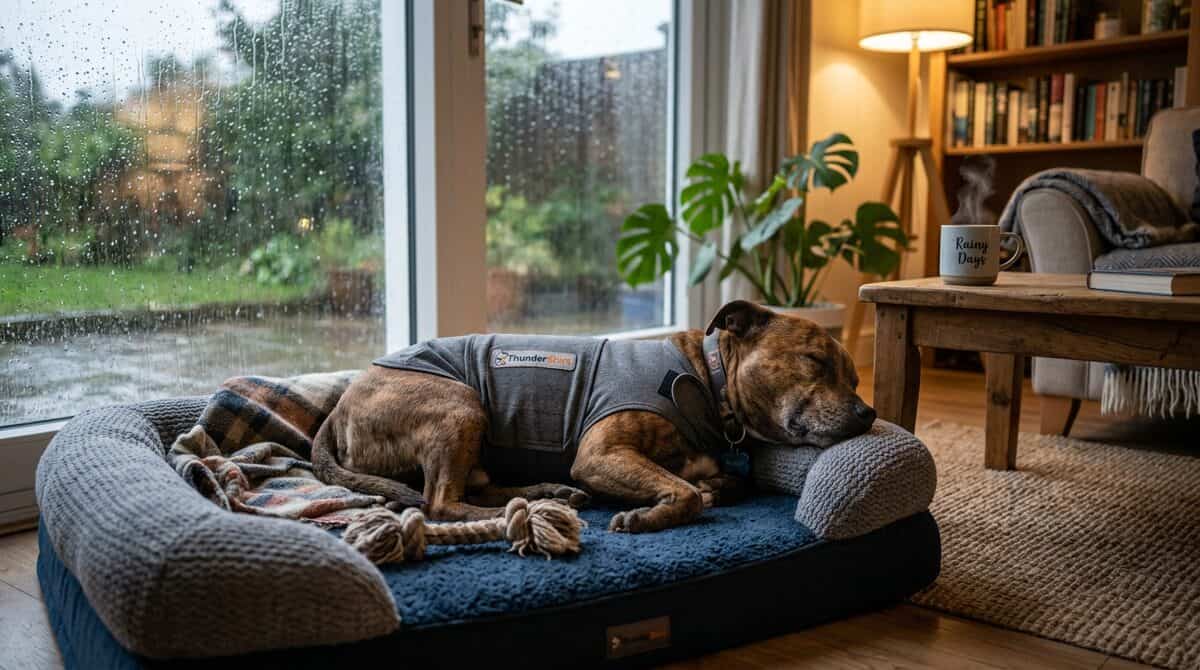
The ThunderShirt Dog Anxiety Jacket applies gentle, constant pressure to your dog’s torso — similar to swaddling. The Humane Society notes that compression therapy has helped many dogs with anxiety. Put it on before the storm hits if you can. Check the barometric pressure app on your phone — drops signal incoming storms. Results vary, but roughly 80% of dogs show improvement.
What Are Calming Products That Help?
The market is full of products claiming to calm anxious dogs. Here are the ones with the strongest evidence and user reviews:
Pheromone Diffusers & Sprays
Dog-appeasing pheromones (DAP) mimic the calming pheromones a nursing mother dog produces. The Adaptil Dog Calming Diffuser plugs into the wall like an air freshener and releases DAP continuously. For immediate use, the spray version can be applied to a bandana worn by your dog. Clinical trials published in peer-reviewed veterinary journals show meaningful reductions in anxiety behaviors. Check out our roundup of calming products for anxious pets for more options.
Calming Chews & Supplements
Look for chews containing evidence-backed ingredients:
- L-theanine: Amino acid found in green tea, promotes alpha brain waves (calm alertness)
- Melatonin: Helps regulate the stress response; give 30–60 min before a storm
- Valerian root: Natural sedative herb
- Thiamine (B1): Supports nervous system function
The Zesty Paws Calming Bites combine several of these in one chew and have strong reviews from storm-phobic dog owners. Give them 30 minutes before the storm if you have advance warning.
Behavioral Aid Comfort Toys
The Snuggle Puppy Behavioral Aid Toy mimics the heartbeat and warmth of another dog — surprisingly effective for dogs that respond to physical closeness. It’s particularly helpful for puppies experiencing their first thunderstorms.
What Should You Know About Long-Term Strategy?
Managing the moment is important, but the real goal is to change your dog’s emotional response to storms over time. Two behavioral techniques do this effectively:
Desensitization
Gradually expose your dog to storm-related stimuli at intensities too low to trigger fear, then slowly increase the intensity over weeks or months. Steps:
- Find a storm sounds recording on YouTube or Spotify
- Play it at the lowest possible volume — barely audible
- Reward calm behavior with high-value treats
- After several sessions with no anxiety response, slightly increase the volume
- Repeat — increase volume only when your dog is completely relaxed at the current level
- Over weeks, build to full volume
This process takes patience. Rushing it makes things worse. If your dog shows any anxiety, drop back to the previous level and stay there longer.
Counter-Conditioning
Pair thunder sounds with something your dog loves — their favorite treat, a game, belly rubs. The goal is to create a new association: thunder = amazing things happen. Over time, the sound triggers anticipation rather than fear.
This works best when combined with desensitization. Many trainers use both simultaneously. If your dog already struggles with being alone, addressing the underlying anxiety holistically will speed up storm desensitization too.
What Are Anti-Static Strategies (Often Overlooked)?
Static electricity buildup is a genuine physical discomfort for many dogs, especially those with thick double coats. Here’s what helps:
- Anti-static jacket: Some dogs calm immediately when static is eliminated. A specially designed anti-static cape can be more effective than a regular thunder shirt for these dogs.
- Dryer sheet rub: Lightly rub an unscented dryer sheet over your dog’s coat to dissipate static charge. (Ensure it’s fragrance-free — scented versions can be irritating.)
- Grounded spaces: Your bathroom, near plumbing, is naturally grounded. Many dogs self-select bathrooms during storms — let them go there.
- Humidifier: Dry air amplifies static buildup. A humidifier in the room reduces the effect.
When to See the Vet?
If your dog’s storm anxiety is severe — self-injury, destructive behavior, loss of bladder control, hours of inconsolable panic — behavioral modification alone isn’t enough. The American Veterinary Medical Association recognizes noise aversion and storm phobia as clinical conditions warranting veterinary intervention.
Your vet may recommend:
- Situational medications: Sileo (dexmedetomidine) is FDA-approved for noise aversion in dogs. It’s given before the storm and works within 30 minutes. Unlike older sedatives, it doesn’t sedate — it specifically targets the fear response.
- Daily anti-anxiety medication: For dogs with year-round generalized anxiety, daily SSRIs or TCAs (like fluoxetine or clomipramine) can reduce the intensity of all anxiety triggers including storms.
- Referral to a veterinary behaviorist: Board-certified veterinary behaviorists are the specialists for severe cases. They develop customized treatment protocols.
For dogs that also show excessive panting indoors outside of storms, the anxiety may be more generalized — worth discussing with your vet regardless.
How Do You Building a Thunderstorm Preparedness Routine?
Being prepared in advance makes the difference between a managed situation and chaos. Build a storm kit and routine:
- 📱 Install a weather app with storm alerts — gives you 20–30 minutes of prep time
- 🧥 Keep the ThunderShirt accessible, not buried in a closet
- 🎵 Preset a calming playlist on your phone or speaker
- 🍖 Stock high-value treats specifically for storms (make them special)
- 🏠 Identify and prepare the safe den location in advance
- 💊 If using supplements, have them ready to give 30 minutes before
Also monitor nighttime anxiety patterns — dogs with storm phobia often sleep poorly after stormy nights even after the storm passes, as they remain in a heightened state of alertness.
Quick Reference: Storm Anxiety Toolkit
| Strategy | Best For | Speed |
|---|---|---|
| ThunderShirt | Mild–moderate anxiety | Immediate |
| Adaptil Diffuser | Ongoing background calm | 24–48hr to build |
| Calming chews | Mild–moderate anxiety | 30–60 min pre-storm |
| White noise | Noise-triggered anxiety | Immediate |
| Desensitization | All levels (long-term fix) | Weeks to months |
| Vet medication | Severe anxiety | 30 min (situational Rx) |