
15 Crate Alternatives for Strong Chewers
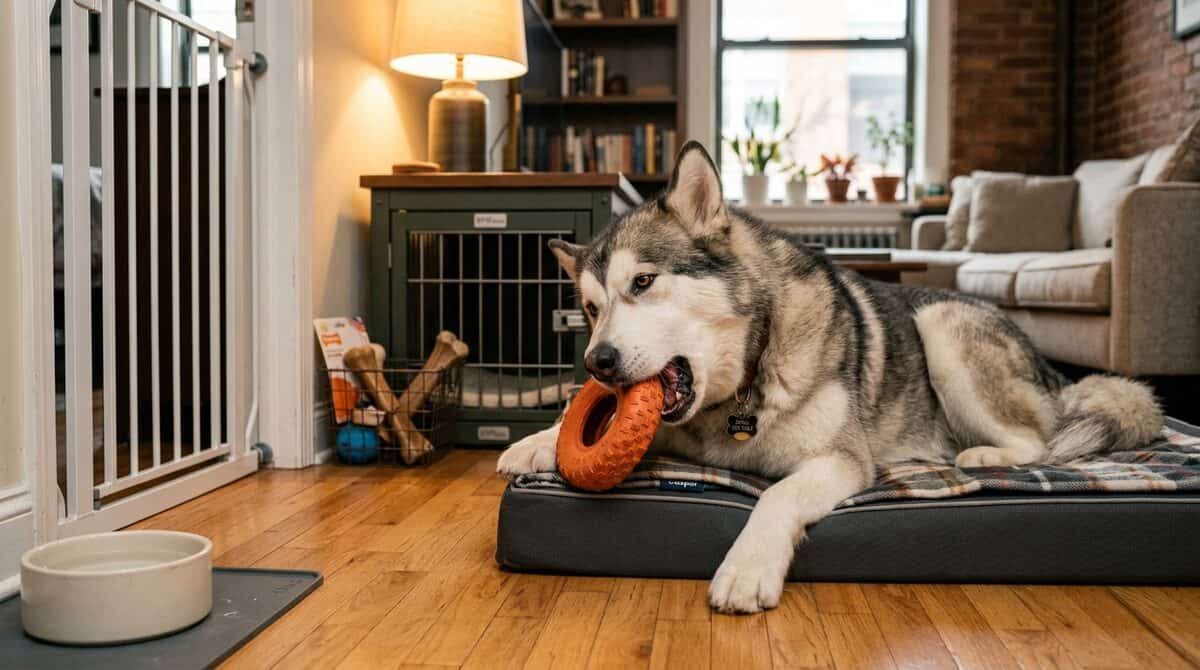
The best crate alternatives for strong chewers in apartments include heavy-duty exercise pens, indestructible dog beds, dog-proofed rooms, tether stations, and heavy-gauge steel crates rated for escape artists. The key is matching containment strength to your dog’s chew intensity while addressing the root cause — usually boredom or separation anxiety.
You bought a crate. Your dog destroyed it in a weekend. Now you’re standing in your apartment looking at bent wire, chewed plastic, and wondering if a containment solution even exists for your four-legged wrecking ball.
You’re not alone. Strong chewers — especially breeds like Belgian Malinois, Huskies, Pit Bulls, and Labradors — can defeat standard wire and plastic crates with frightening speed. Beyond the cost, it’s a genuine safety hazard: ingested metal, plastic shards, and the risk of a now-free dog destroying your apartment (or getting hurt) while you’re at work.
This guide covers 15 proven crate alternatives for powerful chewers in apartments. We’ll look at each option honestly — what works, what doesn’t, and which dog types each is best for. Understanding why dogs chew everything is step one — but you still need a practical containment solution right now.
What Is Why Strong Chewers Destroy Crates?
Before picking an alternative, it’s worth understanding what’s driving the behavior. Dogs don’t destroy crates out of spite — there’s always a reason:
- Separation anxiety: The #1 cause. A dog in panic mode will chew through almost anything to reach their owner. Containment alone won’t fix this — it just redirects the destruction.
- Boredom: High-energy breeds need 1–3 hours of exercise daily. An under-exercised dog will chew whatever is available, including their crate.
- Breed drive: Some breeds (Malinois, Huskies, terriers) have strong oral fixation baked into their genetics.
- Poor crate association: If the crate is only used for punishment or triggers isolation distress, dogs become motivated to escape.
According to the ASPCA, crate training should never be used as punishment, and the crate should always feel like a safe den — not a jail. Many “escape artist” behaviors stem from poor crate introduction. The alternatives below work best when paired with proper behavior work. For dogs with separation anxiety specifically, check out our guide on crate alternatives for anxious dogs.
What Are the Best The 15 Best Crate Alternatives for Strong Chewers?
1. Heavy-Duty Aluminum Escape-Proof Crate
Not a traditional crate alternative, but worth leading with: if you want the security of a crate with indestructibility, aluminum dog crates (like Impact Dog Crates or Gunner Kennels) are virtually escape-proof. Welded aluminum construction, recessed latches, and no exposed edges mean even the most determined chewer can’t gain purchase. They’re expensive ($400–$900) but last a lifetime and are worth it for dogs who pose genuine escape risks. These are widely used by working dog handlers and SAR teams.
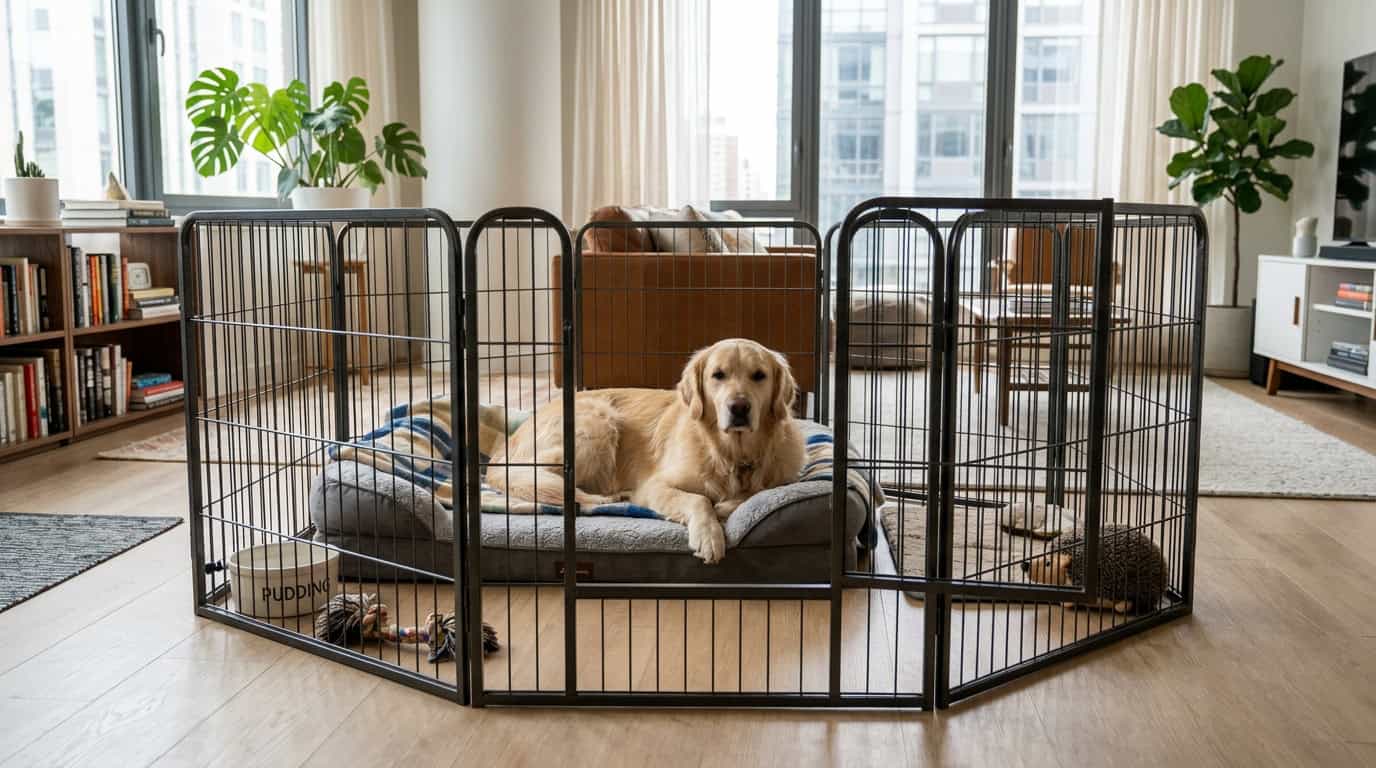
2. Heavy-Gauge Steel Exercise Pen (X-Pen)
An exercise pen (x-pen) gives your dog significantly more space than a crate — typically 16–32 square feet — while creating a defined containment area in your apartment. For strong chewers, opt for 12-gauge or heavier steel panels (not the lightweight aluminum versions). Secure panels together with zip ties in addition to the built-in latches. Add a weighted base or anchor to a wall stud to prevent tipping. This works well for dogs who chew crates due to confinement frustration rather than true anxiety.
3. Dog-Proofed Bathroom or Laundry Room
A dedicated dog-proofed room is one of the most underrated solutions. A bathroom or laundry room offers:
- Easy-clean hard floors (no carpet to destroy)
- Limited furniture to demolish
- Natural air circulation
- No electrical cords or toxic household chemicals (if properly cleared)
Baby-proof the cabinets, remove toxic cleaning products, install a hook-latch on the inside of the door to prevent escape, and add a durable bed and water. This works well for most chewers and eliminates the confinement stress of a crate entirely.
4. Chew-Proof Baby Gate Barriers
For dogs who destroy crates but behave well in open spaces, a heavy-duty baby gate or room divider creates a safe zone without full confinement. Use steel-frame pressure-mounted gates rather than plastic. Multiple gates create a larger safe zone. This works best for dogs who chew crates out of confinement frustration but are otherwise non-destructive — not ideal for dogs who will simply chew the gate itself.
5. Indestructible Dog Bed (Standalone)
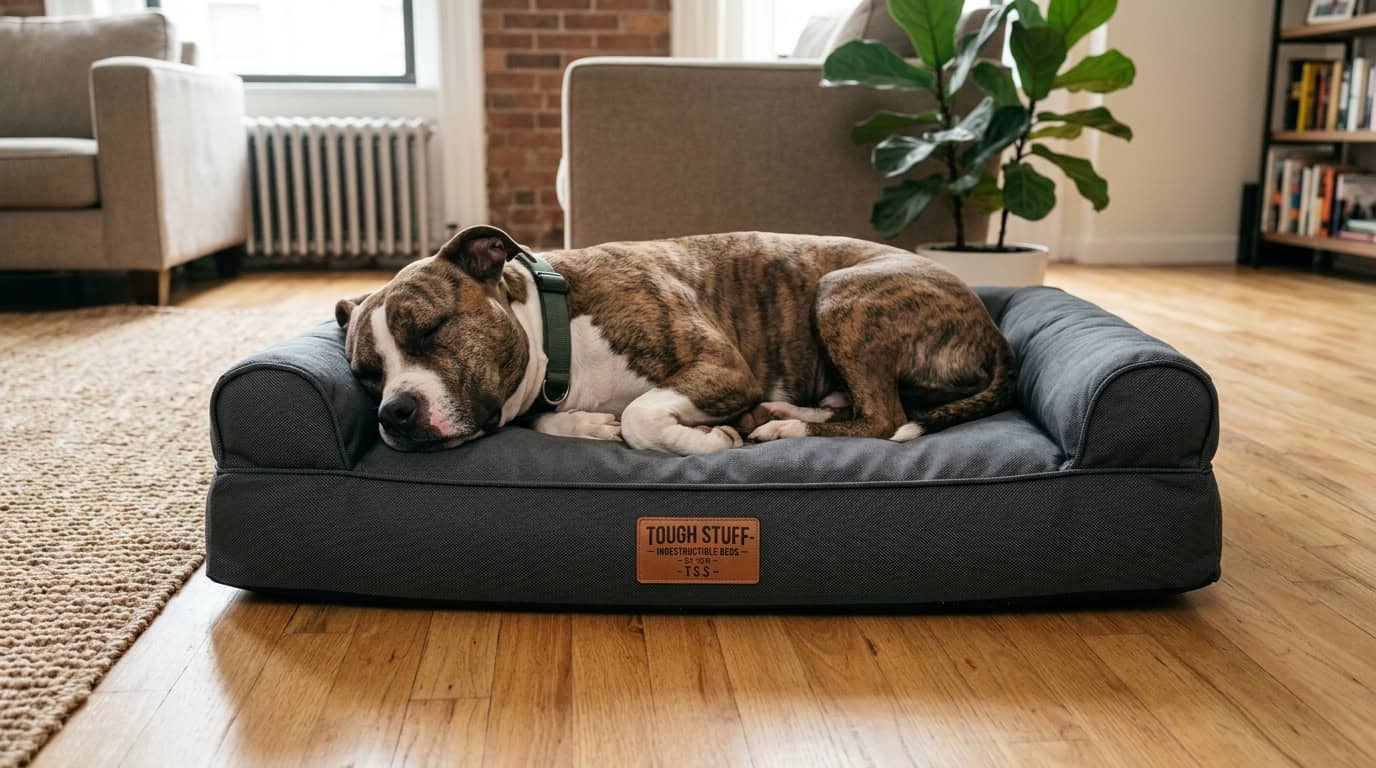
Paired with other management strategies, a chew-resistant dog bed is a must-have. Standard foam beds are dangerous for strong chewers — ingested foam can cause intestinal blockages. Look for beds made with:
- 1000D ballistic nylon (the same material as military gear)
- Ripstop fabric
- No exposed zippers (wrap-around design)
- Elevated platform style (aluminum frame with fabric deck — nothing to chew)
The K9 Ballistics TUFF Bed and elevated Kuranda-style beds are industry standards. These alone won’t contain your dog, but they’re a critical safety piece within any containment solution.
6. Tether / Tie-Out Station (Supervised)
A tether station — a short, heavy-duty leash attached to a fixed anchor point — limits your dog’s range without enclosing them. Use only with supervision. A 4–6 foot heavy-duty chain leash attached to a wall anchor or furniture leg works well for training periods. This is not suitable for long unsupervised durations but is excellent for short absences and for teaching calm settling behavior.
7. Dog-Proof Playpen with Roof
Some strong chewers are also climbers or jumpers. A heavy-duty playpen with a roof panel (like a covered run) eliminates this escape route. Several brands make modular covered pen systems designed specifically for powerful breeds. These work well in apartments with enough floor space — typically need at least a 6×6 foot area.
8. Dedicated Dog Room with Dutch Door
If you have a spare room, installing a Dutch door (split door that allows the top half to be open) gives your dog visibility and air circulation while keeping them safely contained. This dramatically reduces confinement stress — your dog can see and hear you while remaining safe. Add durable flooring (sheet vinyl or tile over any carpet) and strip the room of chewables.
9. Luxury Dog Condo / Furniture-Style Enclosure
Heavy-duty wood-and-metal furniture-style dog enclosures (often marketed as “dog condos”) fit within apartment décor and provide a contained space that’s more aesthetically pleasing than a wire crate. These work for moderate chewers. For power chewers, look for all-metal construction or metal-lined wood interiors. Not suitable for severe chewers — determined dogs will work through wood panels.
10. Anti-Chew Deterrent Spray + Exercise Pen Combo
Bitter apple spray or other pet-safe deterrents applied to pen panels can significantly reduce chewing attempts. This works as an adjunct strategy — not standalone. Spray all potential chew points on the pen. Reapply every 24–48 hours. The Grannick’s Bitter Apple Spray is a long-standing standard. Note: some dogs are not deterred by bitter sprays at all — test before committing.
11. Outdoor Dog Run (For Ground-Floor or Private Patio Apartments)
If you have access to a patio or ground floor, a heavy-duty steel outdoor dog run can provide spacious, secure containment. Use models with roof panels and concrete anchoring. This isn’t viable for most apartment dwellers but is an option for those with private outdoor access. The AKC recommends that high-energy breeds get 1–2 hours of exercise daily — an outdoor run helps meet this need passively.
12. Calming Protocol + Open-Door Rest Area
For dogs whose chewing stems from anxiety rather than breed drive, a comprehensive calming protocol can reduce the need for heavy containment. This combines:
- Pre-departure exercise (20–30 min brisk walk or play before leaving)
- Puzzle feeders and frozen Kongs to occupy the brain
- Calming supplements (L-theanine, melatonin)
- Pheromone diffusers
- Gradual alone time desensitization
Some dogs who destroy crates become perfectly safe when their anxiety is addressed and they’re given more freedom. This approach pairs well with our guide to anxiety-focused crate alternatives.
13. Pet Camera + Free Roaming Trial
Before investing in heavy-duty containment, it’s worth testing whether your dog actually destroys things when unsupervised — or just when crated. Some dogs are model apartment dwellers the moment you remove the crate stress. Set up a pet camera, dog-proof the apartment of valuables and hazards, and do a 30-minute absence test. Many owners are surprised by the results. The Humane Society recommends this gradual freedom approach as part of a positive crate transition.
14. Long-Line Tether in Safe Room
A long-line tether (10–15 feet) attached to a wall anchor inside a dog-proofed room gives your dog more movement than a short tether while limiting what they can reach. Pair with an indestructible bed and puzzle toys. Ensure the anchor is rated for your dog’s weight — use a proper wall stud bolt, not drywall anchors.
15. Professional Doggy Daycare (For Extreme Cases)
When a dog’s chewing severity poses genuine safety risks — to themselves or your apartment — professional doggy daycare may be the right call, at least temporarily. This removes the problem entirely while you work on the underlying behavior through training. It’s an investment, but cheaper than apartment damage deposits and emergency vet visits. Many daycares offer punch cards or monthly memberships that reduce per-day cost significantly.
How Do You Match Alternative to Chewer Type
| Chewer Type | Best Alternative(s) | Avoid |
|---|---|---|
| Anxiety-driven destroyer | Dog-proofed room + calming protocol | Tighter containment |
| Bored power chewer | Exercise pen + puzzle toys + more exercise | Small crate |
| Breed-driven oral fixation | Aluminum crate + indestructible bed + chew toys | Plastic crates, wood furniture |
| Confinement-frustrated dog | Dog-proofed room or Dutch door room | Any crate |
| Escape artist + jumper | Covered playpen or aluminum crate | Open-top x-pens |
What Are the Best Apartment-Specific Tips for Managing Strong Chewers?
Living in an apartment adds extra stakes — damage comes out of your deposit, and noise from a distressed dog creates neighbor complaints. Here are apartment-specific strategies:
- White noise machine near the door: Reduces stimulus barking and helps your dog relax during your absences. Particularly useful if your dog reacts to hallway sounds.
- Rubber mat under the x-pen: Protects flooring from scratching and gives the pen extra stability.
- Rotate chew toys: Keep 6–8 approved chew toys and rotate them daily — novelty sustains interest. Frozen Kongs stuffed with peanut butter or wet food provide 20–45 minutes of engagement.
- Pre-departure protocol: Exercise, then 5 minutes of calm settle practice, then leave without drama. No long goodbye rituals — these amplify separation anxiety.
- Morning exercise is non-negotiable: A tired dog is a non-destructive dog. For power chewers, indoor exercise ideas can supplement walks.
For dogs who are destructive specifically in smaller apartments, our guide on crate alternatives for small apartments covers space-efficient solutions. If you have a large breed, the large dog crate alternative guide has size-appropriate recommendations.
What Are The Amazon Finds Worth Investing In?
If you’re building a strong chewer toolkit, these four products are consistently recommended by trainers and owners of power chewers:
- Heavy-duty steel exercise pen — the foundation of most crate-free setups
- K9 Ballistics indestructible dog bed — safe, chew-resistant resting surface
- Bitter apple deterrent spray — reduces chewing on pen panels and furniture
- Benebone Real Flavor Wishbone Chew Toy — provides appropriate oral outlet, reducing pressure on containment
The AVMA emphasizes that behavioral enrichment — not just physical containment — is essential for dog welfare. Giving your dog an appropriate chewing outlet is as important as choosing the right containment solution.