
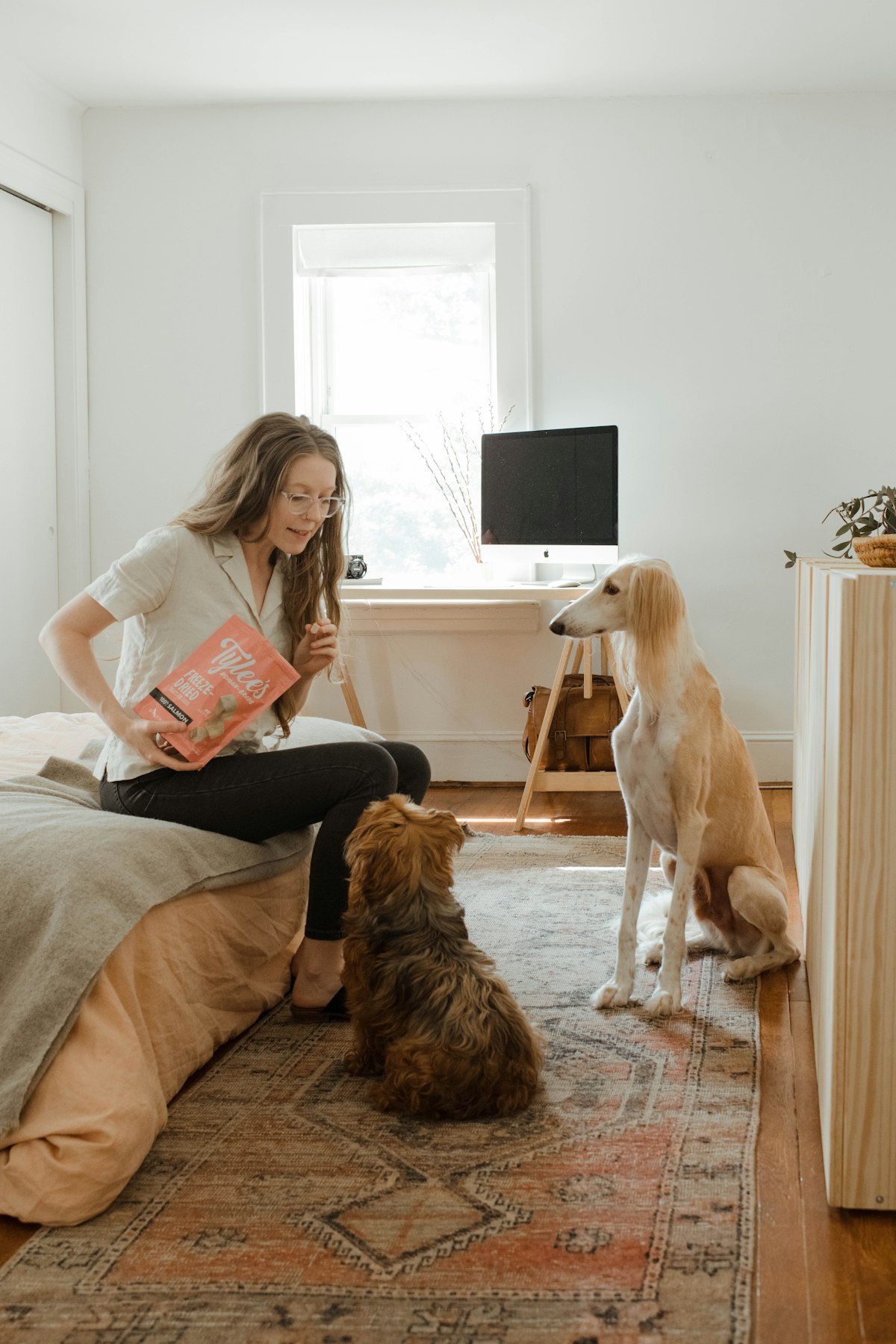
You’ve invested in professional dog training — and it’s working during sessions. But then Monday rolls around, real life kicks in, and somehow by Friday your dog has decided none of those rules apply anymore. Sound familiar? You’re busy. Your trainer knows that. Here’s what to do in just 5 minutes a day.
Here’s the truth your trainer wishes they could tell every client: what you do between sessions matters more than the sessions themselves. The AKC emphasizes that consistent daily reinforcement is what turns learned behaviors into lasting habits. A professional trainer can teach your dog a behavior in an hour. Without consistent daily reinforcement at home, that behavior has a half-life of about three days.
This guide is your at-home training handbook. Use it. Also check out: The Ultimate Guide to Dog Training in Apartments for a full foundation-to-advanced walkthrough.
The Golden Rule: Consistency Above Everything
If every person in your household operates by slightly different rules, your dog isn’t being disobedient — they’re being perfectly logical. Dogs do what works. If jumping on the couch earns them snuggles from one family member and a correction from another, they’ll keep jumping because it works sometimes, and sometimes is enough.
The Consistency Checklist (Everyone in the House Agrees On This)
- Which furniture is off-limits? All of it, some of it, none of it — pick one and stick with it forever.
- Jumping up on people: Allowed as a greeting or not? If not, it’s not allowed for anyone, ever — including when you come home excited.
- Begging at the table: The answer is either always no, or you have a dog that begs at every meal. There’s no middle ground.
- Commands: Use the same word every time. “Down” means lie down. If you sometimes say “lay down” and sometimes “get down” and sometimes “no, down, DOWN,” your dog doesn’t know what you want.
- Free feeding vs. scheduled meals: Your trainer will likely recommend scheduled meals — it gives you a natural reward opportunity and increases food motivation during training.
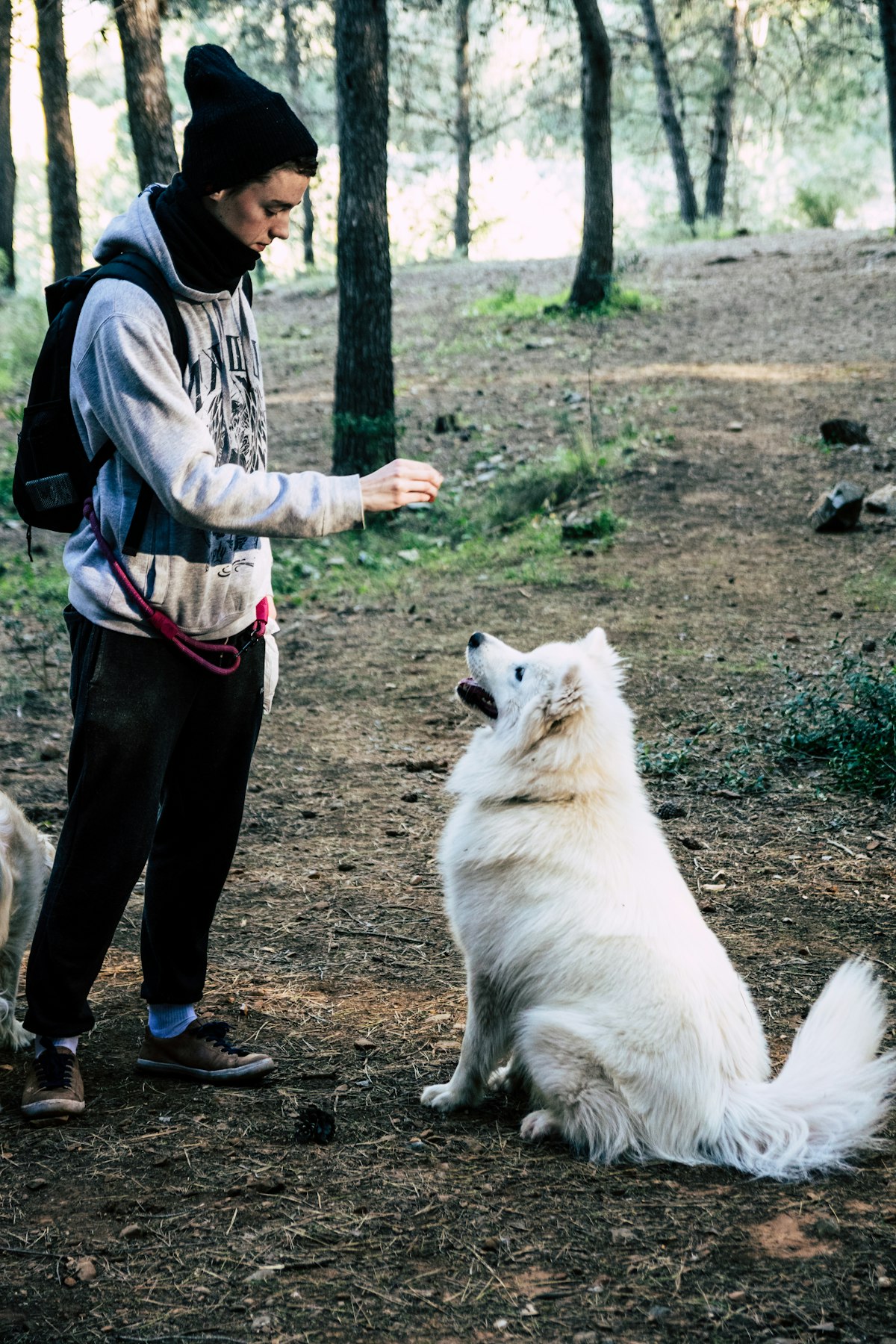
The 5-Minute Daily Training Drill
You don’t need long sessions. In fact, short sessions work better for most dogs — they stay engaged and end on success instead of frustration. Five to ten minutes, once or twice a day, is more effective than a 45-minute cram session on Saturday.
Daily Practice Routine
- Warm-up (1 min): Ask for 5–10 sit/down repetitions they already know perfectly. This builds confidence and focus.
- Current skill (3 min): Work on whatever your trainer assigned this week. Keep it achievable — set your dog up to succeed more than they fail.
- End on a win (1 min): Finish with something easy they know well and reward heavily. You want the session to end with your dog feeling successful and wanting more.
Timing Tips
- Train before meals, not after — a slightly hungry dog is a motivated dog
- Avoid training right after intense play (too excited) or right before bed (too tired)
- Keep sessions shorter for puppies: 3–5 minutes max
- Always end a session before your dog gets bored or frustrated — read their body language
How to Reward Correctly: Treats, Praise, and Timing
Reward timing is everything. A reward that comes 5 seconds late is rewarding whatever your dog was doing 5 seconds ago — which may not be what you wanted.
The 3-Second Rule
Reward within 3 seconds of the desired behavior. Every time. If you can’t get the treat out fast enough, use a verbal marker (“yes!” or a clicker) at the exact moment of the correct behavior, then deliver the treat within a few seconds.
Treats vs. Praise: When to Use Each
- Learning a new behavior: Use high-value treats (real chicken, cheese, or commercial training treats like Zuke’s Mini Naturals). This is not the time for dry kibble.
- Maintaining a known behavior: You can shift to variable reinforcement — reward every 3rd or 4th repetition instead of every one. This actually makes the behavior more durable (same principle as a slot machine).
- Praise only: Works for low-stakes moments and for dogs who are highly praise-motivated. Most dogs respond best to treats, especially early in training.
- Life rewards: The leash going on, the door opening, their food bowl going down — these are all rewards you can use. Ask for a sit before any of these happen.
The Right Training Gear Makes Everything Easier
Zuke’s Mini Naturals Training Treats
The gold standard for training treats — tiny (3 calories each), soft, and smelly enough to cut through distractions. Can give 50+ treats per session without filling your dog up or throwing off their diet.
Clicker Training Set
A clicker lets you mark the exact moment of correct behavior — far more precise than a verbal “yes.” Most dogs respond faster to clicker training than voice alone. Comes with wrist strap for one-handed use during walks.
Long Training Leash (30ft)
Essential for recall (come) practice. Gives your dog freedom to roam while you maintain control. Practice recall at increasing distances — you can’t teach a reliable recall without the ability to enforce it.
Treat Pouch / Training Bag
Keeps treats immediately accessible without fumbling in your pocket. Quick-release magnet top means you can reward within the 3-second window. Belt clip keeps it out of the way between training sessions.
The 4 Commands to Practice Every Day
1. Sit
The foundation of everything. Practice it in different rooms, outdoors, with distractions. When your dog masters “sit” in the kitchen, it doesn’t automatically transfer to the front yard — you have to train each environment.
Daily practice: Ask for a sit before every meal, before putting on the leash, before opening the door, before throwing a toy. These “life manners” moments add up to dozens of repetitions per day with no extra training time.
2. Stay
Work the 3 Ds: Distance, Duration, Distraction. Practice only one D at a time. Increase distance before you increase duration. Add distractions last, and only when the behavior is solid without them.
Common mistake: Asking for a 3-minute stay when your dog only knows a 10-second stay. Build slowly. Set them up to succeed.
3. Recall (Come)
This is the most important safety command you’ll teach. It is also the most commonly poisoned command — meaning owners accidentally teach dogs to not come when called.
Rules for recall practice:
- Never call your dog to punish them, give a bath, or do anything they don’t like. If you need to do something unpleasant, go get them — don’t call them to it.
- Every single recall is followed by something great: a treat, praise, brief play, or all three.
- If your dog ignores a recall, don’t repeat the command. Go get them, reset, and practice with less distraction next time.
- Use a long line (20–30 ft) in the yard so you can practice recall with freedom but still enforce it if needed.
4. Leave It
Essential for walks and around the house. Start easy: a piece of kibble covered by your hand. Your dog tries to get it, you wait, the second they back off — mark and reward with a different treat from your other hand. Build to dropped food, interesting smells on walks, and eventually other animals or people.
Common Mistakes That Undo Professional Training
Repeating Commands
If you say “sit… sit… SIT… come on, sit” you’re teaching your dog that “sit” means nothing and “SIT” means maybe pay attention. Say it once. Wait. If they don’t respond, reset (take a step back, re-engage their attention) and ask again. Never keep stacking the same command.
Rewarding the Wrong Behavior Without Realizing It
Your dog jumps on you when you come home. You push them down and say “no, off.” This is still attention — and for many dogs, any attention (even negative) is reinforcing. Turn your back, cross your arms, give zero eye contact. Reward them the instant all four paws are on the floor.
Expecting Transfer Without Practice
Dogs don’t generalize well. A command mastered in the living room may completely fall apart in the backyard or at the park. This isn’t stubbornness — it’s how dogs learn. You have to proof the behavior in multiple environments. Think of each new location as starting at 50% of where you left off.
Reading Your Dog: Signs the Session Should End
- Yawning repeatedly (stress signal, not tiredness)
- Sniffing the ground to avoid engagement
- Looking away, turning their head or body
- Lip licking without food present
- Offering random behaviors hoping one gets rewarded (desperation for the session to end)
When you see these signals, end the session immediately on a win (ask for something easy, reward, release). Don’t push through — frustration creates negative associations with training that are hard to undo.
More training resources: How to House Train a Dog in an Apartment | How to Teach a Dog to Be Quiet on Command | 15 Tips to Stop Dog Whining in Crate at Night | 15 Apartment Dog Exercise Ideas That Actually Work
Frequently Asked Questions
How often should I practice dog training commands at home?
Aim for short practice sessions of 5–10 minutes daily to reinforce training effectively.
What are the four core commands I should focus on with my dog?
The four core commands to practice daily are sit, stay, recall (come), and leave it.
How can I ensure consistency in training between family members?
Create a Consistency Checklist that outlines agreed-upon rules and commands for everyone in the household to follow.
What is the most common mistake dog owners make during training?
The most common mistake is inconsistency, such as allowing behaviors one day and correcting them the next.
Why is daily reinforcement more important than training sessions?
Daily reinforcement is crucial because behaviors learned in training have a short retention period without consistent practice at home.