
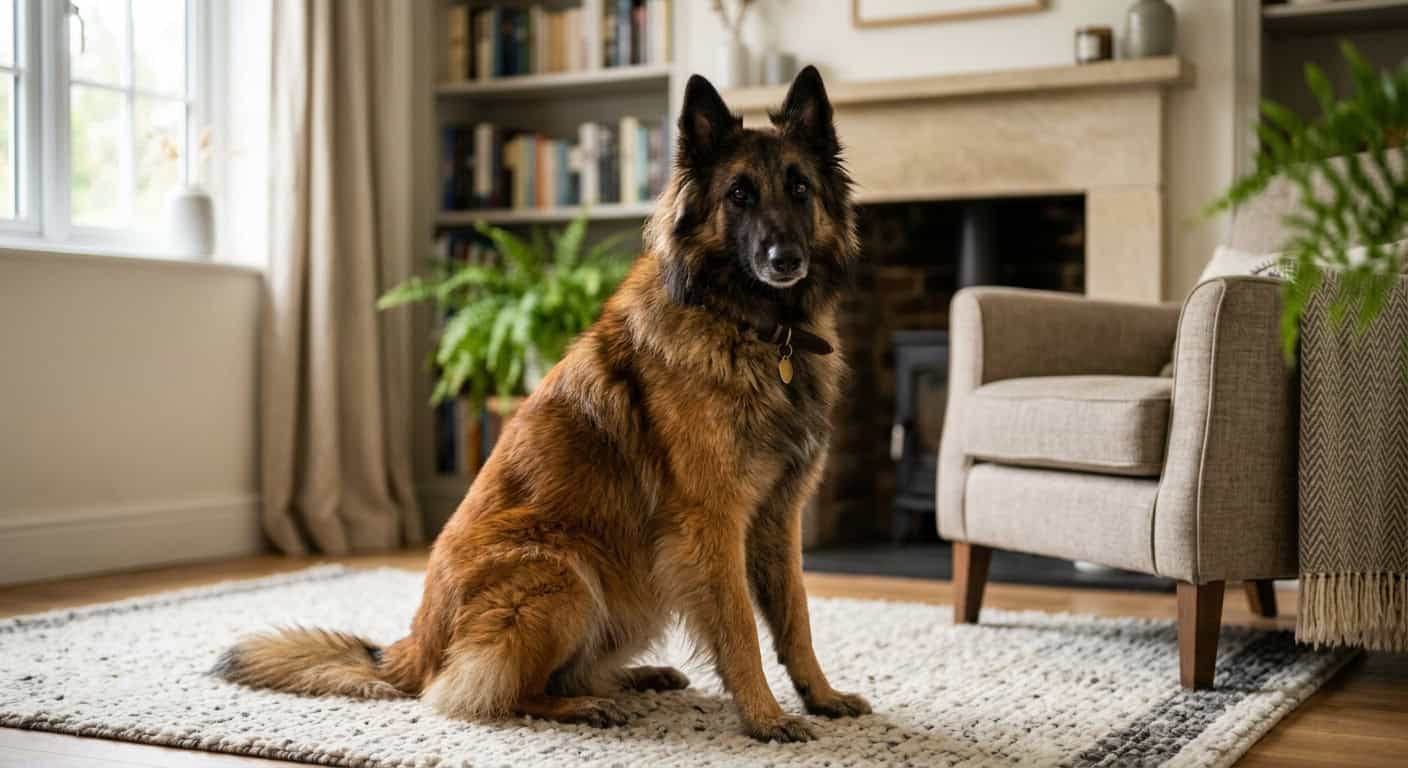
Apartment Living: Pros & Cons
Pros: Elegant and medium-sized — fits apartment living physically when needs are met. Highly intelligent, so they learn apartment rules and routines quickly. Strong bond with their owner means they’re content at home as long as their human is present.
Cons: Need substantial daily exercise (90+ minutes) to prevent boredom-driven behaviors. Their herding instinct and sensitivity can make them reactive in busy urban environments. Dense double coat sheds heavily twice a year — requires frequent vacuuming in smaller spaces.
Exercise & Daily Activity Needs
Belgian Tervurens need a minimum of 1.5–2 hours of vigorous exercise daily. Running, cycling, fetch, agility, herding trials, and off-leash play in secure areas all suit them well. In apartments, structured exercise is especially important since they can’t burn energy through free roaming. Mental enrichment — puzzle feeders, scent work, obedience training — is essential on top of physical activity. Tervurens who are under-stimulated can develop anxiety-based behaviors or become destructive.

Training the Belgian Tervuren in an Apartment
Belgian Tervurens are highly trainable and excel at obedience, agility, herding, and protection sports. Their sensitivity makes them remarkably responsive to positive reinforcement but also means they don’t tolerate harsh corrections well. For apartment living, start crate training early and build a strong “settle” and “place” foundation. Work on desensitization to urban sounds (sirens, elevators, traffic) from the start. Socialization is critical — Tervurens can become overly suspicious without broad exposure to people, environments, and other animals. Daily training sessions of 15–20 minutes, spread throughout the day, keep them mentally engaged and connected to you.
Grooming Requirements
The Tervuren’s double coat is long and dense, requiring regular maintenance. Brush 3–4 times per week to prevent matting and manage shedding, increasing to daily during the twice-yearly heavy shedding seasons. Special attention is needed around the collar, behind the ears, and on the hindquarters where tangles form most easily. Bathe every 6–8 weeks. Professional grooming 2–3 times per year is recommended. Trim nails monthly and clean ears weekly to prevent infections.
Health & Lifespan
Belgian Tervurens have a lifespan of 12–14 years and are generally healthy. Common concerns include hip dysplasia, epilepsy (which has a notable incidence in the breed), progressive retinal atrophy, and hypothyroidism. Responsible breeders test for these conditions through OFA and CERF certifications. Regular annual vet checkups are important; joint health monitoring becomes more critical as the dog ages into its senior years.
Feeding Guide
Tervurens typically eat 2–2.5 cups of high-quality dry food per day, split into two meals. Highly active dogs competing in sports may need more. Choose a protein-first formula designed for active medium-to-large breeds. Avoid overfeeding — these dogs should stay lean and athletic. Puppies need 3 meals daily until 6 months of age. Monitor weight and adjust portions based on activity level.
Is the Belgian Tervuren Right for You?
The Belgian Tervuren is best suited to active, experienced owners who can provide consistent training and plenty of mental and physical outlets. They flourish in dog sport environments — agility, herding trials, and obedience competition are natural fits. Owners who work from home or have flexible schedules will find it easier to meet their needs. They’re not ideal for busy professionals with long hours away, or for households without access to open exercise space. Patient, dedicated owners who want a beautiful, brilliant, and deeply loyal companion will be richly rewarded by this breed. The Tervuren’s combination of elegance and athleticism makes them one of the most versatile herding breeds in existence — whether you’re competing in dog sports, working livestock, or simply exploring trails together, they bring full commitment to everything they do. That devotion, channeled properly, is extraordinary.
Recommended Products for Belgian Tervuren Owners
🛒 Top Picks for Belgian Tervuren Owners
- Best Dog Beds for Belgian Tervurens — supportive, right-sized for apartment living
- Top-Rated Harnesses for Belgian Tervurens — city-ready, escape-proof
- Best Dog Food for Belgian Tervurens — breed-appropriate nutrition
What Does a Belgian Tervuren Cost to Own?
The initial purchase price of a Belgian Tervuren from a reputable breeder typically ranges from $1,500 to $3,000, depending on the breeder’s reputation, lineage, and location. This cost often includes initial vaccinations and health screenings. However, the expenses don’t stop there. Monthly ongoing costs are a significant consideration for owners.
High-quality dog food tailored to active breeds like the Belgian Tervuren can cost between $40 and $70 per month. Grooming expenses are relatively low since their coat requires minimal professional care, but occasional grooming supplies or services may add $10 to $30 monthly. Veterinary care, including routine check-ups and vaccinations, averages $50 to $100 per month, while pet insurance can range from $30 to $60 monthly, depending on coverage.
To keep your Belgian Tervuren healthy and active, consider investing in a durable dog toy like the KONG Classic Dog Toy, perfect for their energetic nature.
“`html
Is the Belgian Tervuren Good With Other Pets?
The Belgian Tervuren is a highly intelligent and energetic herding breed, which can influence its interactions with other pets. With proper socialization, Tervurens can coexist peacefully with other dogs, especially if raised together. However, their strong herding instincts may lead them to chase or nip at smaller animals, including cats. Early training is essential to curb this behavior, as their prey drive can be pronounced.
When introduced carefully, Tervurens can adapt to living with cats, though supervision is recommended. Their alert and protective nature means they may be wary of unfamiliar dogs, but they typically bond well with canine companions in their household. With children, Tervurens are loyal and affectionate but may try to herd them during play. Families should teach kids to respect the dog’s space, as this breed can be sensitive to rough handling.
Overall, the Belgian Tervuren thrives in a structured environment where boundaries are clear. Consistent training and early socialization are key to ensuring harmony with other pets and family members.
“`
What Do Belgian Tervuren Owners Say About Apartment Life?
Living with a Belgian Tervuren in an apartment can work, but it’s not without challenges. Owners often note their high energy and need for mental stimulation mean daily exercise and training are non-negotiable. Without it, they can become restless or bark excessively, which isn’t ideal in close quarters. Many owners find creative ways to use space, like indoor agility setups or puzzle toys, to keep them engaged. On the plus side, Tervurens are adaptable and thrive on routine, so consistent walks and playtime help them adjust. Still, their size and activity level make apartment living a commitment requiring dedication.
Frequently Asked Questions
🔗 Official Breed Resources