
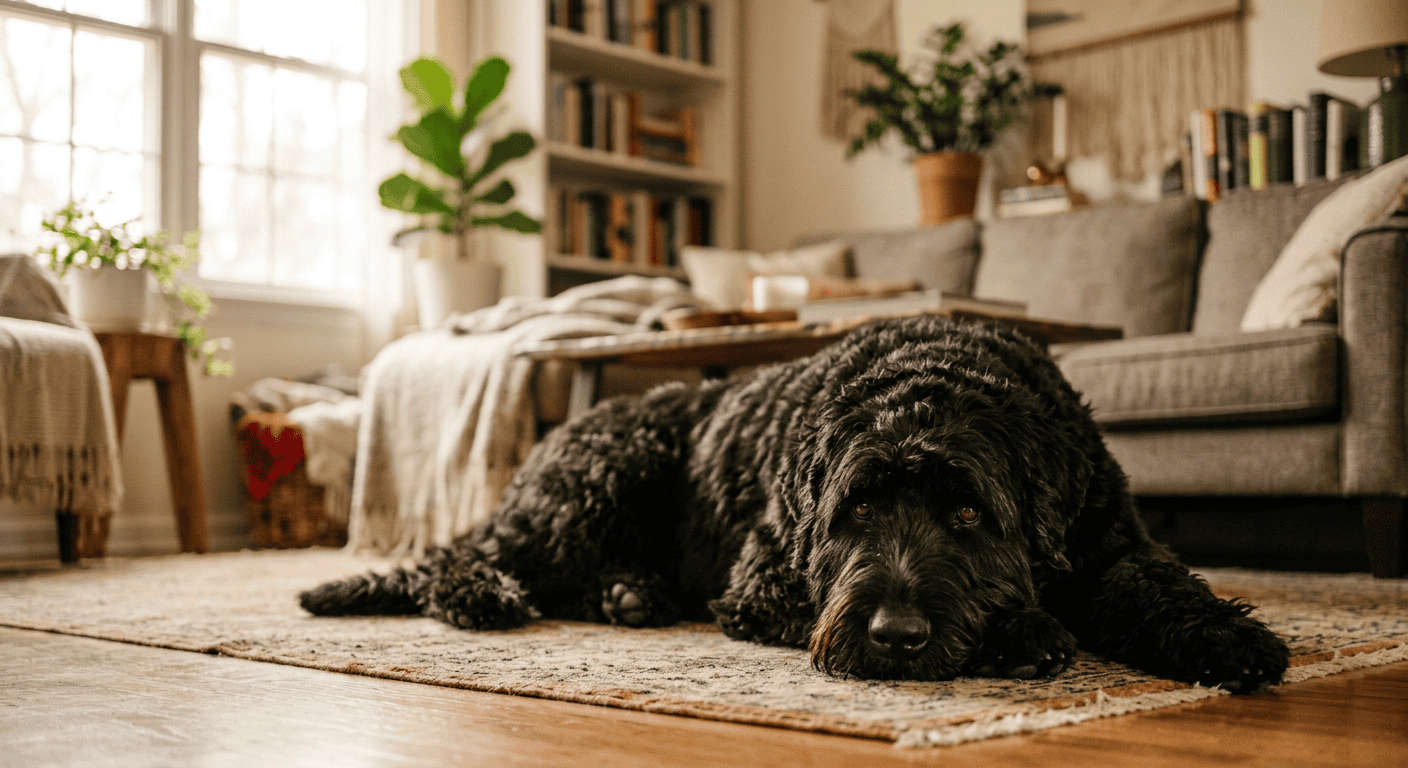
Apartment Living: Pros & Cons
Pros: Calm and composed indoors when properly exercised — not a constant whirlwind of energy. Adaptable to urban environments once well-socialized. Their watchdog instinct means they’re naturally attentive to the household without being neurotic.
Cons: Large and powerful — need sufficient physical space and a confident handler. Can be territorial or reactive with unfamiliar dogs, making apartment common areas and elevators a management challenge. Dense double coat requires significant grooming — expect regular brushing and professional trims every 6–8 weeks.
Exercise & Daily Activity Needs
Black Russian Terriers need 60–90 minutes of vigorous exercise daily. Long walks, jogging, hiking, and structured play are all appropriate. They enjoy activities that challenge them mentally and physically, such as obedience, protection sports (Schutzhund), and carting. In apartments, consistent morning and evening exercise is essential. They can become destructive or develop behavioral problems if under-exercised. Mental stimulation through training sessions and puzzle toys supplements physical activity on low-activity days.

Training the Black Russian Terrier in an Apartment
BRTs are highly intelligent and trainable but require a confident, experienced handler. They were bred to think independently and can be dominant if leadership isn’t established clearly and early. Positive reinforcement combined with firm, consistent boundaries works best. For apartment living, early socialization is absolutely critical — they must be comfortable with strangers, elevators, crowds, and urban environments to avoid becoming overly protective or reactive. Crate training is recommended for puppies to establish a calm base. Obedience classes with an experienced trainer are strongly recommended. Harsh methods will backfire; these dogs respect calm authority, not aggression.
Grooming Requirements
The Black Russian Terrier’s thick, wavy double coat requires significant maintenance. Brush 2–3 times per week to prevent matting, paying special attention to the beard, eyebrows, and leg furnishings. Professional grooming every 6–8 weeks is typically needed to trim and shape the coat. Bathe every 4–6 weeks. The beard collects food and water — daily wiping keeps it tidy. Trim nails monthly. This is not a low-maintenance breed on the grooming front; budget accordingly.
Health & Lifespan
Black Russian Terriers have a lifespan of 10–12 years. Common health concerns include hip and elbow dysplasia, progressive retinal atrophy, and hyperuricosuria (a urinary condition causing urate stones). They can also be prone to bloat (GDV), especially as large, deep-chested dogs. Purchase from health-tested lines and consider pet insurance. Annual vet checkups are important; joint monitoring and regular eye examinations are particularly valuable as the breed ages.
Feeding Guide
BRTs typically eat 3–5 cups of high-quality large-breed dry food per day, divided into two meals. Feed from a raised bowl and avoid exercise 1 hour before and after meals to reduce bloat risk. Choose a formula appropriate for large working breeds with at least 25% protein. Avoid overfeeding — weight management is important for joint health in this heavy breed. Monitor weight monthly and adjust portions based on activity level.
Is the Black Russian Terrier Right for You?
The Black Russian Terrier is right for experienced, confident dog owners who want a devoted, protective companion and can invest in consistent socialization and training. They suit homes with a single dog or a carefully managed multi-dog household. Not recommended for first-time owners, timid handlers, or those in very small apartments with little access to exercise space. Owners with experience in guardian or working breeds will find the BRT rewarding — they’re loyal, intelligent, and deeply bonded to their family. The commitment to grooming, training, and socialization is real, but so is the payoff.
Recommended Products for Black Russian Terrier Owners
🛒 Top Picks for Black Russian Terrier Owners
- Best Dog Beds for Black Russian Terriers — supportive, right-sized for apartment living
- Top-Rated Harnesses for Black Russian Terriers — city-ready, escape-proof
- Best Dog Food for Black Russian Terriers — breed-appropriate nutrition
What Does a Black Russian Terrier Cost to Own?
The initial purchase price of a Black Russian Terrier from a reputable breeder typically ranges from $1,500 to $2,500. This cost reflects the breed’s rarity, pedigree, and the breeder’s commitment to health testing and ethical practices. It’s essential to avoid cheaper options, as they may come from unethical sources.
Monthly ongoing costs for owning a Black Russian Terrier can add up quickly. High-quality dog food tailored to large breeds costs approximately $50 to $80 per month. Grooming is a significant expense due to their thick, dense coat; professional grooming sessions every 6-8 weeks can cost $80 to $120 each. Routine veterinary care, including vaccinations and check-ups, averages $30 to $50 monthly, while pet insurance can add another $40 to $60 per month.
To keep your Black Russian Terrier’s coat healthy between grooming sessions, consider using a FURminator Deshedding Tool, which helps reduce shedding and maintain their coat’s condition.
Is the Black Russian Terrier Good With Other Pets?
The Black Russian Terrier is a loyal and protective breed, known for its calm and confident demeanor. While they can coexist with other pets, their compatibility largely depends on early socialization and training. With cats, this breed may exhibit a moderate prey drive due to their terrier heritage. Introducing them to cats gradually and supervising interactions is essential to ensure harmony.
When it comes to other dogs, Black Russian Terriers can be territorial and dominant, especially with dogs of the same sex. Proper socialization from puppyhood helps them develop better relationships with fellow canines. They thrive in households where they are the only dog or paired with a compatible companion.
With children, this breed is generally patient and gentle, making them excellent family guardians. However, their large size and protective instincts mean supervision is necessary around younger kids to prevent accidental knocks or overprotectiveness.
Living with a Black Russian Terrier in an apartment has its ups and downs. While they’re large dogs, they adapt surprisingly well to smaller spaces as long as they get enough exercise. Mine loves lounging on the couch after a long walk, but she does take up a lot of room! Noise-wise, she’s relatively quiet, but she’ll bark if she hears something unusual outside, which can be a bit startling in a building with thin walls. The biggest challenge is fitting her daily routine into city life—she needs at least an hour of exercise, rain or shine, so weekends are for park trips. Overall, she’s a calm, loyal companion who makes apartment living work with a little extra effort.
Frequently Asked Questions
🔗 Official Breed Resources