
By Jarrod Gravison • Updated April 28, 2026 • 7 min read
⚡ Quick Answer
The most important pet emergency preparation for apartment dwellers: build a pet go-bag that can be grabbed in under 60 seconds, keep microchip and ID current, post a pet alert sticker on your door, and know which building exit is closest to your pet’s usual location. Most apartment pet emergencies (fires, floods, gas leaks) require evacuation with little warning. Preparation time is now, not during the emergency.
Disclosure: This post contains affiliate links. We may earn a small commission at no extra cost to you.
Key Takeaways
- Build the go-bag now, not during the emergency: A pet go-bag within arm’s reach of your front door is the single highest-impact action an apartment pet owner can take — it enables sub-60-second evacuation with everything your pet needs for 3 days.
- Most emergency shelters don’t accept pets: According to FEMA, identifying at least two pet-friendly locations in advance is essential — research hotels, boarding facilities, and friends before any emergency occurs, not during one.
- Microchip data goes stale fast: The ASPCA reports that outdated microchip registrations are a leading cause of pets not being reunited with owners after disasters — update your registration every time you move or change your contact information.
- Practice makes evacuation possible: A cat or dog that has never been quickly placed in a carrier will resist in a real emergency — monthly 60-second carrier drills build the habit on both sides of the leash and dramatically improve evacuation speed.
Apartment dwellers face specific emergency scenarios: building fires, gas leaks, flooding in lower floors, and mandatory evacuations. Pets must be part of every emergency plan. Here are 7 steps that matter most.
What About Build a Pet Go-Bag (And Keep It Accessible)?
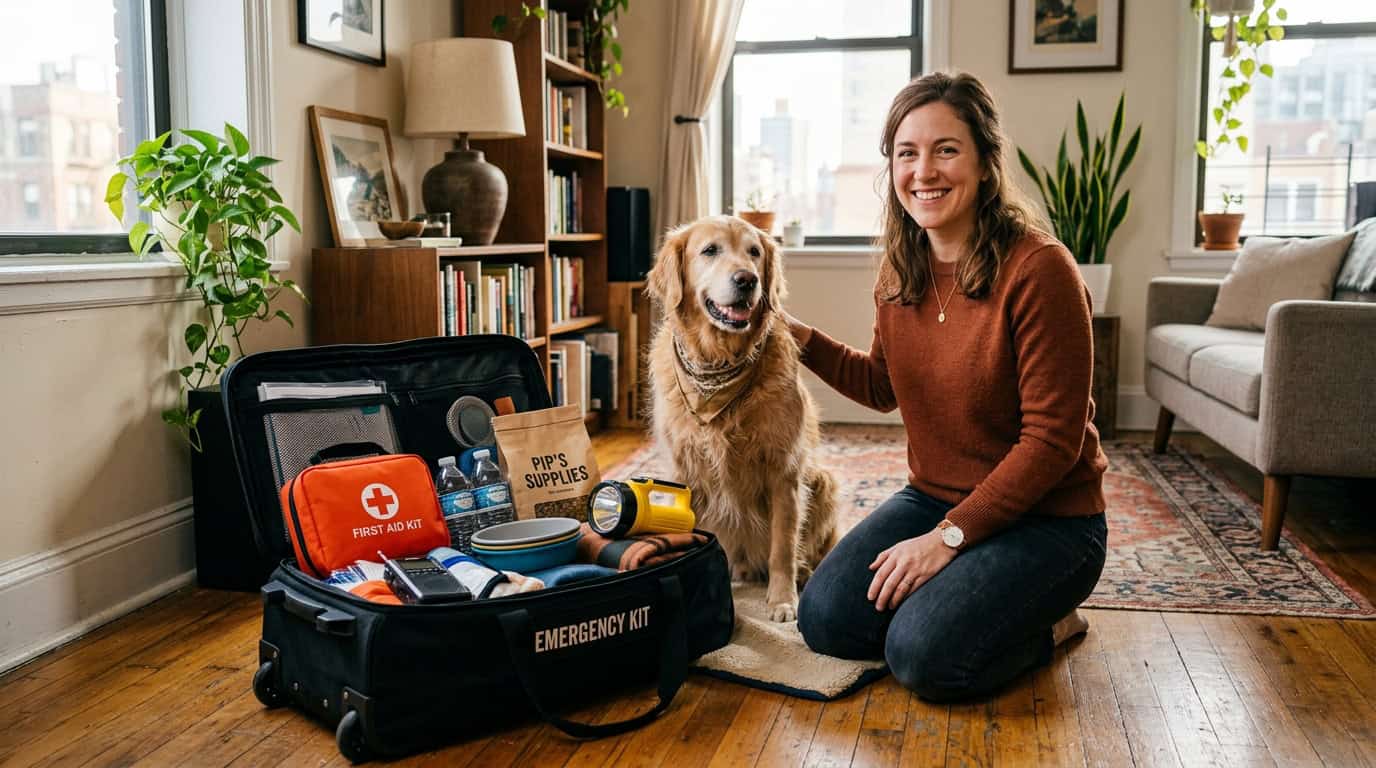
Your pet go-bag should be grabble in under 60 seconds. Store near the front door. Include:

- 3-day supply of food (in a sealed container) and bottled water
- Collapsible bowls
- Current medications with dosage instructions (5-7 day supply)
- Vaccination records and microchip documentation (copies)
- Current photos of your pet (and of you with your pet)
- First aid supplies (gauze, saline, bandage wrap)
- Carrier or leash/harness
- Familiar comfort item (worn T-shirt, favorite toy)
- Emergency contacts: vet, emergency vet, poison control (888-426-4435)
See our complete pet emergency kit guide for the full list.
What About Update Microchip and ID Tags?
Microchip registration and ID tags are most valuable when an emergency actually happens. If your contact info is outdated, a found pet may not be returned to you. Update whenever you:
- Move to a new apartment
- Change your phone number
- Change your email address
Check your registration annually at your microchip registry’s website. Some national databases (like the AAHA Universal Pet Microchip Lookup at lookup.aaha.org) let you verify your registration is findable across registries.
What About Post a Pet Alert Sticker on Your Front Door?
A pet alert sticker on your front door or window tells firefighters that pets are inside — enabling rescue attempts when you’re not home. Include the number and type of pets. Available free from the ASPCA or for under $5 at pet stores. Takes 5 minutes to set up and could save your pet’s life in a fire.

What About Know Your Building’s Emergency Exits?
Walk all emergency exits in your building, including stairs (in elevator-dependent buildings). Identify:
- Fastest exit from your unit
- Whether pets are allowed on all exit routes (most buildings prohibit pets in elevators during fires)
- Where the building’s outdoor assembly point is
What About Identify Pet-Friendly Emergency Shelters in Advance?
Most traditional emergency shelters don’t accept pets. Research before you need to know:
- Pet-friendly hotels along your likely evacuation route
- Emergency pet boarding facilities that stay open during disasters
- Friends or family who can accept you and your pet
- Your local animal shelter’s emergency protocols
FEMA recommends identifying at least two pet-friendly locations in advance. The FEMA ready.gov pet preparedness page has location-finding tools.
What About Practice Fast Carrier Loading?
Knowing how to quickly and safely contain your pet during an emergency is a skill, not an instinct. Practice loading your cat or dog into their carrier in under 60 seconds. This involves:
- Keeping the carrier accessible and familiar (open in a common area)
- Knowing your pet’s stress signals during containment
- Having a plan for a hiding cat: luring with treats vs. grabbing with a thick towel
See our cat carrier guide and pet travel guide for carrier training strategies.
What About Know Your Emergency Contacts by Heart?
During an emergency, phones may be dead or inaccessible. Know (or have written on paper in the go-bag):
- Nearest 24-hour emergency vet name and address — see our emergency vet guide
- ASPCA Animal Poison Control: 888-426-4435
- A trusted friend or family member who can care for your pet if you’re incapacitated
- Your building manager’s emergency line
The ASPCA disaster preparedness guide and Humane Society’s pet disaster planning guide have additional resources for building a complete emergency plan.
🛒 Related Picks on Amazon
📬 Free Weekly Apartment Pet Tips
Practical guides for apartment pet owners, delivered weekly.
After the Emergency: Recovery Steps for Apartment Pet Owners
Once the immediate emergency has passed, pets need structured support to return to normal. Even brief displacements from home — a few hours during a building evacuation — can trigger anxiety in pets that may not manifest until days later. According to the ASPCA, displaced pets commonly display behaviour changes including appetite loss, excessive vocalization, hiding, house-soiling, and aggression for up to two weeks after a stressful event. This is normal and manageable with the right approach.
Begin reintroducing your pet to normal routines as quickly as possible after returning home. Feed at consistent times, resume usual walk schedules, and return toys and bedding to their normal locations. Scent continuity matters significantly — if your apartment has lingering smoke or chemical smell after an incident, introduce familiar-scented items (worn clothing, unwashed bedding) to help your pet reorient. For multi-pet households, monitor for inter-pet tension — disrupted routines can trigger resource-guarding behaviour even between previously bonded pets. If anxiety symptoms persist beyond two weeks, a vet consultation for situational anti-anxiety support is appropriate. The ASPCA’s free pet disaster recovery guide includes a behavioural symptom tracker for exactly this purpose.
Apartment-Specific Hazards to Include in Your Emergency Plan
Apartment emergencies have unique characteristics compared to house-based emergencies. Gas leaks are more common in dense buildings due to shared infrastructure — pets, with their superior sense of smell, may signal a gas leak before humans notice. Watch for unusual agitation, pawing at doors, or reluctance to enter a room as early warning signs. Carbon monoxide is odourless and colourless — a CO detector near pet sleeping areas is essential. The ASPCA notes that pets are often first affected by CO exposure due to their smaller lung capacity and lower resting position in rooms where CO concentrates.
In high-rise apartments specifically, establish a clear balcony protocol: dogs and cats left on balconies during an evacuation are frequently unreachable by rescue crews. Ensure your pet cannot be isolated on a balcony unsupervised. Building elevator policies during fire alarms (most prohibit elevator use) mean navigating stairwells while managing a carrier or leash simultaneously — test this physically at least once before an emergency. In 2026, a PetMD survey found that fewer than 20% of apartment pet owners had practiced a stairwell evacuation with their pet, yet it is one of the most common bottlenecks in a real emergency scenario. One practice run changes everything.
Creating a Yearly Emergency Preparedness Review
Emergency preparedness is not a one-time task — it’s a recurring one. Set a calendar reminder annually (or every six months if you have senior, medically complex, or anxious pets) to review and refresh your go-bag. Medications expire, food goes stale, and your pet’s weight, health status, and needs change over time. According to the AKC, an outdated emergency plan is almost as problematic as no plan — the wrong medication dose or expired vaccination records can delay emergency treatment. Use each review to also update your pet’s emergency photo (current appearance matters for lost pet reports), verify microchip registration, and confirm that your designated pet-friendly emergency locations are still available and pet-friendly in 2026.
Frequently Asked Questions
How do you prepare your apartment for a pet emergency?
Build a pet go-bag with 3 days of supplies, know your building’s exits, post a pet alert sticker on your door, keep pet ID and microchip current, and identify pet-friendly emergency shelters in advance.
What should be in a pet emergency go-bag?
3-day food and water, medications, vaccination records, microchip info, carrier, first aid supplies, current photo, comfort item, and emergency contacts (vet, poison control).
Do emergency shelters accept pets?
Most traditional shelters do not. Research pet-friendly hotels, boarding facilities, and friends with pet-friendly homes along your evacuation route before an emergency.
How do you evacuate from an apartment with a pet?
Practice carrier loading (under 60 seconds). Know all building exits. Keep the go-bag near the front door. In a fire: grab your pet and go — don’t delay evacuation to search for a hiding pet.
What should apartment pet owners do during a building fire?
Grab your pet and evacuate immediately. Inform firefighters that a pet is inside. Pet alert stickers help rescue teams. Never re-enter a burning building for any reason.
Jarrod Gravison
Apartment pet specialist at Busy Pet Parent.